
Why pressure washing damages roof tiles
Pressure washing has a well-earned reputation for transforming driveways and patios, which is exactly why it gets requested for roofs too. The problem is that roof tiles and slates are a completely different material context to concrete paving, and the same force that lifts embedded dirt from a slab does real, sometimes invisible, damage to a roof covering.
This page goes into the specific mechanisms of that damage, because understanding why it happens — not just being told it does — is what makes the case for softwashing convincing rather than just a claim.
The specific damage mechanisms
- Surface stripping — most concrete and clay tiles have a thin, weatherproof outer layer that pressure washing erodes, exposing more porous material beneath.
- Forced water ingress — a concentrated jet drives water up and under overlapping tiles, into a space designed to shed water outward, not resist inward pressure.
- Physical dislodging — pressure at close range can crack, chip or lift tiles outright, especially older, brittle or handmade coverings.
- Loosened fixings — dry-fix ridge and verge systems and nail fixings can be disturbed by the mechanical force involved.
- Granule loss on some concrete tile ranges, which accelerates weathering and colour loss beyond the growth being removed.
Why the damage is often not obvious immediately
One of the most misleading things about pressure washing a roof is that it can look dramatically successful on the day. The growth is gone and the tiles look clean. The damage — a roughened, more porous surface, water that has tracked further under a lap than it should, a slightly loosened fixing — often does not show up until months later, as a leak, a faster-than-expected return of growth, or a tile that fails in the next hard frost.
Why softwash avoids this
Softwashing works at low pressure and relies on biocide chemistry to treat growth rather than force to remove it, which means none of the mechanisms above come into play. It takes a different kind of patience — growth dies and weathers off over subsequent weeks rather than vanishing instantly — but it leaves the tile's protective surface intact.
Our own photographs
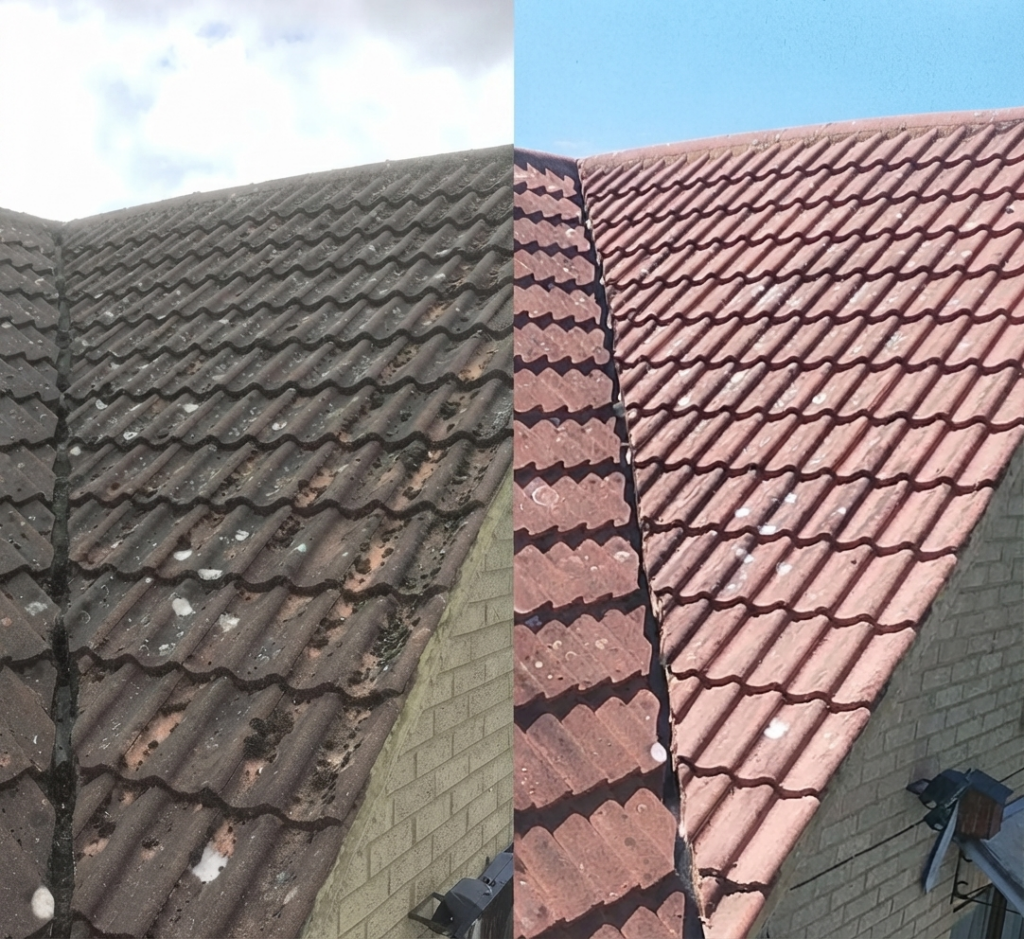
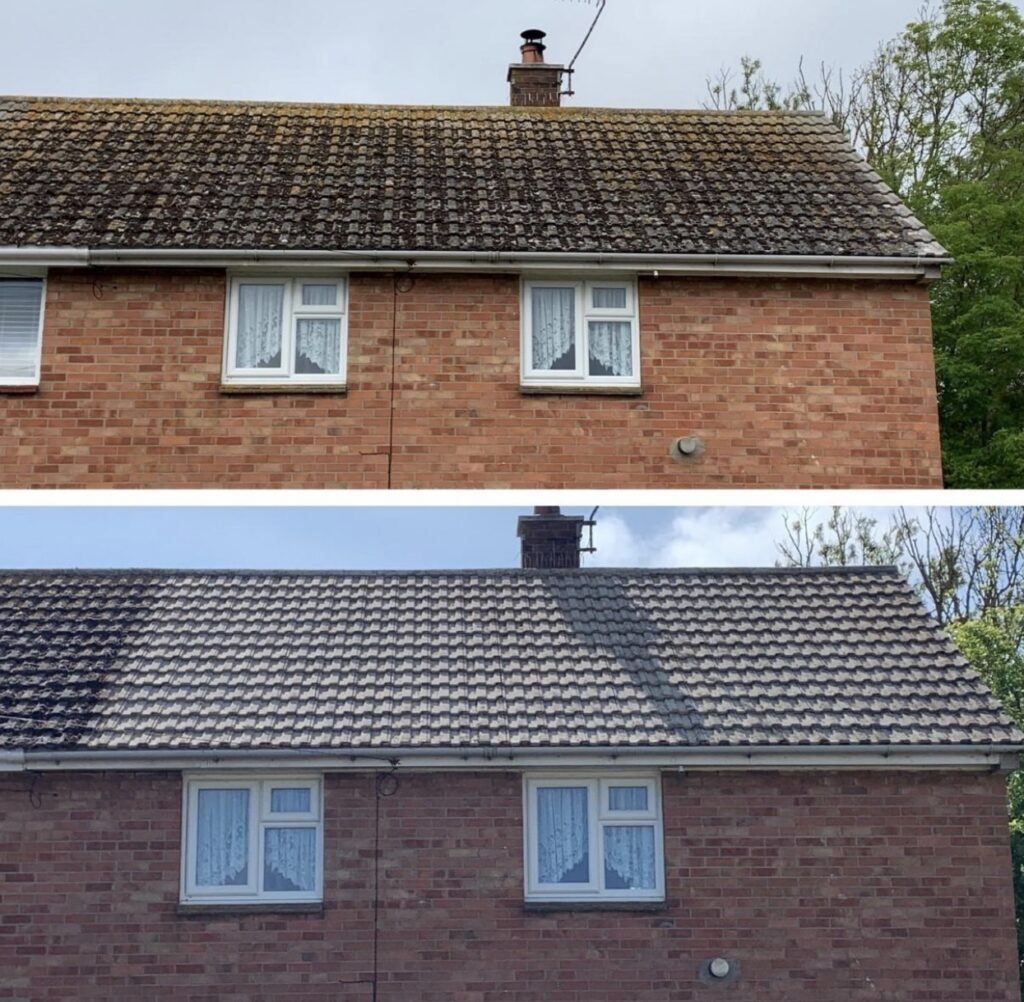
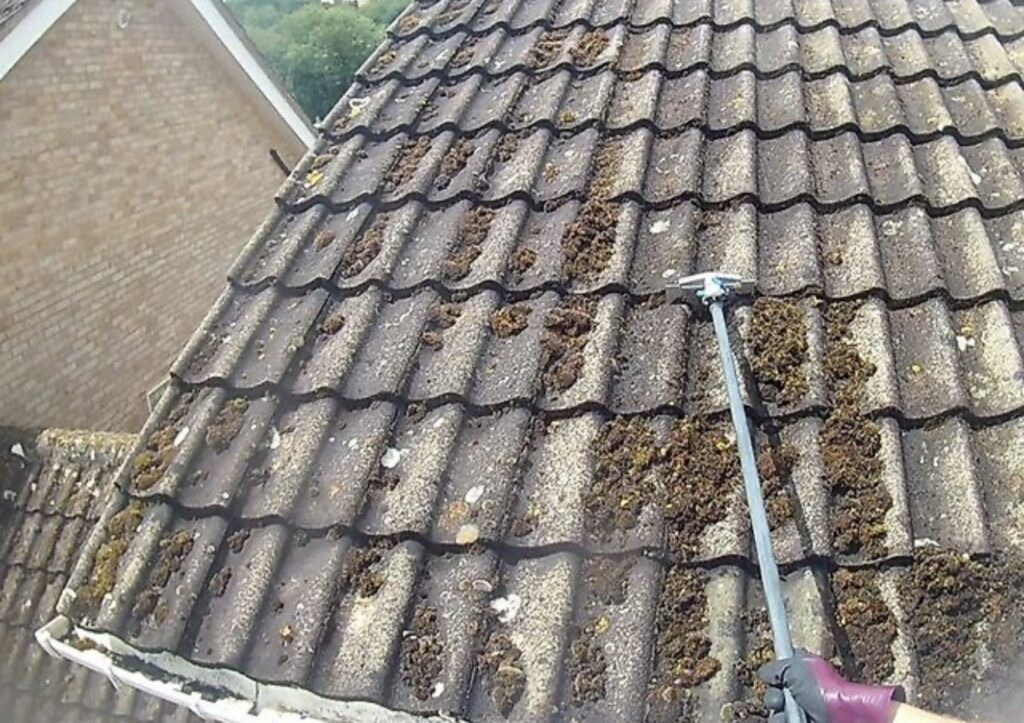
Images from Sky Scrapers Ltd work showing the methods described on this page.
Where this applies locally
Towns where this comes up most often on our patch:
Questions we get asked
Is any amount of pressure washing safe on a roof?
We do not use it on roof coverings at any pressure, because even reduced settings applied at close range to a tile risk the same underlying mechanisms — surface stripping and forced water ingress.
How would I know if pressure washing had already damaged my roof?
Signs can include a rougher, more matte tile surface than before, faster-than-normal return of moss or algae, or leaks appearing in the months after the work — though some damage only becomes visible over a longer period.
Do manufacturers warn against pressure washing tiles?
Many roof tile and covering manufacturers advise against high-pressure cleaning in their own maintenance guidance — it is worth checking your specific product documentation.
Is pressure washing acceptable for gutters instead of tiles?
Gutters are typically cleared by hand rather than pressure washed, since forcing water and debris through joints and downpipes at high pressure can dislodge fittings or stress old seals.
Choose a method that protects the tile
If you would like your roof cleaned without the risks described here, ask us about softwash and hand cleaning for your specific roof.
Sky Scrapers Ltd · info@sky-scrapers.co.uk
Summary
Pressure washing strips the protective surface off roof tiles, forces water under overlaps, and can dislodge tiles and fixings — damage that often only becomes apparent months later. Softwash treats growth chemically without these risks.