Softwashing vs pressure washing: what is actually different
These two terms get used almost interchangeably by homeowners, but they describe very different processes with very different outcomes for a tiled or slated roof. Pressure washing uses mechanical force at high PSI to blast material off a surface. Softwashing uses low pressure, water and a biocide solution to kill and lift organic growth chemically rather than physically stripping it away.
The distinction matters because roof coverings are not designed to withstand a concentrated jet of water at close range. Understanding what each method actually does to a tile helps explain why one is standard practice for driveways and patios, and the other is what we use on roofs.
How each method works
Pressure washing relies on force. A jet at several thousand PSI physically knocks dirt, moss and coatings off a surface, which is effective on dense, impervious materials like concrete or natural stone paving that can absorb that kind of impact without damage.
Softwashing relies on chemistry and dwell time. A biocide solution is applied at low pressure, allowed to sit on the surface, and works by breaking down the cell structure of moss, algae and lichen so it can be brushed or rinsed away gently, or left to weather off naturally over the following weeks.
Why pressure is the wrong tool for a roof
- Roof tiles have a thin weatherproof surface layer — pressure washing strips this away, exposing the more porous material underneath.
- Concentrated jets drive water up under overlaps and laps, which is exactly where it should not go on a lapped roof covering.
- The force can crack, chip or dislodge tiles outright, particularly older, brittle or handmade coverings.
- A stripped, roughened tile surface holds moisture and grips new spores more readily, so growth often returns faster after pressure washing, not slower.
The result over time
A pressure-washed roof often looks dramatically clean on the day of the work, which is part of its appeal, but that clean surface is now more porous and more vulnerable. Softwashing looks less immediately dramatic — some growth is left in place to die and weather off — but the tile surface is undamaged and treated to resist regrowth for longer.
Our own photographs
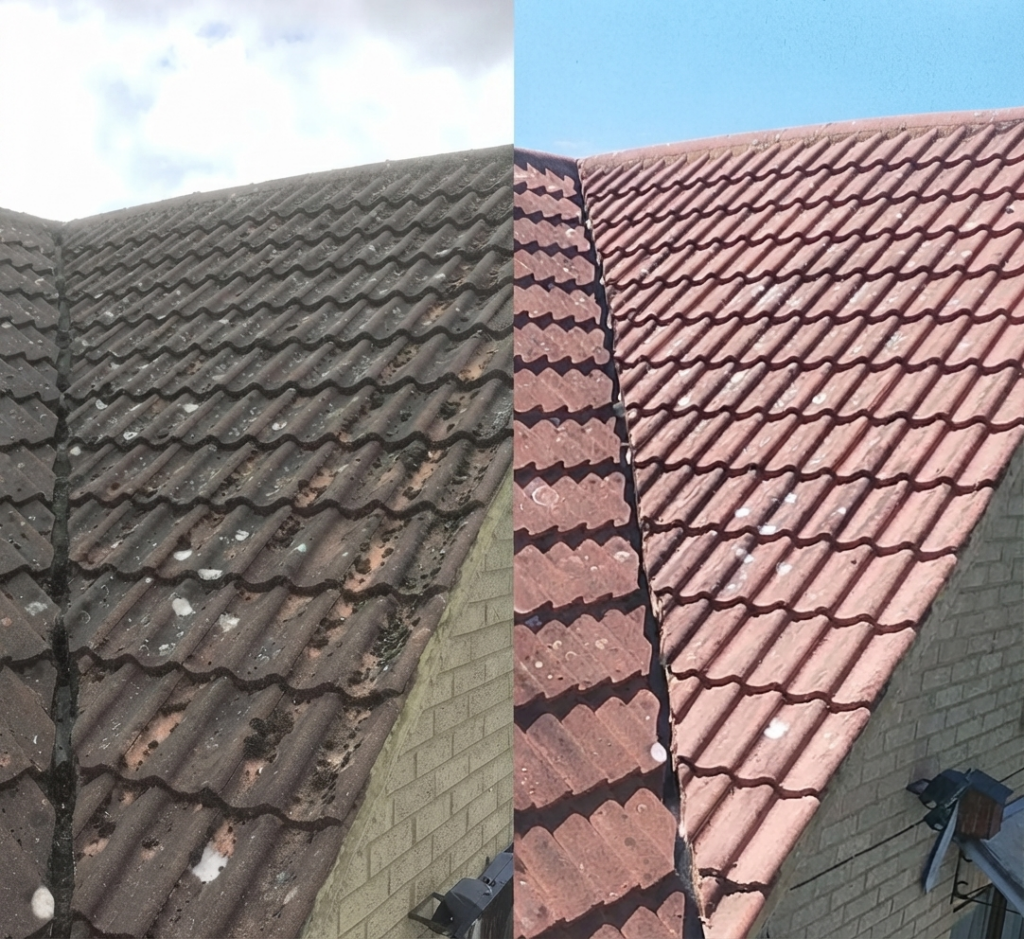
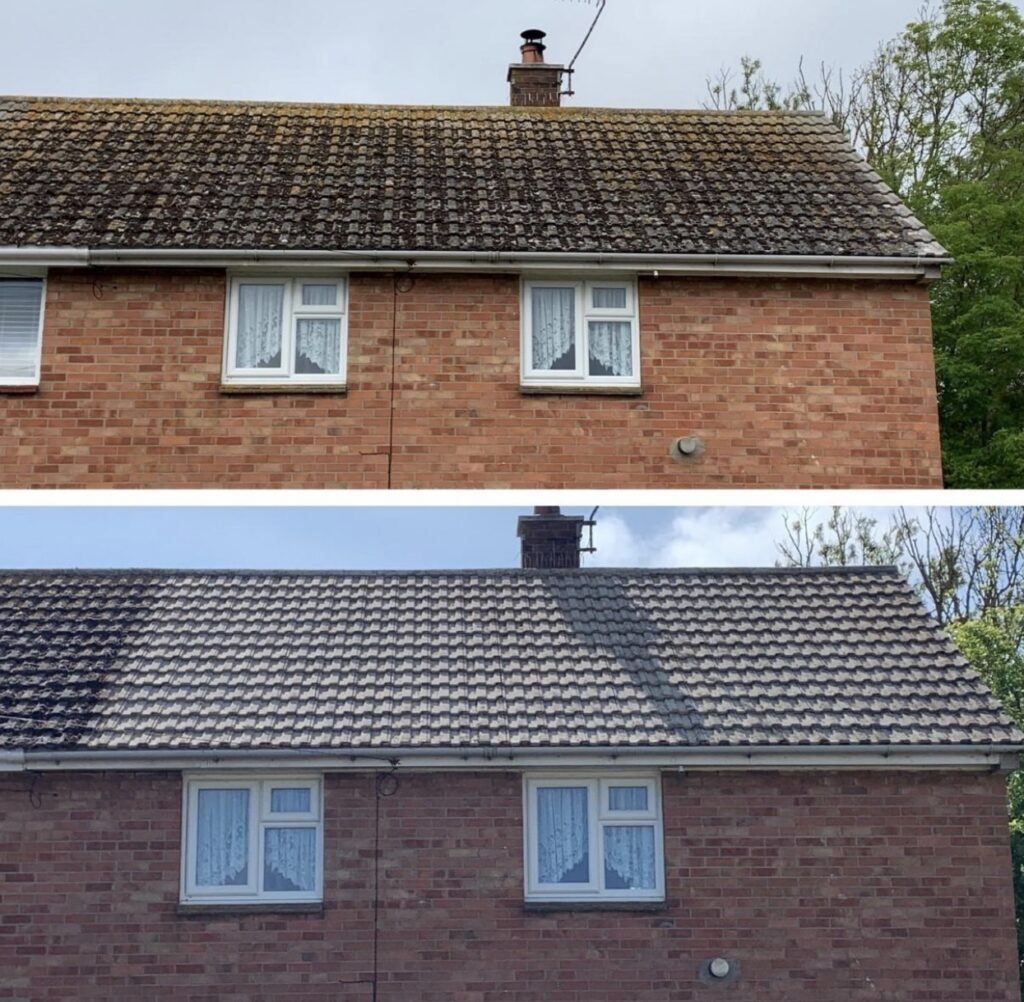
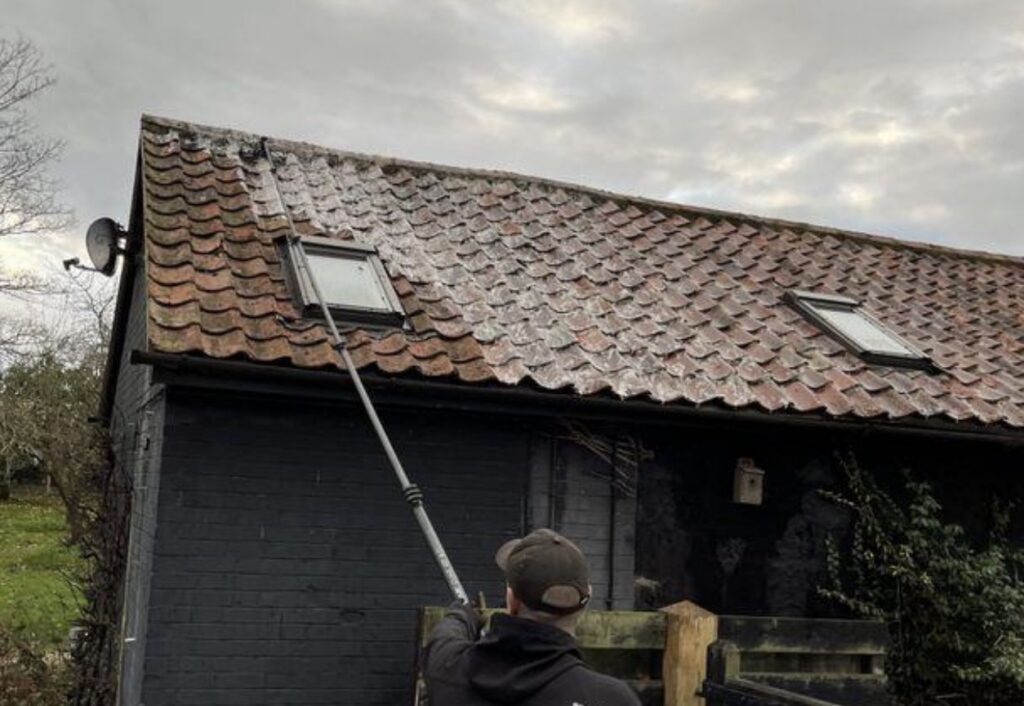
Images from Sky Scrapers Ltd work showing the methods described on this page.
Where this applies locally
Towns where this comes up most often on our patch:
Questions we get asked
Is softwashing slower than pressure washing?
The visible transformation is more gradual because growth dies and weathers off rather than being blasted away instantly, but the roof is left in far better condition.
Can pressure washing void a roof guarantee?
Many tile and roofing manufacturers specifically warn against high-pressure cleaning in their maintenance guidance. Check your own documentation, but it is a common exclusion.
Does softwash use bleach?
Biocide treatments are formulated specifically to control moss, algae and lichen on masonry and roofing, not generic household bleach. We use products intended for the job.
Will softwashing remove thick moss mats immediately?
Established, thick moss is usually cleared by hand first, then the roof is treated. Softwash chemistry is most effective on film, staining and lighter growth, and as a follow-up treatment after hand clearing.
Ask about the softwash process for your roof
If you have had a quote elsewhere that mentions pressure washing a roof, it is worth asking us for a second opinion before booking.
Sky Scrapers Ltd · info@sky-scrapers.co.uk
In short
Pressure washing forces material off a surface and can damage roof tiles in the process. Softwashing uses low pressure and biocide chemistry to treat growth without stripping the tile's protective surface.