
Roof scraping: how moss is taken off a roof by hand
Roof scraping means removing moss from tiles with hand tools rather than a jet of water. A person works down the roof course by course, lifting the moss cushions out of the gaps and off the faces of the tiles, bagging what comes off and clearing the gutters afterwards. It is slower than a pressure washer and that is the point: the tile surface is left intact.
It is the core of how we clean roofs. The rest of this page covers why scraping beats blasting, what it can and cannot achieve on its own, how a scraped roof is finished, and what to look for if you are comparing quotes.
Why scrape instead of jet washing
Concrete and clay tiles have a thin weathered skin that sheds water. A high-pressure lance strips that skin, leaves the tile rougher and more absorbent, and gives new moss an even better place to root. It can also drive water up under the laps of the tiles and into the roof space, and loosen the mortar on ridges and verges.
A scraper only touches the growth. The tile is left as it was, just clean. That is why we never pressure wash roofs, and why a scraped roof tends to stay clean for longer than one that has been blasted.
What happens on a scraping job
- The roof is looked over and photographed first, so any cracked or slipped tiles are recorded before anyone steps on it.
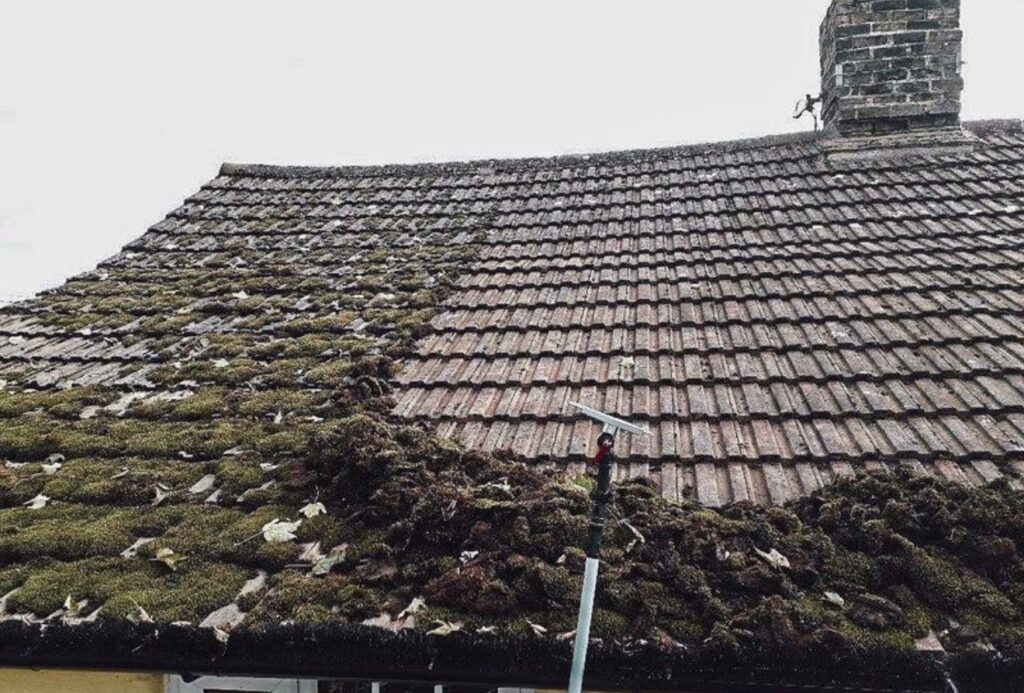
- Moss is lifted by hand from tile faces, the joints between tiles, valleys and along the ridge.
- Debris is bagged and taken away rather than swept into the garden.
- Gutters and downpipes are cleared of whatever fell during the work.
- A biocide wash is applied at low pressure to deal with the spores and roots scraping cannot reach.
What scraping alone cannot do
Scraping removes the bulk of the growth, but the microscopic spores and thread-like roots stay behind in the grain of the tile. Left untreated, those give the moss a head start and a scraped roof can look green again surprisingly quickly. That is why a scrape is almost always followed by a biocide treatment, and why full roof cleans carry our written 24-month biocide guarantee.
Scraping also will not remove the dark algae staining that sits flat on the tile surface. Those marks fade in the weeks after the biocide goes on, as the dead film weathers off in the rain.
Roofs that need extra care
Older clay tiles, slate and fibre cement all need a lighter hand than modern concrete interlocking tiles. Some roofs have areas that should not be walked on at all, such as fragile sheets over garages and conservatories, and those are cleaned from safe access or not at all. If we find damaged tiles during the look-over, we show you the photographs and agree what to do before starting.
Heavily shaded roofs under trees usually carry the thickest moss. They take longer to scrape and recolonise faster afterwards, so it is worth cutting back overhanging branches if you can.
How long it takes
Most domestic roofs are scraped, cleared and treated in one to two days. The size of the roof, the pitch, how thick the moss is and how the roof has to be reached all make a difference. We confirm the expected time when we quote.
Comparing roof scraping quotes
Ask each company how the moss comes off. If the answer involves a pressure washer or a rotary cleaner on the tiles, that is not scraping. Ask whether the gutters are cleared afterwards, whether a biocide is included, whether there is a written guarantee and whether the team is insured for work at height. A cheaper quote that leaves moss in your gutters or skips the treatment rarely works out cheaper.
Our own photographs
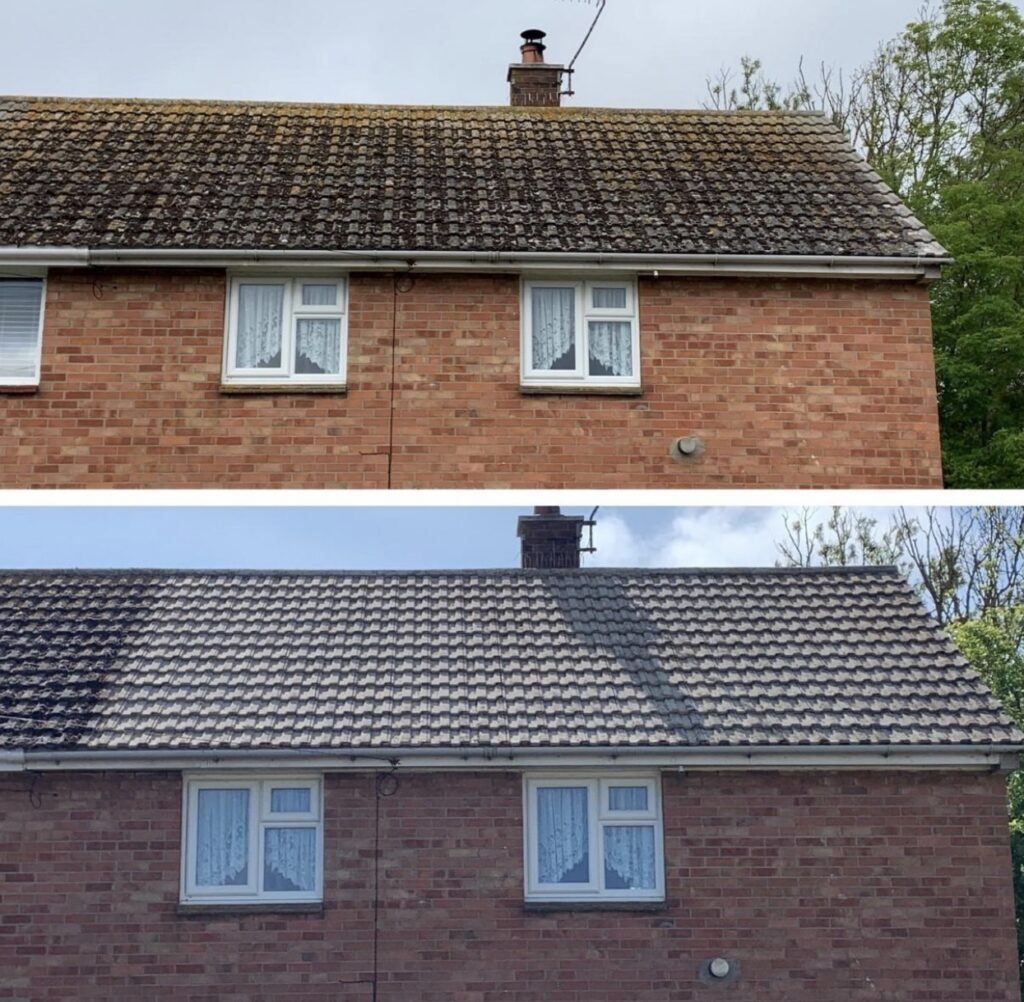
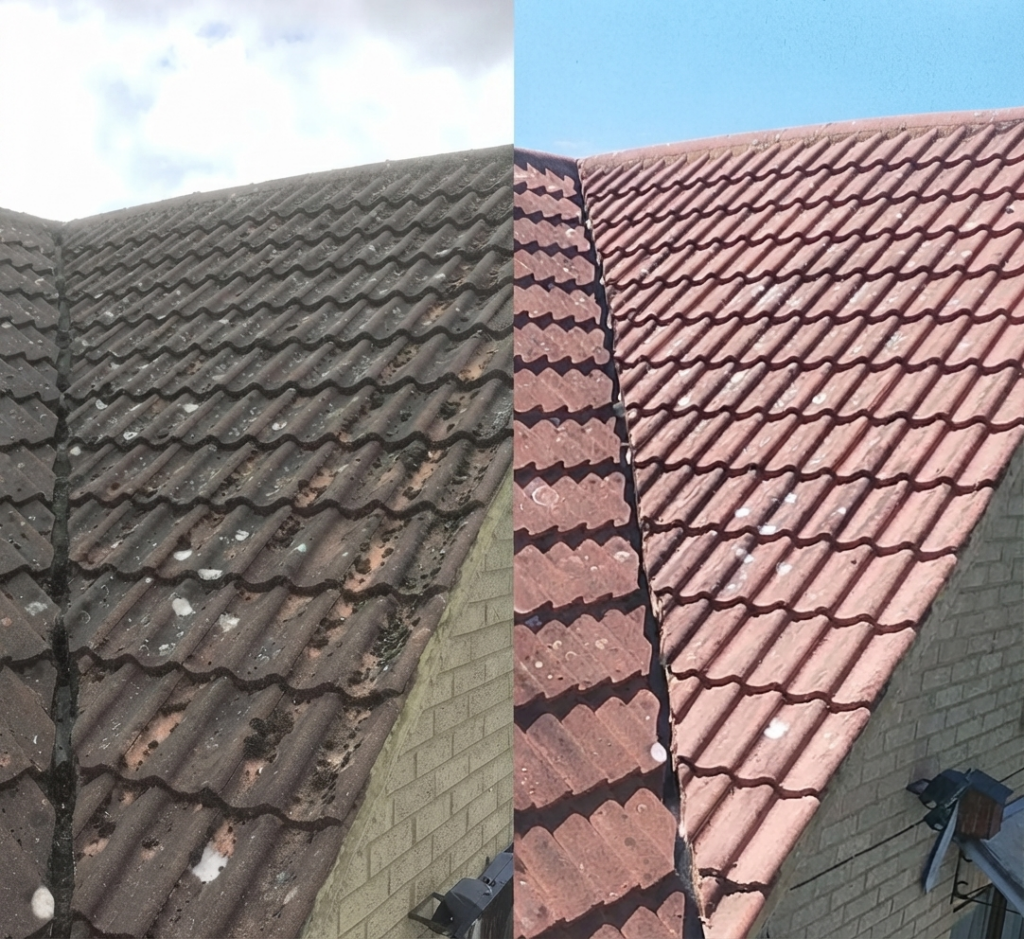
Images from Sky Scrapers Ltd work showing the methods described on this page.
Where this applies locally
Towns where this comes up most often on our patch:
Questions we get asked
Does roof scraping damage tiles?
Not when it is done carefully by hand. Hand tools only touch the moss, whereas high pressure strips the surface of the tile. Any tile already cracked or slipped is photographed and pointed out before work starts.
Is scraping enough on its own?
It removes the visible moss but leaves spores and roots behind. We follow it with a low-pressure biocide wash so regrowth is slowed, and full roof cleans come with a written 24-month biocide guarantee.
Where does all the moss go?
It is bagged and removed from site, and the gutters and downpipes are cleared of anything that fell into them during the job.
How long does a roof scrape take?
Most domestic roofs take one to two days including the gutters and the biocide treatment. We confirm the time for your roof when we quote.
Do you ever use a pressure washer on the roof?
No. We never pressure wash roofs. Moss is removed by hand and treatments go on through a low-pressure soft wash system.
Get your roof scraped by hand
Send a few photographs of the roof from the garden and we will tell you how heavy the moss is and what the job involves. Quotes are free and carry no obligation.
Sky Scrapers Ltd · info@sky-scrapers.co.uk
In short
Roof scraping lifts moss off by hand, leaves the tiles intact, clears the gutters and is finished with a biocide wash. It takes longer than blasting and lasts far better.