
When should you use soft washing on a house or building?
Soft washing is a method, not a single product or a single job. It means applying a cleaning and treatment solution at low pressure, letting it do the work, then rinsing gently. Whether it is the right choice depends entirely on what surface you are cleaning and what is growing on it.
This page is about choosing it: which parts of a house and which kinds of building suit it, where another approach is better, and how to tell the difference when you look at your own property.
Surfaces that suit soft washing
Render, including painted and through-coloured finishes, where green and black staining builds up on shaded walls.
uPVC fascias, soffits and cladding, which scratch and dull if scrubbed hard or blasted.
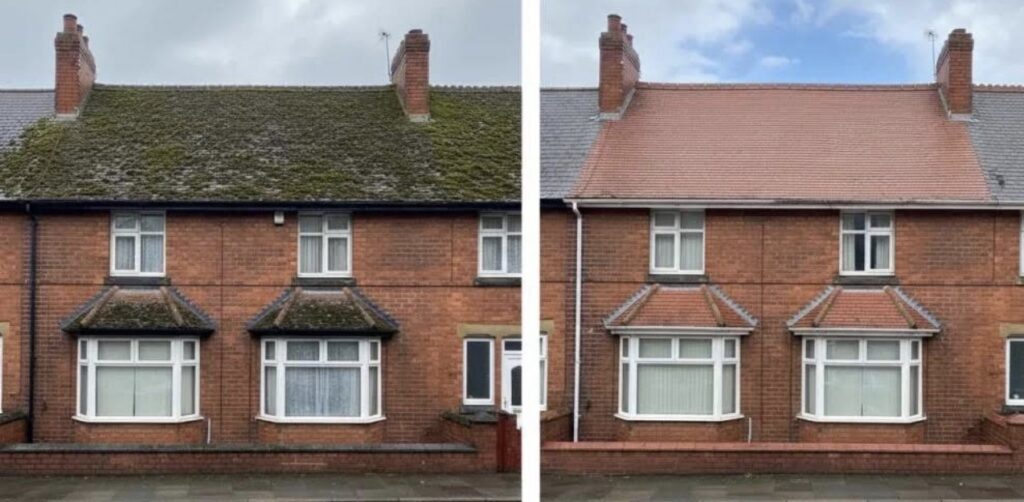
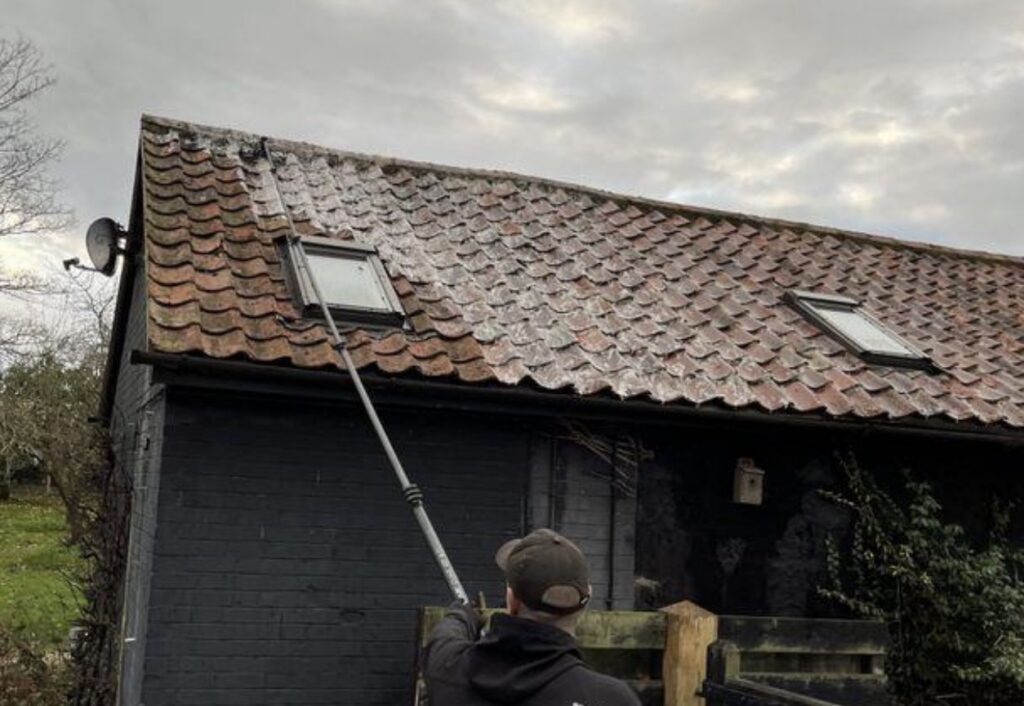
Roof tiles after a hand clean, where the soft wash applies the biocide treatment.
Walls and elevations of larger buildings, where a gentle method covers a big area without damaging finishes.
The deciding question: stain or build-up?
Soft washing is at its best on staining and thin organic films: algae, lichen spotting and the grime that clings to render and plastic. The solution kills the growth and loosens the dirt without anything abrasive touching the surface.
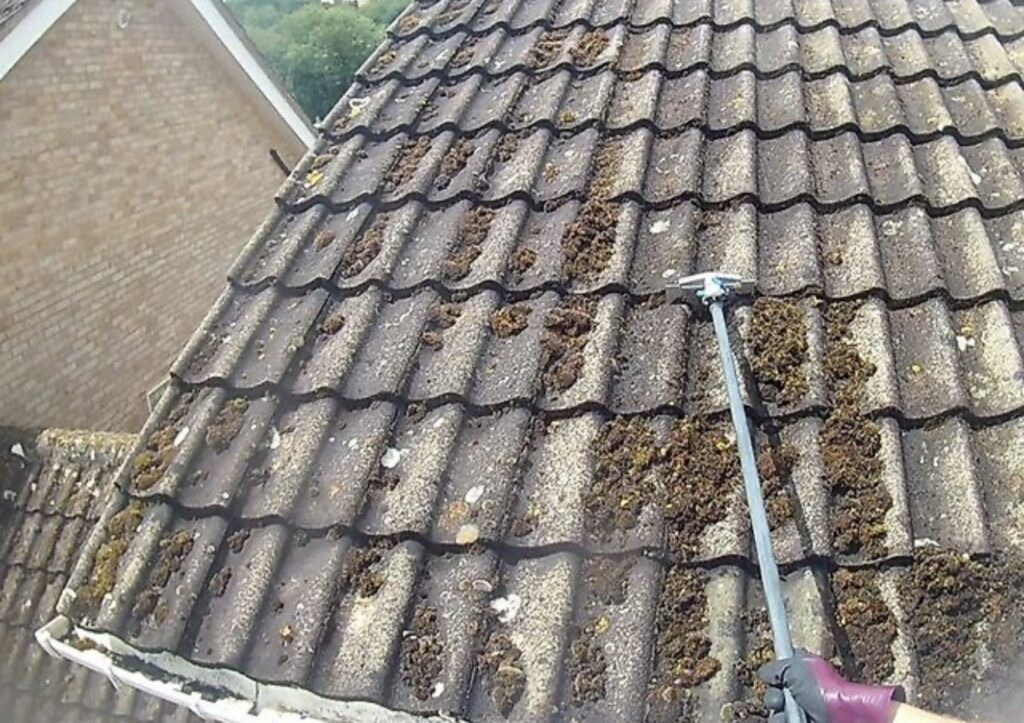
It is not a substitute for physical removal where there is bulk. Thick moss on a roof has to be lifted by hand first, otherwise dead clumps sit on the tiles for months. So on most roofs we hand clean first and soft wash second, while on render and uPVC the soft wash often does the whole job.
Why not just use pressure?
High pressure removes dirt by force, and it removes surface material along with it. On roof tiles that leaves a rougher face that holds water and regrows faster. On render it can open up the finish. We never pressure wash roofs and we do not use pressure on render, which is why soft washing is our method for those surfaces.
Signs your property is a good candidate
Look at the side of the house that gets least sun. Green tinges or black streaks on render, a grey film on white fascias, or dark patches spreading on cladding are all classic soft washing jobs. If your roof has spotty lichen and a faint green film rather than deep moss, a treatment by soft wash alone may be enough.
If you are unsure, photographs are usually enough for us to say which method fits and whether it is worth doing at all.
Not sure if soft washing suits your property?
Send a photo of the wall, fascia or roof and we will tell you which method fits and what it involves. Quotes are free and carry no obligation.
Sky Scrapers Ltd · info@sky-scrapers.co.uk
Commercial and community buildings
The same principles apply to larger buildings. Wide expanses of render or cladding clean well by soft wash, and the low-pressure approach means less water, less mess and less risk to finishes near entrances and windows. Access and working at height are planned properly before any job starts.
Questions to ask before booking
Ask what method will be used on each surface, whether any pressure is involved, how nearby planting and windows are protected, and whether the company is insured for working at height. A clear answer to each tells you far more than a headline price.
Our own photographs
Images from Sky Scrapers Ltd work showing the methods described on this page.
Where this applies locally
Towns where this comes up most often on our patch:
- Softwashing & Biocide Treatment in Milton KeynesBuckinghamshire · MK1
- Softwashing & Biocide Treatment in BedfordBedfordshire · MK40
- Softwashing & Biocide Treatment in AmpthillBedfordshire · MK45
- Soft washing explained, in plain EnglishMethod guide
- Cleaning cladding and uPVC without damaging the finishMethod guide
- Softwashing vs pressure washingComparison
Questions we get asked
Is soft washing only for roofs?
No. It is widely used on render, uPVC fascias and soffits, cladding and building elevations, as well as for applying biocide to roofs.
Can soft washing remove thick moss?
Not on its own. Heavy moss needs lifting by hand first. Soft washing then treats what is left.
Is soft washing safe on render?
Render suits low-pressure treatment. We do not use pressure on render.
How is it different from jet washing?
Jet washing relies on force. Soft washing relies on the solution and a gentle rinse, so the surface is not stripped.
Do you do soft washing on its own?
Yes. It can be booked for render, uPVC or cladding without a roof clean.
In short
Use soft washing for staining and thin growth on render, uPVC, cladding and treated roofs. Where there is bulk, such as thick roof moss, hand cleaning comes first and soft washing finishes the job.