
Cleaning cladding and uPVC without damaging the finish
Cladding and uPVC are sold as maintenance free, which is true only in the sense that they do not need painting. They still collect the same green film, black spotting and traffic grime as anything else on the outside of a building.
The difference is that they are easily marked by careless cleaning, and unlike render or masonry the damage cannot be filled or repainted. This guide covers doing it properly.
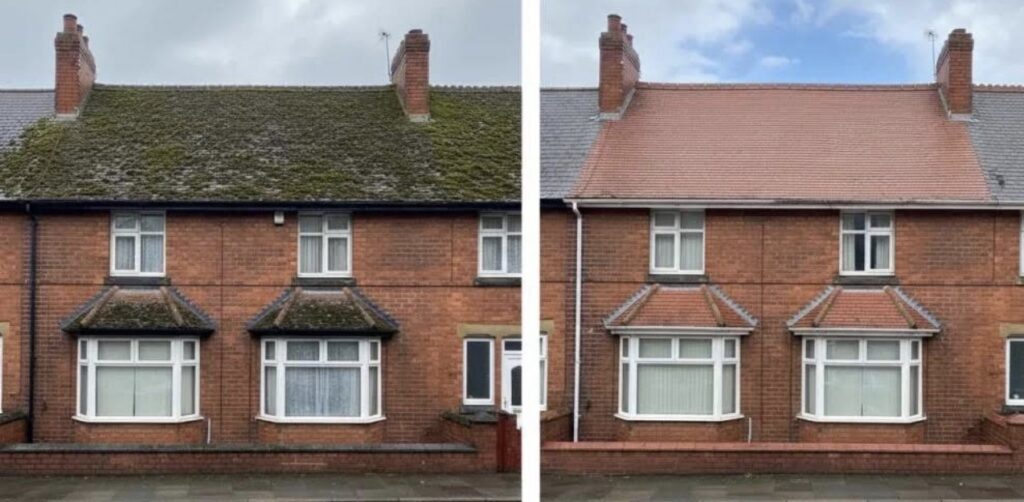
Why cladding goes green and grey
Textured surfaces hold moisture and dust in their grain, and horizontal shiplap profiles have a lip along every board that holds a little water after every shower. That combination is ideal for algae, which is why the green tends to appear as lines rather than patches.
The grey dulling on older uPVC is different. It is a combination of atmospheric grime and oxidation of the surface, and it needs chemical cleaning and sometimes a restorative treatment rather than simply more scrubbing.
Black spotting, particularly near planting, is usually artillery fungus or lichen and is stubborn. It cleans up but occasionally leaves faint marks where it has etched the surface.
The safe method
- Low-pressure application of a biocidal solution suited to the material, left to work rather than forced.
- Soft brushing on textured profiles and along board lips where the film collects, using pole-fed equipment from ground level where possible.
- Gentle rinsing with clean water so no residue dries on the surface or on glazing.
- Windows, seals, vents and any electrical fittings protected before work starts.
- Planting sheeted or wetted down, and the ground cleared afterwards.
Why pressure washing ruins uPVC
A lance held close to uPVC scars the surface permanently. The marks are usually invisible on the day, when everything is wet, and become obvious as bright dull patches once the panel dries.
There is a second, worse problem. Pressure driven into the joints between boards, or around window reveals, pushes water behind the cladding where it has no route out. On insulated cladding systems that is a serious matter rather than a cosmetic one.
Composite and timber cladding suffer differently: pressure raises the grain, leaving a rough surface that then holds dirt faster than it did before.
Fascias, soffits and guttering
The uPVC most homeowners notice first is the fascia and soffit line, because the green streaks sit right under a clean roof line and directly above the walls. Cleaning them at the same time as the gutters is the obvious move, since the access is already set up.
The outside face of the guttering itself is worth doing too. It is the element that shows dirt most and it takes almost no extra time when the run is already being cleared.
What to expect from the result
Most uPVC and cladding comes back to something very close to its original appearance the same day, because the surface is smooth enough for the film to lift and rinse cleanly.
Genuinely oxidised, chalky uPVC is the exception. It cleans and looks much better, but the deep colour will not fully return without a restorative product, and we will say so before starting rather than after.
Scratches, previous pressure-wash scarring, warped boards and failed seals are not cleaning problems and we will point them out rather than pretending otherwise.
Keeping it clean
Keep planting off the elevation, keep gutters clear so water is not running down the face, and have shaded elevations treated every couple of years. On most properties that is enough to avoid the surface ever getting properly dirty again.
If one elevation always looks worse, that is where the light and airflow are poorest, and it is the one to treat more often rather than harder.
Our own photographs
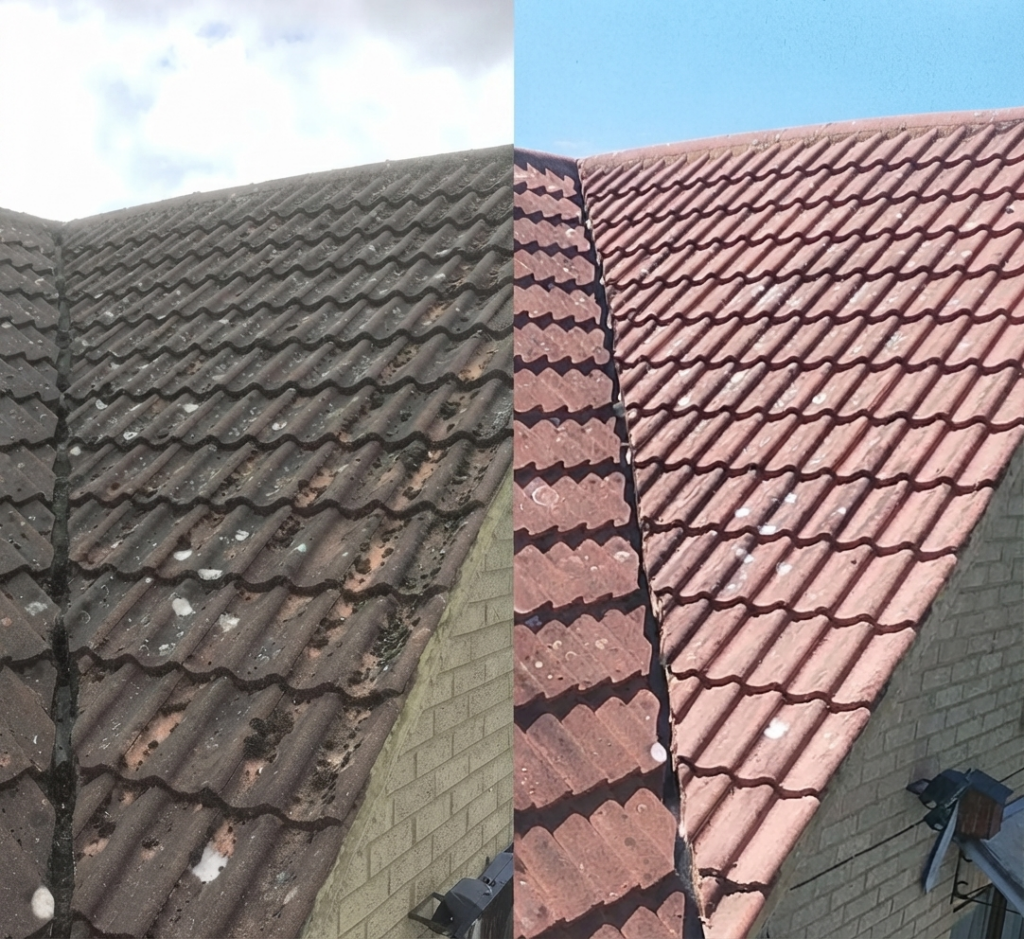
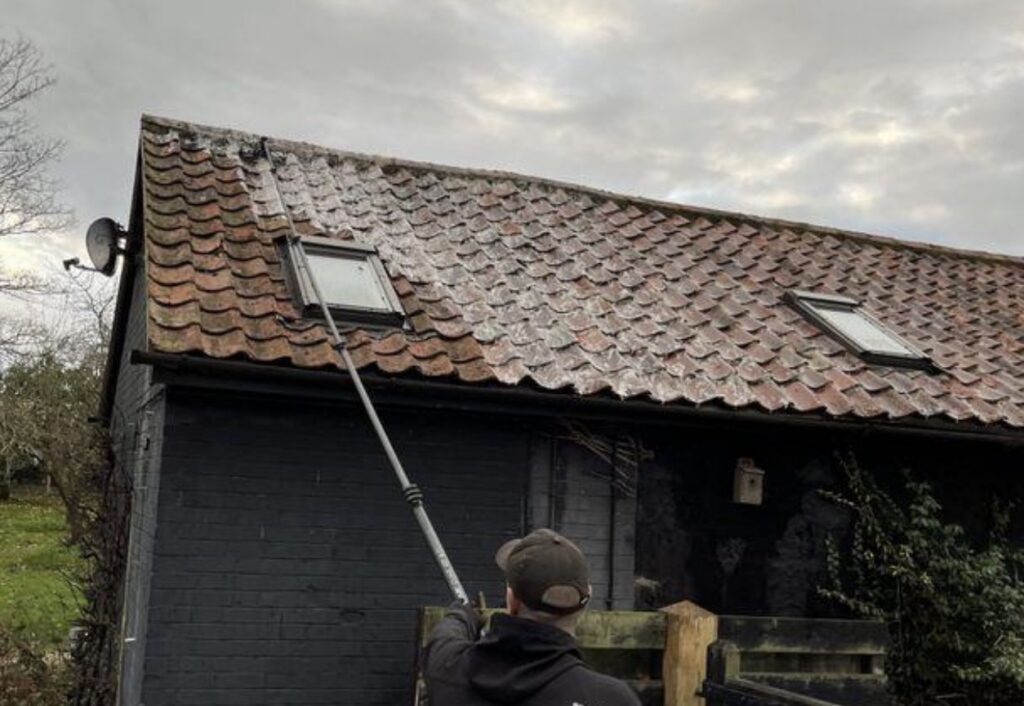
Images from Sky Scrapers Ltd work showing the methods described on this page.
Where this applies locally
Towns where this comes up most often on our patch:
- Softwashing & Biocide Treatment in Milton KeynesBuckinghamshire · MK1
- Softwashing & Biocide Treatment in BedfordBedfordshire · MK40
- Softwashing & Biocide Treatment in LutonBedfordshire · LU1
- uPVC fascias and soffitsCommon problem
- Fascia and soffit careMaintenance guide
- How does soft washing work?Method guide
Want a professional to handle it?
Get the cladding and uPVC looking right
Low-pressure cleaning with everything protected, usually done alongside gutters and fascias in one visit.
Sky Scrapers Ltd · info@sky-scrapers.co.uk
Questions we get asked
Can uPVC be pressure washed?
It should not be. Pressure scars the surface permanently and forces water behind joints and reveals. Everything is done at low pressure with the right solution instead.
Will old, chalky uPVC come back to new?
Not entirely with cleaning alone. It will look markedly better, and we will tell you honestly if oxidation means the deep colour will not fully return.
Do you clean the fascias while doing the gutters?
Yes, and it is the sensible time to do it because the access is already in place, so it costs less than a separate visit.
Is the treatment safe around planting?
With sheeting or pre-wetting, yes. We take the same precautions here as with any exterior soft washing.
How often should cladding be cleaned?
Every one to two years on most properties, more often on shaded elevations or where planting is close to the wall.
In short
Cladding and uPVC hold algae in their texture and along board lips. Low-pressure treatment and gentle brushing restore them; a pressure lance scars them permanently and pushes water behind the system.
Related services
Covering Bedfordshire and surrounding counties