
Slate roofs: hand cleaned, treated, and never touched with pressure
Natural slate is the covering we are most cautious with and the one most often damaged by cleaning. A well-laid Welsh slate roof can outlive several generations of concrete tiles, provided nobody attacks it with a lance.
We see slate throughout the Victorian and Edwardian streets of Bedford, Luton and Hitchin, and on the older cores of towns such as Leighton Buzzard and Sandy.
Why pressure is catastrophic on slate
- Slate is laid in courses held by nails; force at the tail lifts the slate and works the fixing loose.
- Water driven up under the lap goes straight past the headlap into the roof space.
- Delaminating slate splits along its natural layers under pressure, and once split it is finished.
- Nail fatigue in an older roof means slates are already fragile at the fixing before anyone touches them.
How we work on slate
By hand, along the courses, using soft tools and working downwards so nothing is lifted against the lap. Growth on slate typically sits along the joints and at the tail rather than in mats, so it is teased out rather than scraped off.
Treatment afterwards is low pressure and even. On a slate roof the treatment matters as much as the physical work, because there is very little you can safely do mechanically.
When we advise against cleaning
Where slates are already delaminating, where multiple slates have slipped, or where the roof shows widespread nail fatigue, cleaning is not the priority and can make things worse. In that situation the honest answer is a roofer's assessment first, and we will say so.
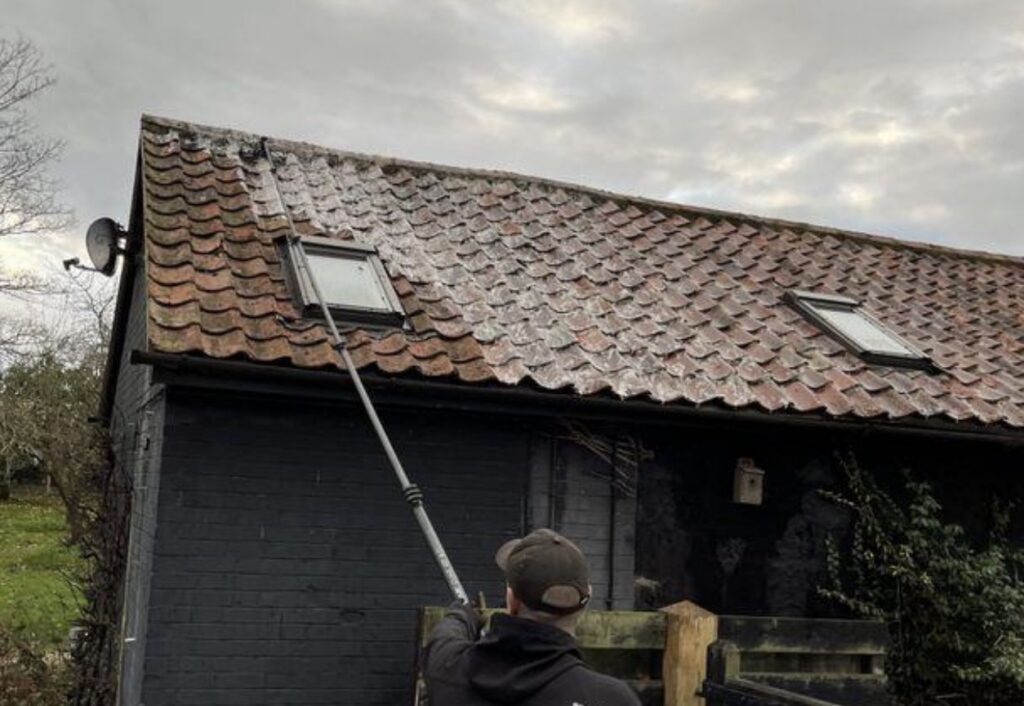
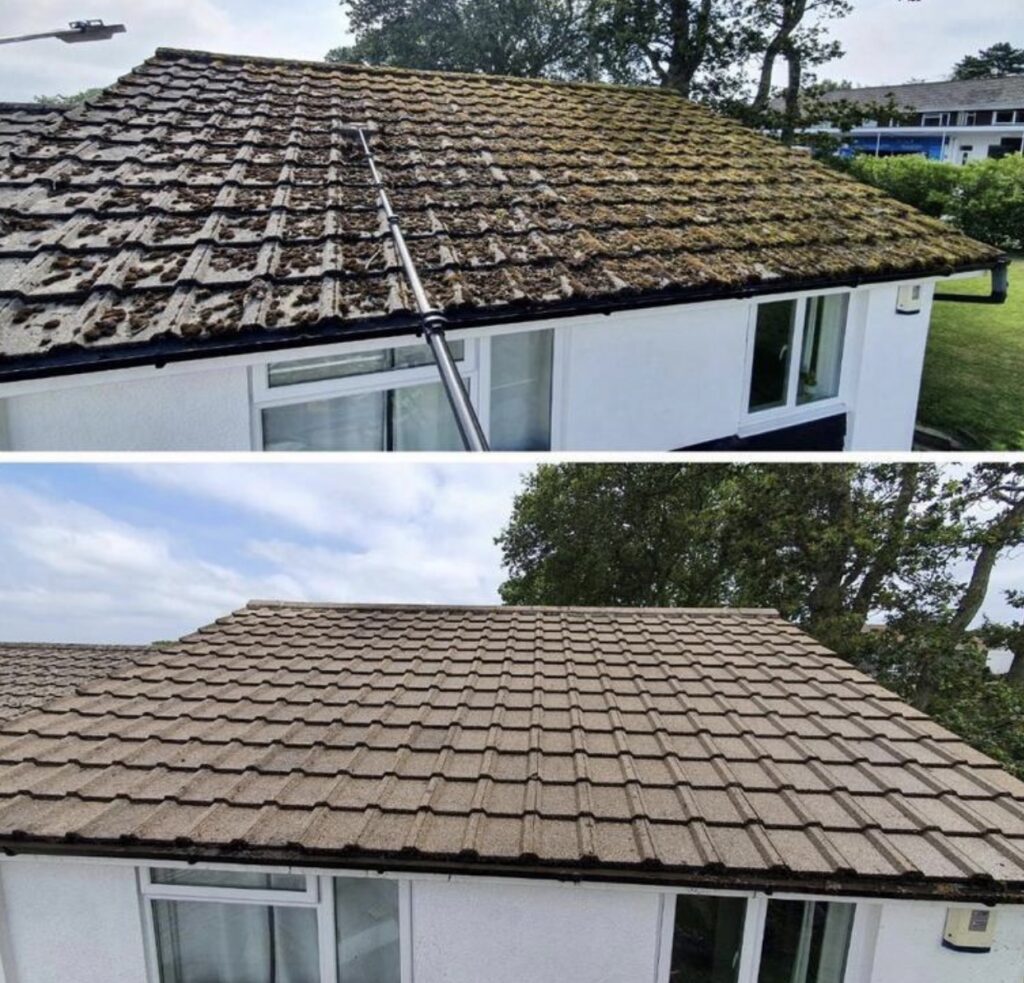
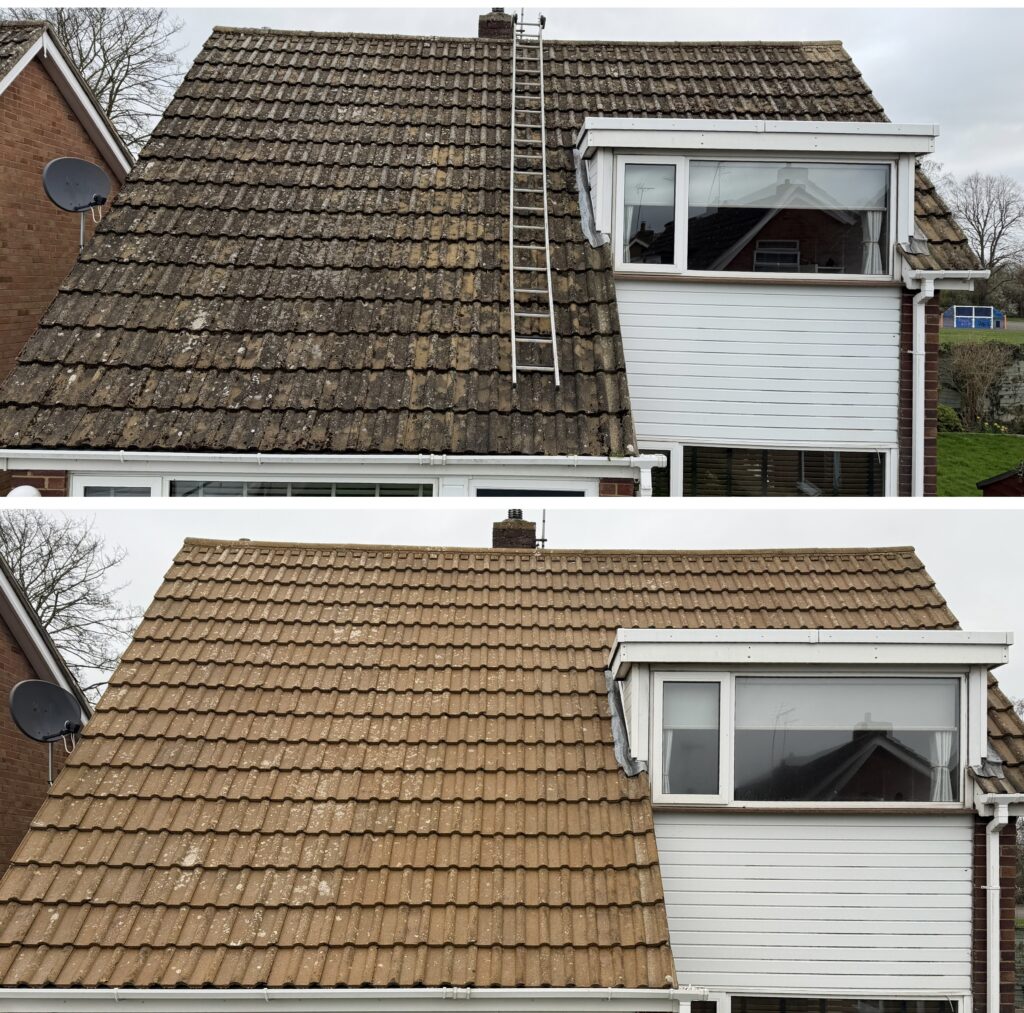
Our own photographs
Images from Sky Scrapers Ltd work showing the methods described on this page.
Where this applies locally
Towns where this comes up most often on our patch:
- Hand Roof Cleaning in BedfordBedfordshire · MK40
- Hand Roof Cleaning in LutonBedfordshire · LU1
- Hand Roof Cleaning in HitchinHertfordshire · SG4
- Hand Roof Cleaning in Leighton BuzzardBedfordshire · LU7
- Hand Roof Cleaning in SandyBedfordshire · SG19
- Period and listed property roofs cleaned entirely by handBuilding type
- Clay peg, plain and pantile roofs cleaned without breaking nibsRoof covering
- Crusty lichen on roof tiles and why it is harder to shift than mossCommon problem
Questions we get asked
Can slate roofs be cleaned at all?
Yes, carefully and by hand, followed by low-pressure treatment. What they cannot take is any form of pressure washing.
How do I know if my slate is natural or man-made?
Natural slate varies subtly in thickness, colour and texture between slates; fibre cement slate is uniform. Both are hand cleaned, but fibre cement needs even softer handling because of its surface coating.
What is nail fatigue?
Corrosion of the fixing nails over decades, which lets slates slip even though the slate itself is sound. It is a roofer's job, and cleaning a roof with widespread nail fatigue is the wrong priority.
Will cleaning make an old slate roof watertight?
No. Cleaning removes growth. If water is getting in, that is a repair question and needs a roofer.
Ask about your slate roof
Tell us the approximate age of the property and send a photo of the pitch, and we will tell you honestly whether cleaning is the right move.
Sky Scrapers Ltd · info@sky-scrapers.co.uk
In brief
Hand work along the courses, low-pressure treatment, and a willingness to say no where the roof needs a roofer instead. Never pressure, on any slate.