Period and listed property roofs cleaned entirely by hand
Historic roof coverings are the ones most often ruined by cleaning. Clay peg tiles, handmade plain tiles and natural slate all have thin, brittle edges and original fixings that will not survive a pressure lance.
Our whole method — hand scraping, brushing and low-pressure treatment — was built around coverings like these, which is why we are comfortable working on conservation-area property in towns such as Hitchin, Ampthill and Newport Pagnell.
Coverings we handle differently
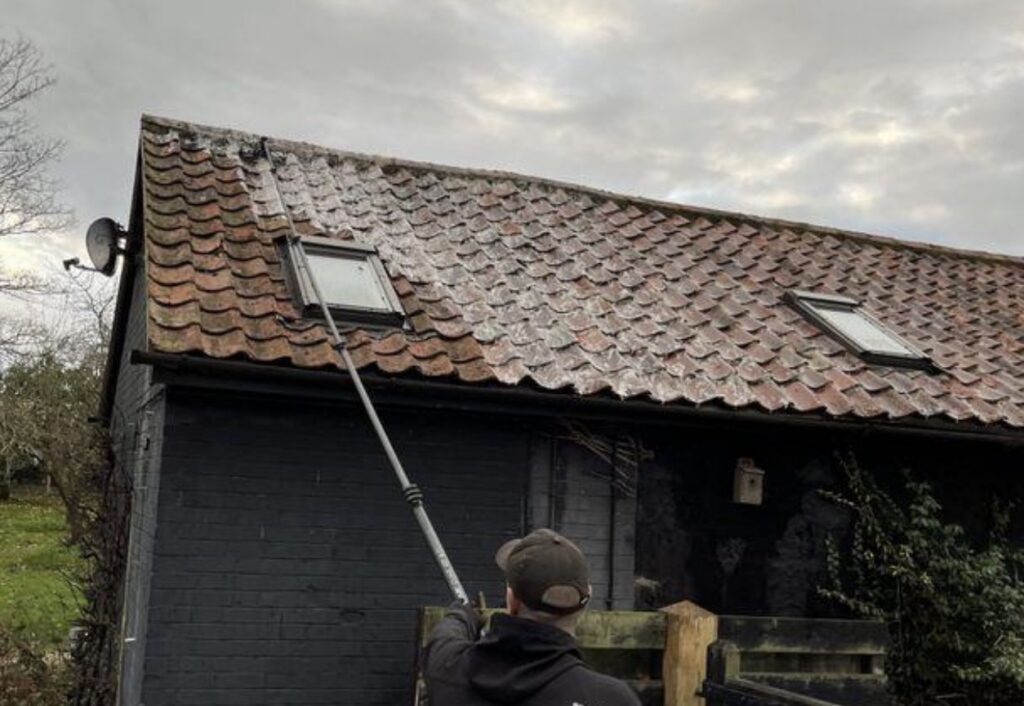
- Clay peg and handmade plain tiles: cleaned along the courses, with growth teased out of the overlaps rather than scraped hard.
- Natural Welsh and Westmorland slate: hand work and treatment only, because pressure lifts slates and works nails loose.
- Stone slate: assessed individually — some are too delaminated to clean and we will say so.
- Lime-bedded ridges and hips: growth here usually means the bedding needs a roofer, not a cleaner.
Working inside a conservation area
Conservation-area and listed properties usually sit on tight town-centre plots with restricted access, neighbouring boundaries within a metre or two, and pavement frontages. Set-up takes longer than the cleaning does: sheeting, boundary protection and planning the access route.
We do not carry out any work that alters the appearance or fabric of a listed building. Cleaning organic growth from the surface is maintenance, but if what a roof actually needs is re-bedding or re-fixing, that is a roofer's job and we will tell you.
The honest limits
Some period roofs should be left alone. Where slates are delaminating, where nail fatigue has already dropped courses, or where the tiles are so soft that cleaning would remove material, the right advice is to leave it and get a roofer's opinion. We would rather lose the job than take the covering apart.
Talk to us about a period roof
Tell us the covering type and roughly when the property was built and we can advise whether cleaning is the right call before quoting.
Sky Scrapers Ltd · info@sky-scrapers.co.uk
Our own photographs
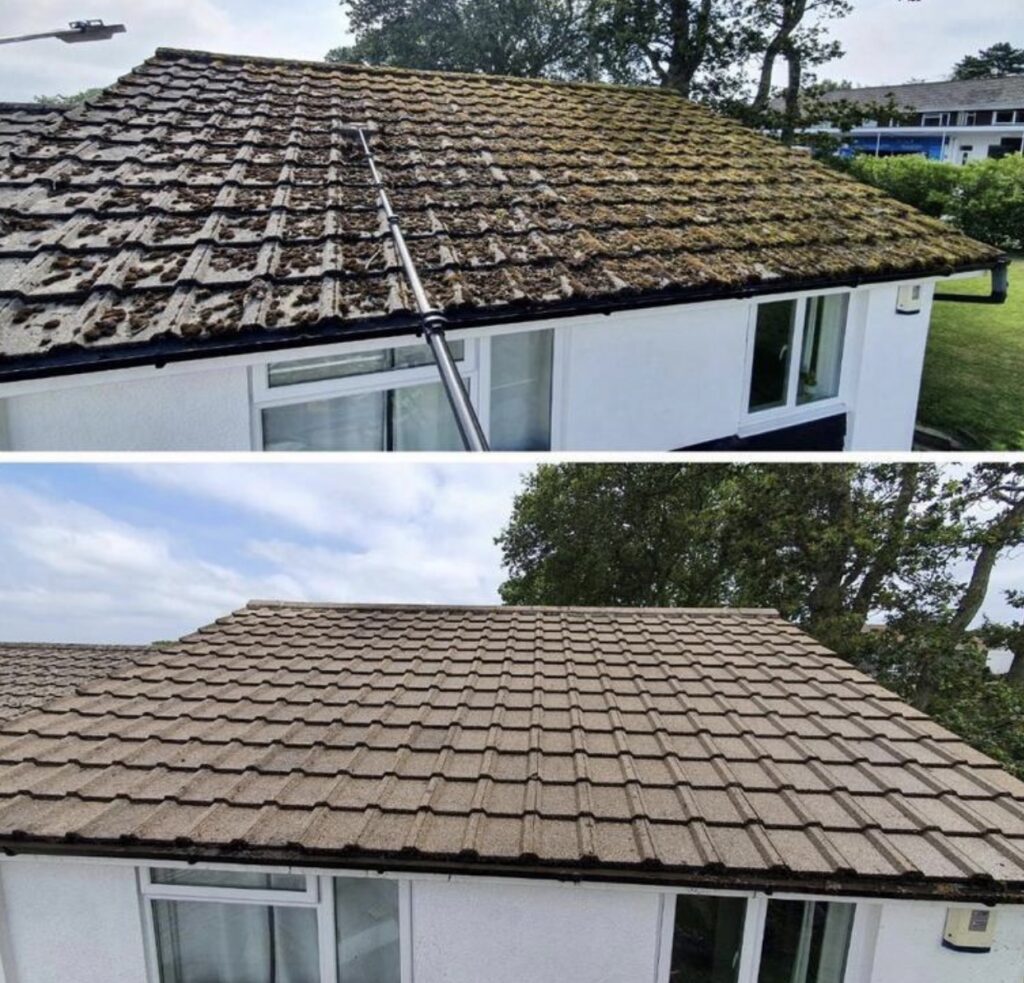
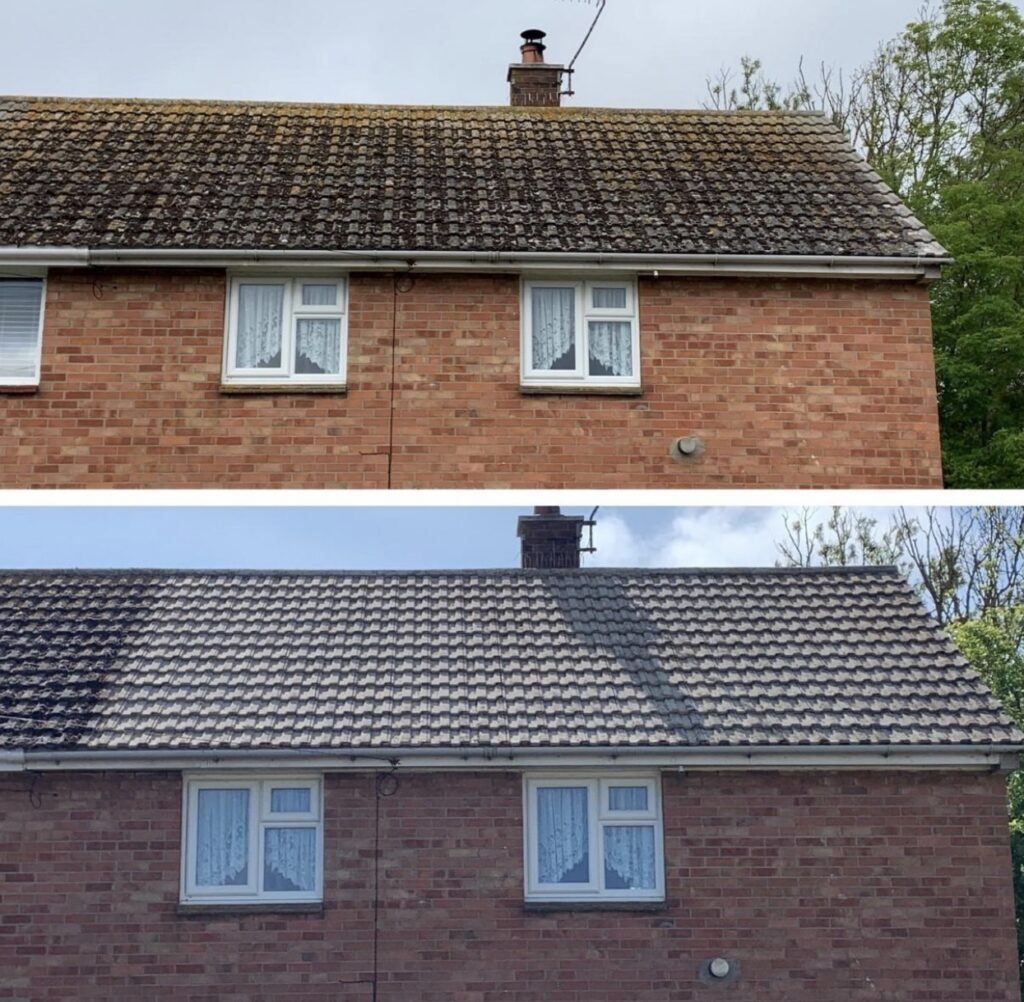
Images from Sky Scrapers Ltd work showing the methods described on this page.
Where this applies locally
Towns where this comes up most often on our patch:
- Hand Roof Cleaning in HitchinHertfordshire · SG4
- Hand Roof Cleaning in Letchworth Garden CityHertfordshire · SG6
- Hand Roof Cleaning in Newport PagnellBuckinghamshire · MK16
- Hand Roof Cleaning in AmpthillBedfordshire · MK45
- Slate roofsRoof covering
- Clay peg, plain and pantile roofs cleaned without breaking nibsRoof covering
- Crusty lichen on roof tiles and why it is harder to shift than mossCommon problem
Questions we get asked
Do you clean listed buildings?
We clean organic growth from listed and conservation-area roofs using hand methods only. We do not alter the fabric, and where a roof needs structural or re-bedding work we refer you on rather than working around it.
Is pressure washing ever acceptable on clay or slate?
No. Clay peg tiles are brittle at the nib and slate splits and works loose under pressure. Both are hand-clean-only coverings as far as we are concerned.
Will cleaning make old tiles look new?
No, and it should not. The aim on a period roof is to remove growth and debris while keeping the weathered patina that makes the covering look its age.
Can you work on a narrow town-centre frontage?
Yes. Most of our conservation-area work is front-elevation only with pavement and boundary protection planned in advance.
The short version
Old coverings need hand work, patience and honest advice about when to stop. If your roof is clay, slate or stone, the method matters far more than the price.