
Clay peg, plain and pantile roofs cleaned without breaking nibs
Clay tiles are beautiful, long-lived and easily broken. The nib that hangs the tile on the batten is the weak point, and a handmade tile that has been on a roof for a century is a very different proposition from a modern machine-made one.
They are common across our patch — the older cores of Ampthill, Hitchin and Newport Pagnell, the Arts and Crafts stock in Letchworth Garden City, and farm conversions throughout the surrounding villages.
What makes clay different
- The nib is brittle: any point loading or careless footing snaps tiles at the hanging edge.
- Handmade tiles vary in camber and thickness, so they never sit uniformly and cannot be worked uniformly.
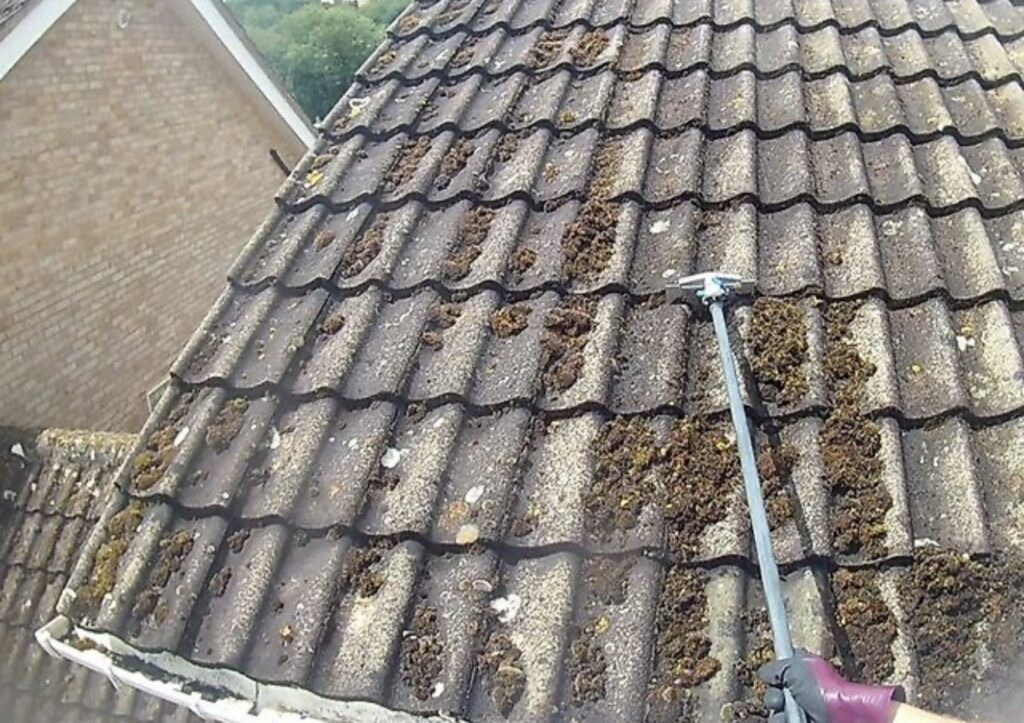
- Growth sits in the overlaps rather than on the face, so it has to be teased out, not scraped across.
- Old clay is porous, which is why lichen anchors into it so firmly.
How the work is done
Load is spread with roof ladders and staging so no weight goes through individual tiles. Growth is removed along the courses with hand tools sized to the overlap, and anything that resists is left for the biocide rather than forced.
Broken and slipped tiles are photographed and reported. On a clay roof there are almost always a few, and it is better for you to know than for us to quietly work around them.
Pantiles specifically
Pantiles have a deep S-profile that channels water quickly but also collects debris in the troughs. On conversions and older rural property, clearing the troughs matters as much as cleaning the face, because a blocked trough puts water sideways under the next tile.
Get a clay roof looked at properly
Tell us roughly when the property was built and whether the tiles are handmade — both change how we approach the job.
Sky Scrapers Ltd · info@sky-scrapers.co.uk
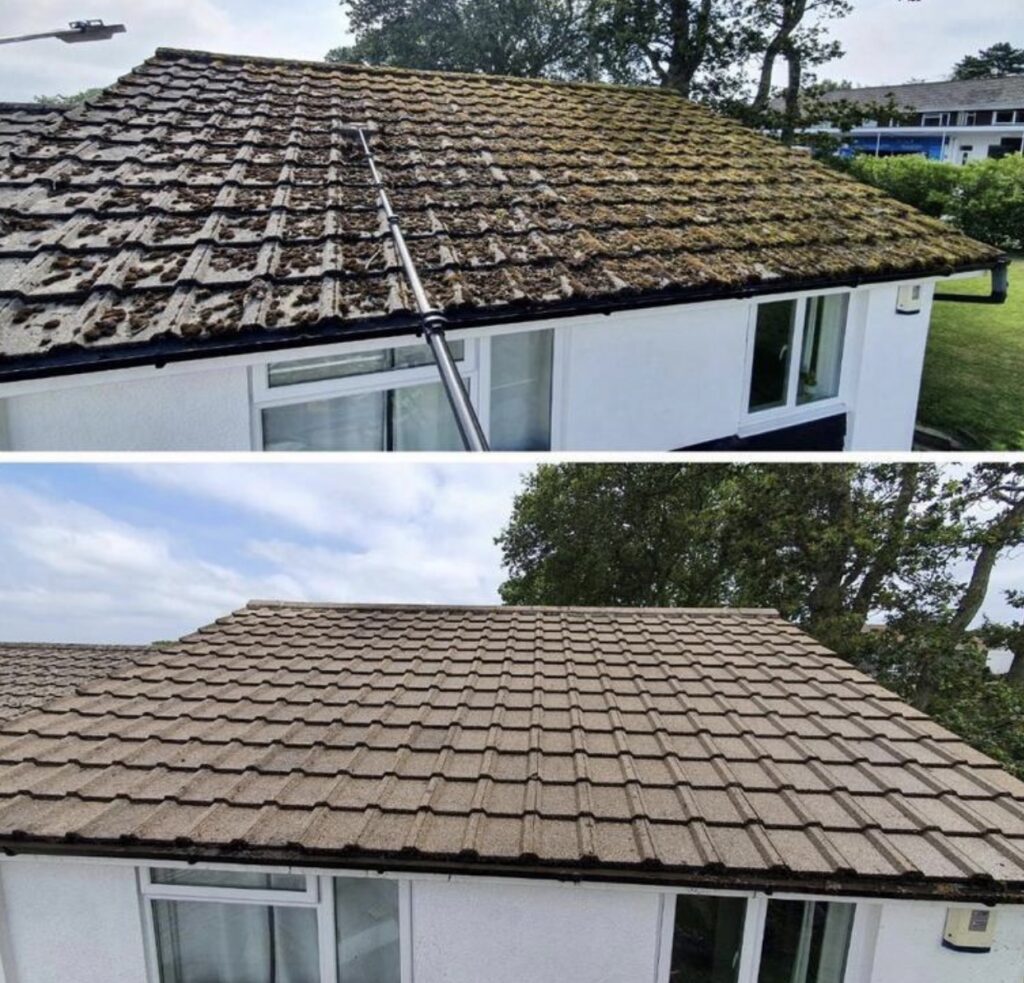
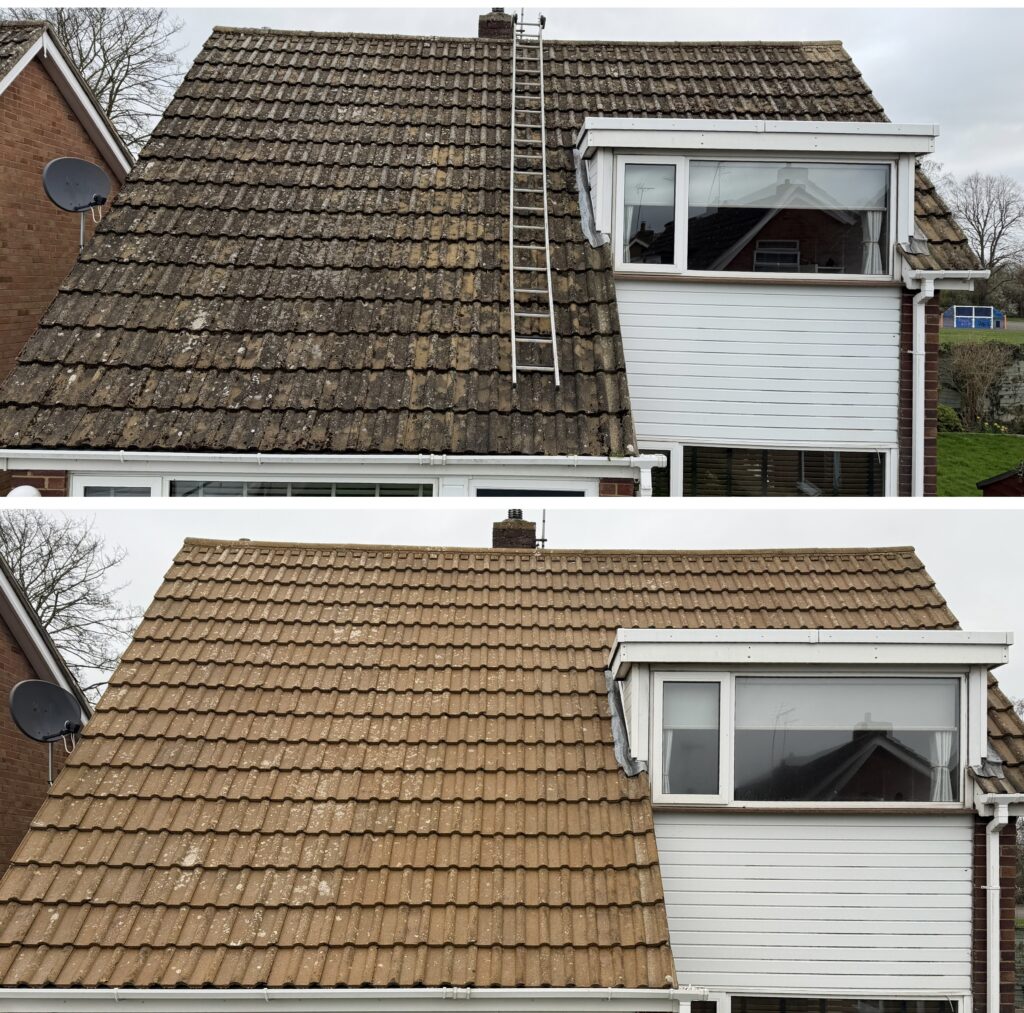
Our own photographs
Images from Sky Scrapers Ltd work showing the methods described on this page.
Where this applies locally
Towns where this comes up most often on our patch:
- Roof Moss Removal in AmpthillBedfordshire · MK45
- Roof Moss Removal in HitchinHertfordshire · SG4
- Roof Moss Removal in Letchworth Garden CityHertfordshire · SG6
- Roof Moss Removal in Newport PagnellBuckinghamshire · MK16
- Roof Moss Removal in SheffordBedfordshire · SG17
- Period and listed property roofs cleaned entirely by handBuilding type
- Slate roofsRoof covering
- Barn conversion roofsBuilding type
Questions we get asked
Are clay tiles more fragile than concrete?
At the nib, generally yes, particularly on older handmade tiles. That is why load spreading and hand tools matter so much on clay.
Can moss be removed from tile overlaps?
It is teased out along the courses rather than scraped across them. Anything that will not come away cleanly is left for the biocide to kill rather than forced.
Do you replace tiles you break?
We work to avoid it, and we report anything already broken with photographs before we start. Matching old handmade tiles is a roofer's job and we will point you to one.
Will an old clay roof look uniform after cleaning?
No, and it should not. Handmade clay weathers unevenly by nature, and evening it out would mean taking surface off the tiles.
Summary
Spread the load, work along the courses, tease growth out of the overlaps, treat the rest and report what is already broken. Clay rewards patience and punishes force.