Mould, mildew or fungus on your roof: what you are actually looking at
People describe the growth on their roofs in all sorts of ways. Green mould, black mildew, white spots, yellow fungus. The words are understandable, but on a tiled or slate roof in England the culprit is almost never a true mould. It is nearly always one of three things: algae, lichen or moss.
Getting the name right matters because each one behaves differently and needs a slightly different approach. Here is how to tell which you have, and what can be done about it.
Green film or black streaks: algae
A flat green tinge across the tiles, or dark streaks running down the slope, is algae. It sits on the surface, has no real body to it and spreads fastest on damp, shaded slopes. It is mostly cosmetic, but it is often the first stage before lichen and moss move in, and it makes a roof look much older than it is.
White, grey or yellow spots: lichen
Round crusty patches in white, pale grey, yellow or orange are lichen. People often call these fungus, and in a sense they are right: lichen is a partnership between a fungus and an alga. It grips the tile surface very tightly and grows slowly, which is why spots can look the same for years.
Lichen should not be scraped hard or blasted off. Doing so damages the tile surface. It responds to a biocide treatment instead, dying back and weathering off gradually.
Soft green cushions: moss
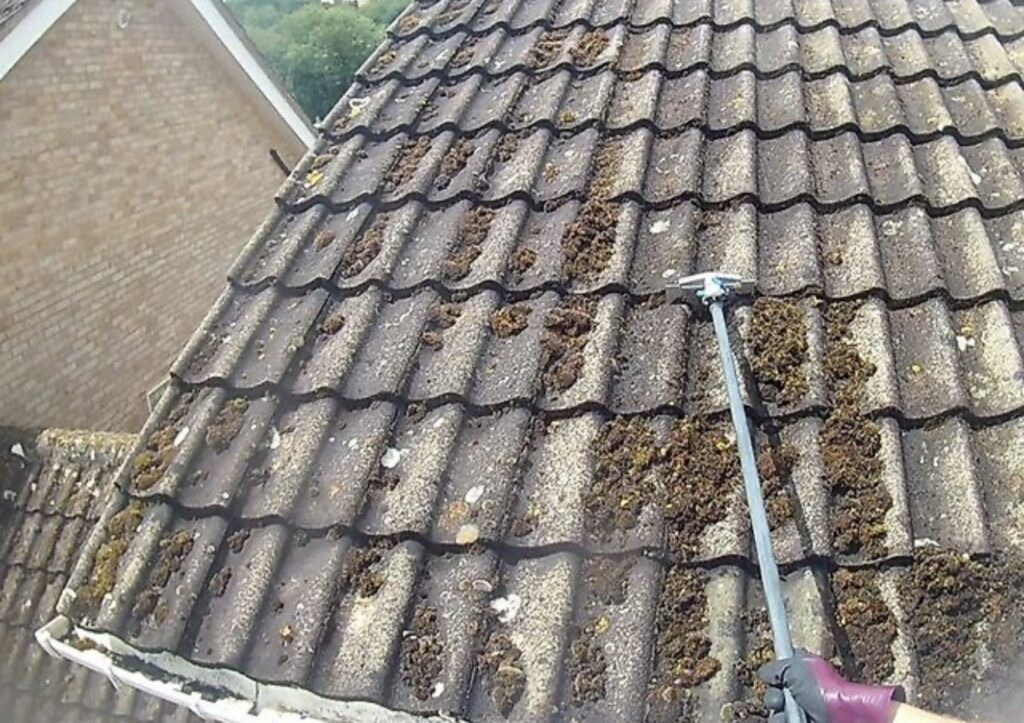
Raised, spongy clumps are moss. Unlike algae and lichen it holds a lot of water, sheds into gutters, and can lift the edges of tiles over time. It is removed by hand and the roof then treated to slow regrowth.
A quick way to check from the ground
- Flat and smeared: algae.
- Crusty, circular, pale or yellow: lichen.
- Raised, soft and cushion-shaped: moss.
- A mix of all three is common on a roof that has not been cleaned for many years.
How each is dealt with
Moss is lifted by hand, bagged and removed, and the gutters cleared of what falls. Lichen and algae are treated with a biocide applied at low pressure by soft wash, which kills the growth and its spores. On most roofs the answer is a combination: hand clean, then treat. We never pressure wash roofs, because it roughens the tiles and brings growth back faster.
Full roof cleans come with our written 24-month biocide guarantee.
Why it is worth dealing with early
Algae on its own is mainly a cosmetic issue, but it holds moisture on the tile surface and gives lichen and moss an easier start. A roof treated while the growth is still a thin film needs less work than one left until moss has built up in the lower courses and gutters. If you are thinking of selling, a clean roof also makes a noticeable difference to how the house looks from the street.
Our own photographs
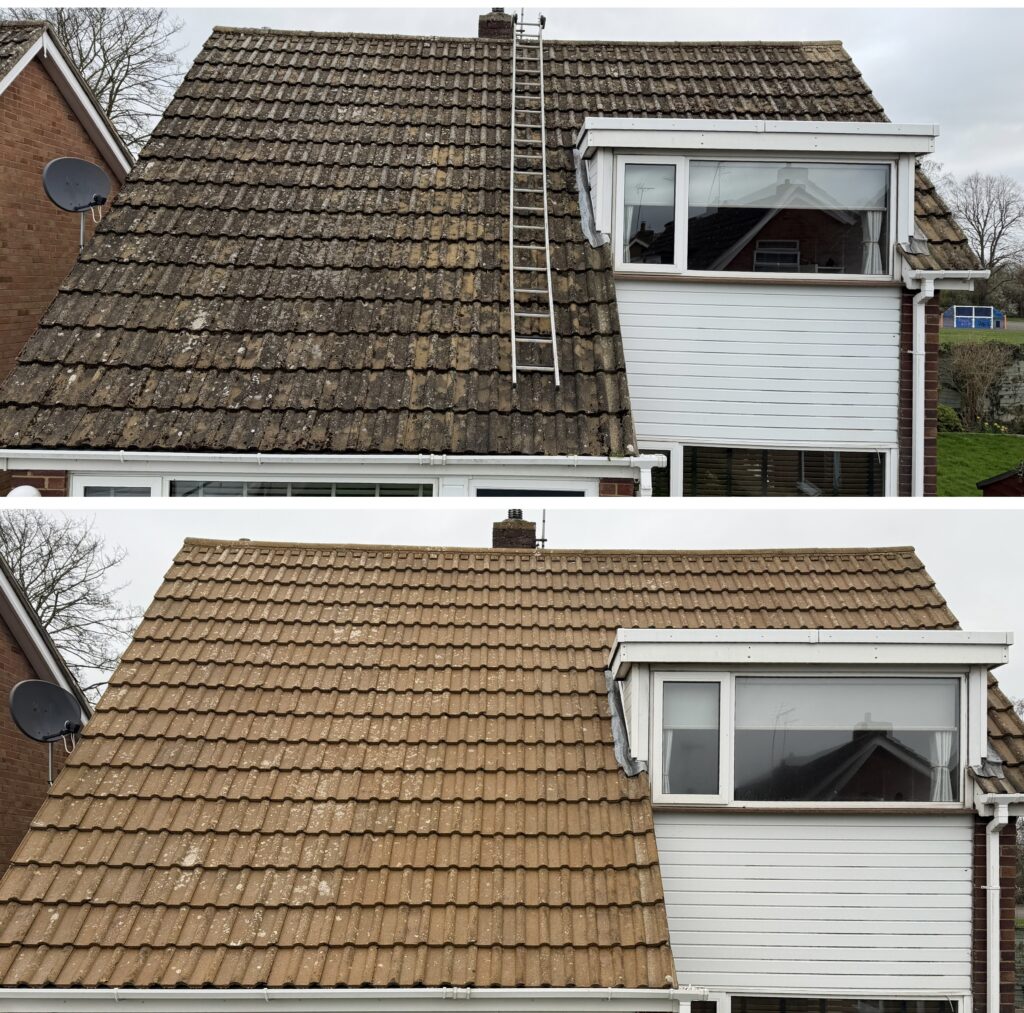
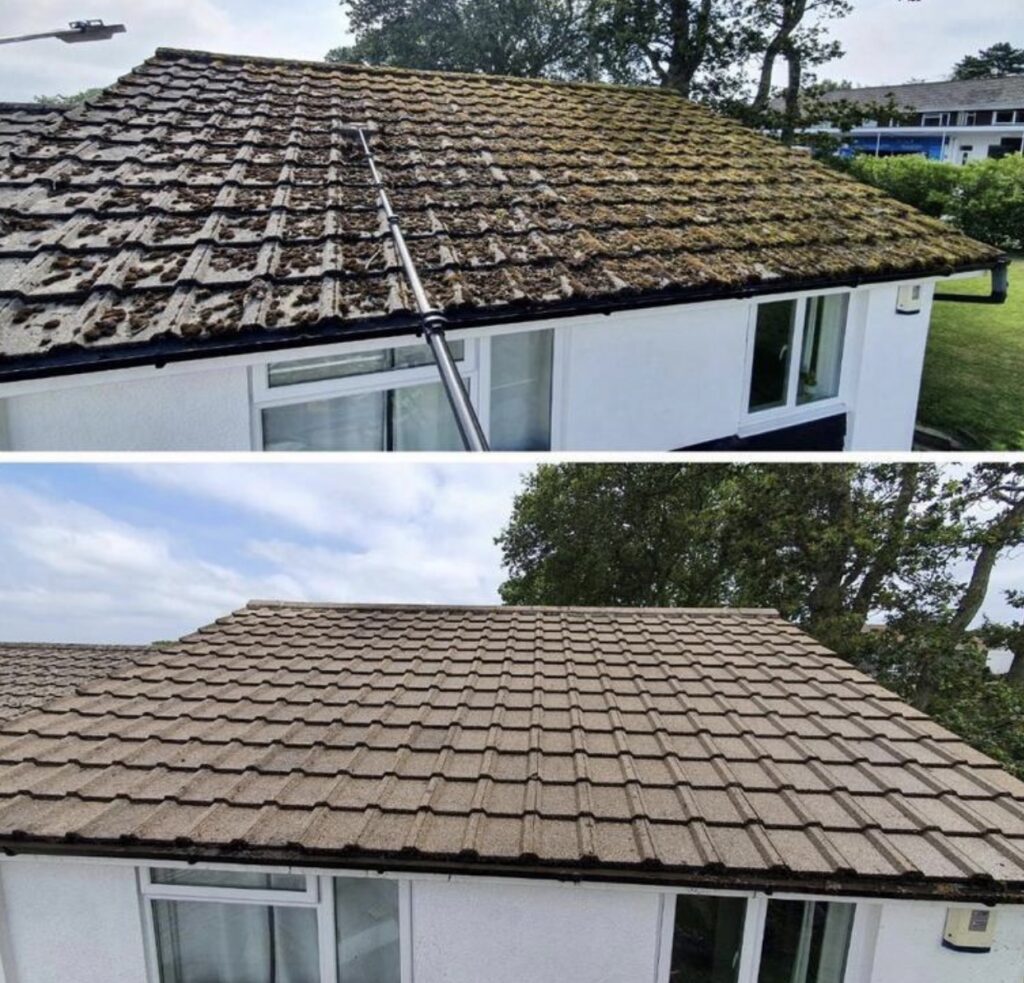
Images from Sky Scrapers Ltd work showing the methods described on this page.
Where this applies locally
Towns where this comes up most often on our patch:
- Hand Roof Cleaning in LutonBedfordshire · LU1
- Hand Roof Cleaning in FlitwickBedfordshire · MK45
- Hand Roof Cleaning in Milton KeynesBuckinghamshire · MK1
- Algae, moss or lichenGuide
- Crusty lichen on roof tiles and why it is harder to shift than mossCommon problem
- Black streaks running down your roof tilesCommon problem
Questions we get asked
Is the mould on my roof harmful to my health?
What looks like mould on the outside of a roof is almost always algae, lichen or moss. It is a roof maintenance issue rather than the kind of indoor mould people worry about.
Why are there white spots on my roof tiles?
Pale circular spots are usually lichen. They respond to a biocide treatment and fade over the following weeks.
Can I scrub lichen off myself?
We would not advise it. Lichen grips hard, scrubbing damages the tile face, and working on a roof carries real risk.
Does black streaking mean my tiles are failing?
Not usually. Black streaks are normally algae on the surface and can be treated.
Do you need to see the roof to tell?
A few clear photographs from the ground are usually enough for us to identify the growth and suggest a treatment.
Not sure what is growing on your roof?
Send us a photo and we will tell you whether it is algae, lichen or moss and what it would take to deal with it. Free, no obligation.
Sky Scrapers Ltd · info@sky-scrapers.co.uk
In short
Roof mould is almost always algae, lichen or moss. Flat and smeared is algae, crusty spots are lichen, soft cushions are moss. Moss is hand cleaned, the rest is treated with biocide, and roofs are never pressure washed.