Algae, moss or lichen: telling roof growth apart
Homeowners often use 'moss' as a catch-all term for anything green or dark growing on a roof, but algae, moss and lichen are genuinely different organisms with different appearances, different growth habits, and different responses to cleaning and treatment. Knowing which one you are looking at helps set realistic expectations for what a clean can achieve.
This page sets out the visual differences and the practical implications of each, without getting into unnecessary technical detail that does not change how the roof gets treated.
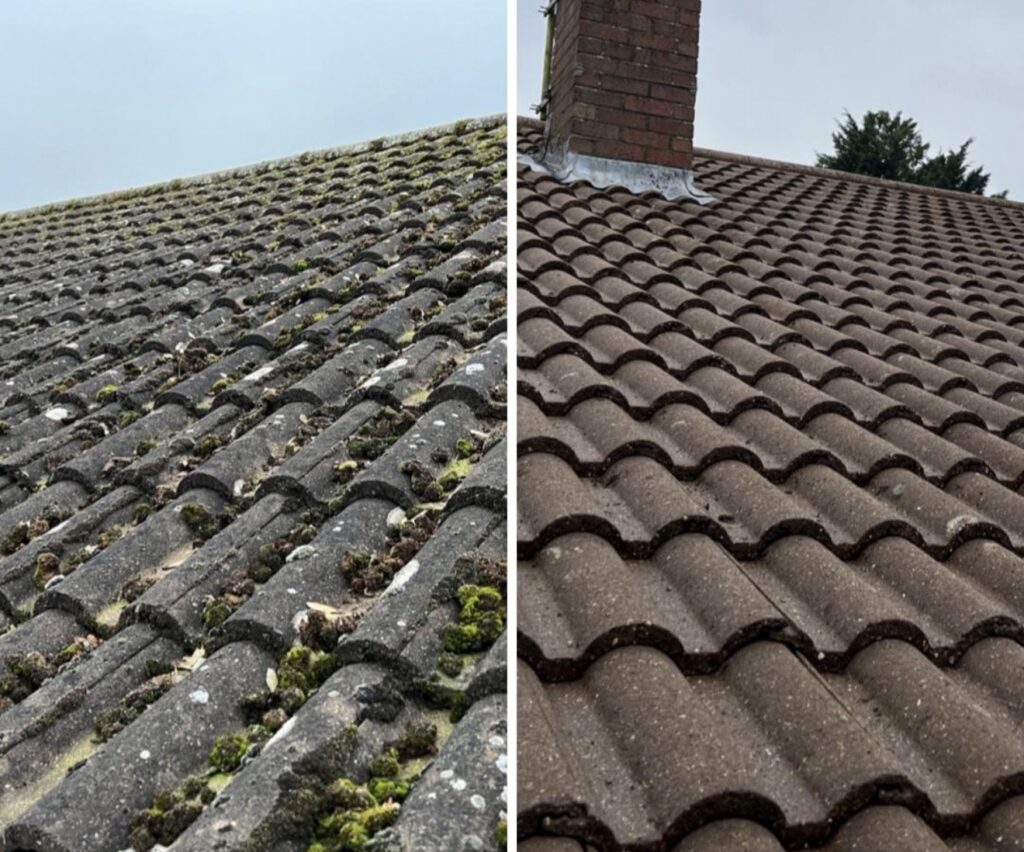
How to tell them apart
Algae — typically appears as a thin green film or black streaking, especially on pale tiles running down from the ridge; it has no visible structure and looks like staining rather than growth.
Moss — appears as distinct, cushion-like green or dark green clumps with visible texture, usually thickest at the eaves and in shaded, damp areas.
Lichen — appears as flat, crusty patches, often grey, yellow-green or orange, adhered tightly to the tile surface with a rougher, more textured edge than algae staining.
Why the distinction changes expectations
Algae film generally responds well to softwash treatment and lifts or fades over the following weeks with minimal physical scraping needed. Moss, because it has a physical root-like structure gripping the tile surface and overlaps, usually needs to be cleared by hand before treatment can be fully effective.
Lichen is the most stubborn of the three because it bonds tightly to the tile surface itself, sometimes growing into microscopic surface irregularities. It responds to biocide treatment over a longer timeframe than algae or moss, and aggressive physical removal risks damaging the tile surface it has bonded to, so patience is often the more appropriate approach.
Why it is not worth guessing from a distance
All three can look broadly similar from ground level, particularly in poor light or from a distance, which is part of why a proper look — even just from a good photograph — helps set the right expectations for a job rather than assuming every roof problem is the same.
Our own photographs
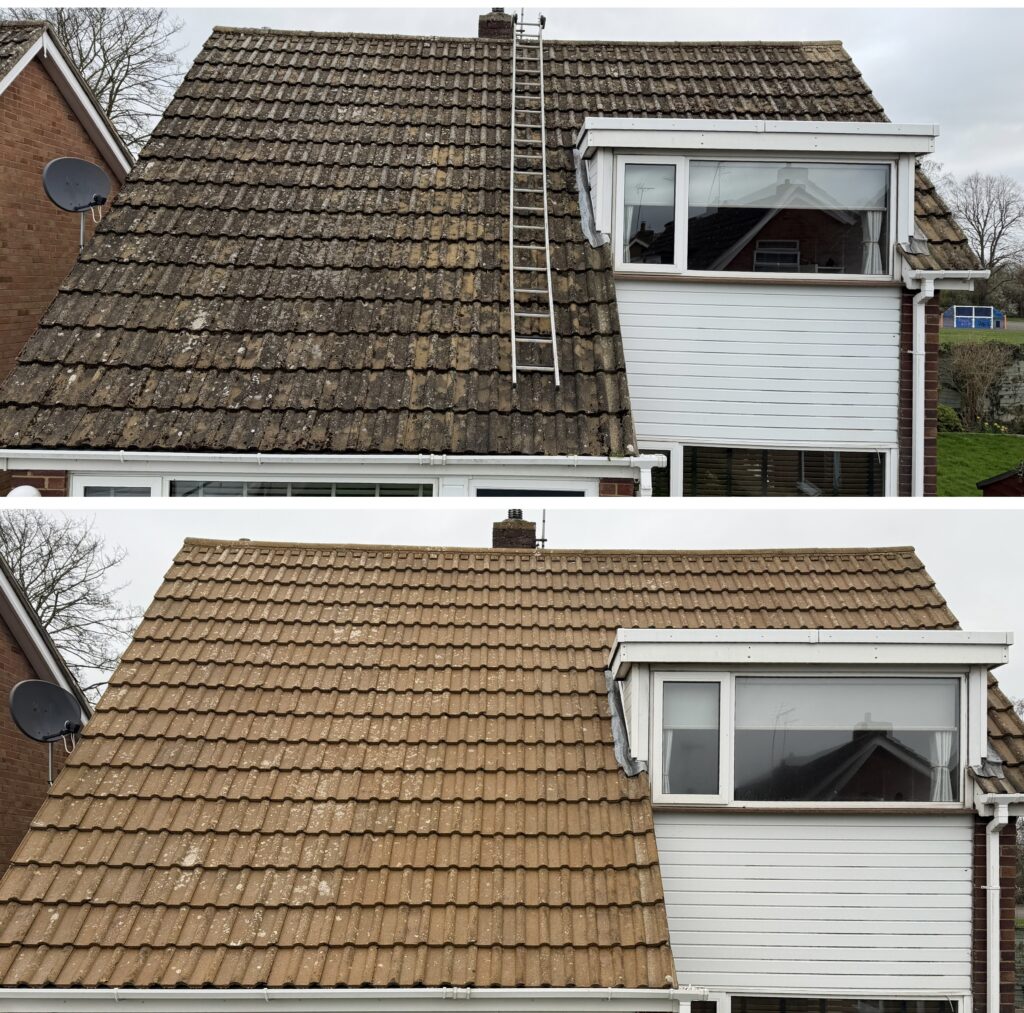
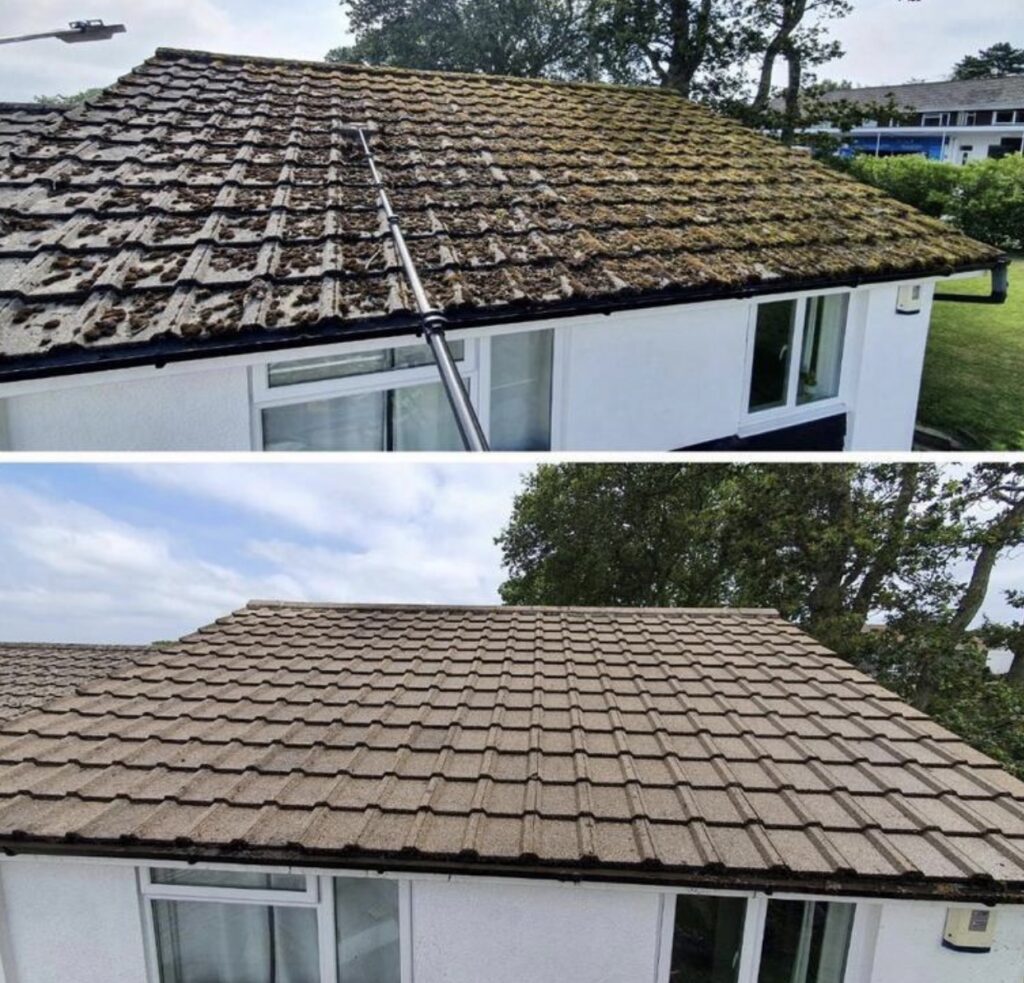
Images from Sky Scrapers Ltd work showing the methods described on this page.
Where this applies locally
Towns where this comes up most often on our patch:
Questions we get asked
Does the same treatment work on all three?
Biocide treatment is broadly effective against all three, but the timeframe and whether hand clearing is needed first differs — moss usually needs physical removal, lichen needs patience, algae responds fastest.
Is lichen a sign of good air quality?
Lichen is sometimes associated with cleaner air in general ecological terms, but on a roof it is simply a growth to be managed like any other, not something worth leaving for that reason.
Can I tell which one I have from a photo?
Often yes, with a reasonably clear photo — the differences in texture and pattern are usually visible enough to make a reasonable identification.
Does lichen removal risk damaging tiles?
Aggressive scraping can, since lichen bonds tightly to the surface. A careful, treatment-led approach over time is generally more appropriate than forceful removal.
Send a photo and we'll identify it
Not sure what is growing on your roof? Send us a clear photo and we will tell you what it is and what a sensible approach looks like.
Sky Scrapers Ltd · info@sky-scrapers.co.uk
Summary
Algae appears as thin film or streaking, moss as textured cushions, and lichen as tightly bonded crusty patches. Each responds differently to cleaning, with lichen needing the most patience and the least aggressive approach.