Roof moss removal methods, compared honestly
There are only a handful of ways to get moss off a roof, and each one has a genuine case and a genuine cost. Contractors tend to advocate whichever they own equipment for, which is not much help when you are trying to choose.
This guide sets out each method, what it is actually good at, and where it does damage, so you can judge what is being proposed for your roof.
Need this sorted?
Need roof moss removal? Get a quote from Sky Scrapers.
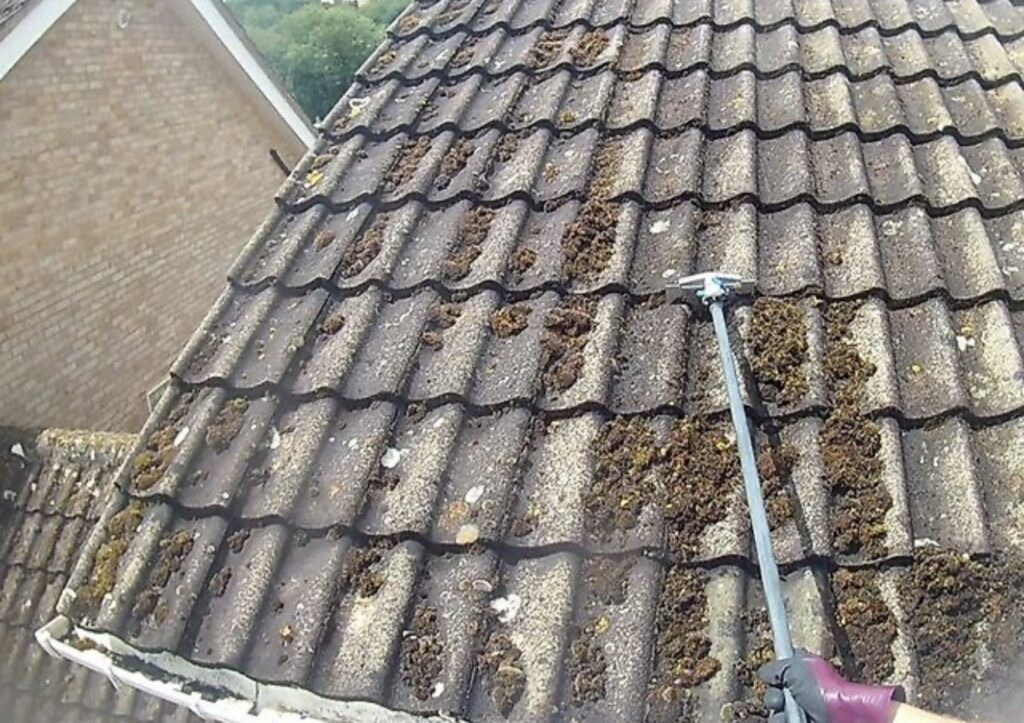
Hand scraping and brushing
The traditional method: the moss is lifted off physically, course by course, using scrapers and brushes matched to the covering. Concrete interlocking tile takes a firmer tool than a weathered clay plain tile or a natural slate.
It is slow and it is labour, which is why it is not the cheapest option on the quote sheet. What you get for it is complete removal of the bulk material on the day, with the tile surface left intact, and a technician close enough to the covering to see slipped tiles, cracked cement fillets and failed pointing while they work.
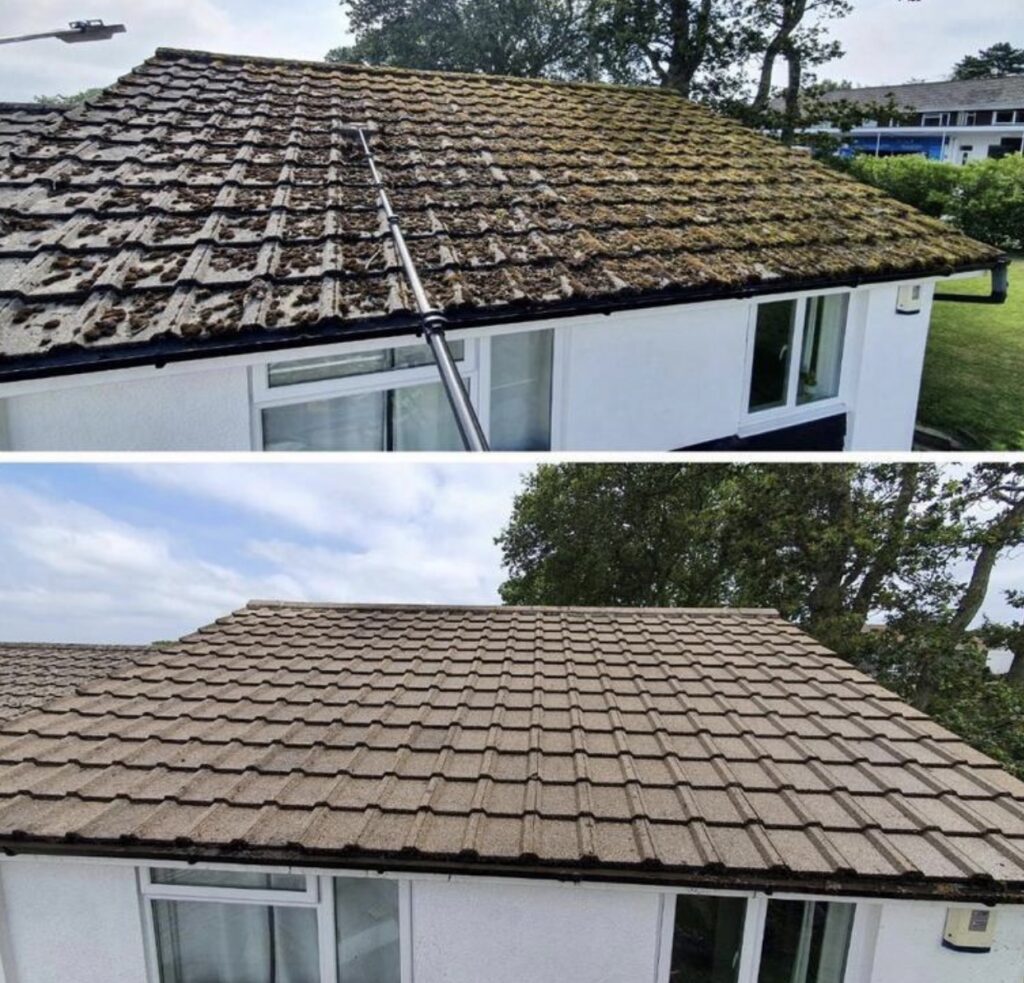
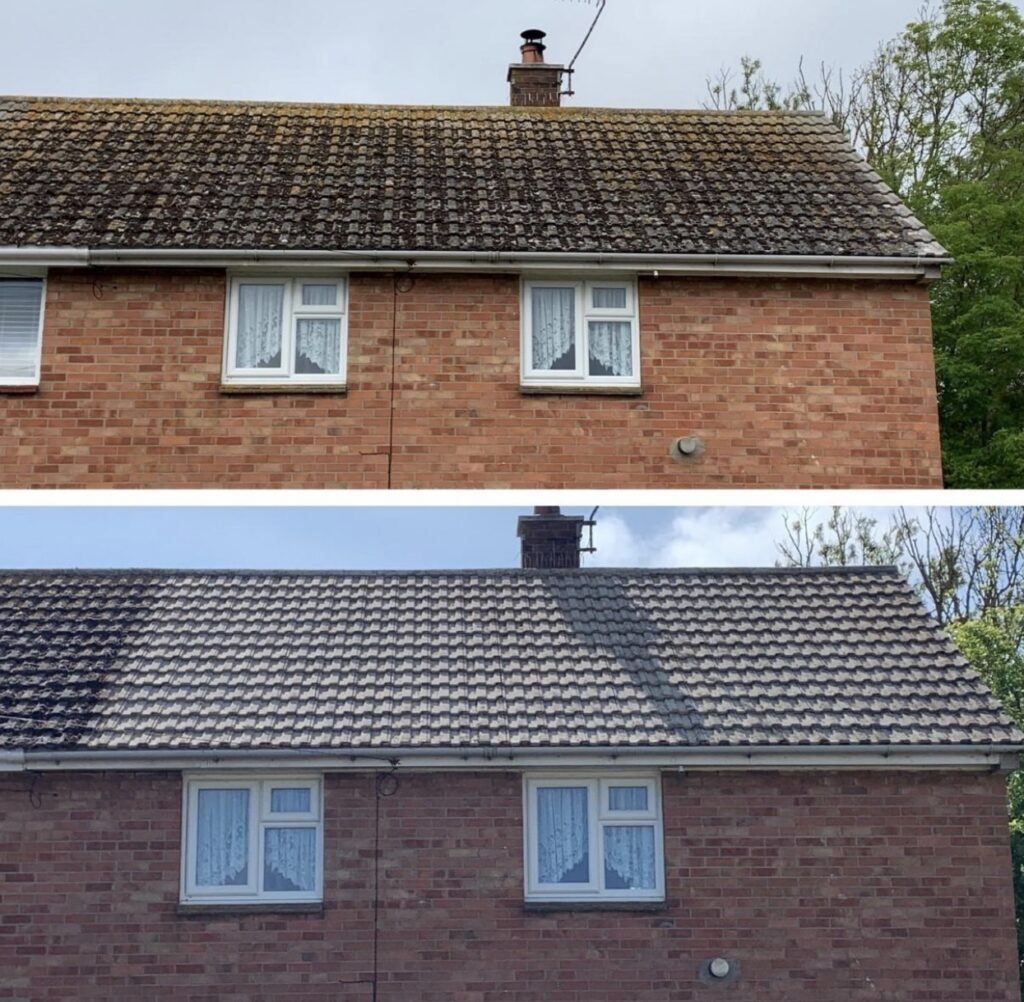
This is the method we use, followed by treatment. On heavily colonised roofs there is nothing that replaces getting the material off by hand.
Soft washing and biocide treatment
A biocidal solution is applied at low pressure. It kills algae, lichen and moss at the root and then lets weather clear the residue over the following weeks and months.
On lightly soiled roofs it is the ideal method: cheap, gentle and effective. On roofs carrying thick moss it is a supporting act rather than the whole job, because dead moss still has to leave the roof and in the meantime it is still filling the gutters.
The right combination on a heavily mossed roof is a hand clean followed by treatment. That is the sequence that both looks right immediately and lasts.
Pressure washing
- Fast and dramatic, which is why it sells and why it is cheap.
- Strips the weathered surface off concrete tiles, leaving them more porous and quicker to recolonise.
- Drives water up under the tile laps and into the roof space.
- Washes out ridge, verge and valley mortar, turning a cleaning job into a repair job.
- Destroys slate, fibre cement and any fragile covering, and can dislodge tiles outright.
Steam cleaning
Low-pressure steam is a legitimate method and is gentler than a pressure lance. It kills growth thermally and lifts surface soiling without the mechanical force that causes most tile damage.
The limitations are practical: it is slow, it needs a lot of water and fuel on site, and on thick moss it still does not physically remove the material any faster than a person with a scraper. It is more commonly used on masonry and paving than on domestic roofs.
Chemical-only treatment with no clearing
This is what a very cheap quote usually is. Spray the roof, drive away, and let the customer wait for the weather to do the rest.
There are roofs where it is honestly the right answer. There are many more where it leaves a homeowner looking at dead brown moss for a year, gutters that block anyway, and a strong suspicion they have been sold something.
We are clear about which category a roof falls into before quoting, and where treatment alone is genuinely sufficient we will say so rather than selling a full clean.
Choosing between them
Light green film, no cushions, gutters clear: treatment alone is sensible and inexpensive. Established moss, filled gutters, packed valleys: hand clean plus treatment. Anything fragile, old or slate: hand work and treatment only, never pressure.
The one method that has no place on a domestic pitched roof is high-pressure washing. It is the reason a large proportion of the repair work we are asked about exists.
Our own photographs
Images from Sky Scrapers Ltd work showing the methods described on this page.
Where this applies locally
Towns where this comes up most often on our patch:
- Roof Moss Removal in BedfordBedfordshire · MK40
- Roof Moss Removal in AmpthillBedfordshire · MK45
- Roof Moss Removal in LutonBedfordshire · LU1
- Roof Moss Removal in Milton KeynesBuckinghamshire · MK1
- Hand cleaning or chemical treatment aloneBuyer guide
- Softwashing vs pressure washingComparison
- Roof moss removal, step by stepProcess guide
Want a professional to handle it?
Not sure which your roof needs?
Send photographs and we will tell you whether a treatment will do or whether it needs a full hand clean.
Sky Scrapers Ltd · info@sky-scrapers.co.uk
Questions we get asked
Is hand cleaning always better than treatment alone?
Not always. On a lightly soiled roof, treatment alone is cheaper and perfectly adequate. Hand cleaning matters once there is bulk material to remove.
Is steam cleaning worth paying more for?
It is gentler than pressure washing but slower than hand work on thick moss, and it is more suited to masonry and paving than domestic tiled roofs.
Why do you refuse to pressure wash roofs?
Because it strips the tile surface, forces water under the laps and washes out mortar. The short-term result looks impressive and the long-term cost falls on the homeowner.
Can moss be removed without walking on the roof?
Where access allows, yes, from ladders and access equipment. Where the roof must be accessed, roof ladders spread the load rather than treading on tiles.
Which method lasts longest?
Hand clean followed by biocide treatment. The clean removes the bulk and the treatment deals with what is embedded in the surface.
In short
Hand cleaning removes bulk moss safely, biocide treatment deals with what is embedded and prevents rapid regrowth, steam is gentle but slow, and pressure washing is fast, cheap and damaging. Match the method to the roof.
Related services
Covering Bedfordshire and surrounding counties