
Cleaning driveways, patios and paths properly
Green, slippery paving is a winter hazard as much as an eyesore, and it is the exterior job homeowners most often attempt themselves with a hired pressure washer. It is also the one where the damage shows up fastest.
This guide covers what each surface can take, why the fast method causes problems, and how to keep paving clear once it has been cleaned.
Know your surface first
- Block paving, which relies on jointing sand for stability. Remove the sand and the blocks move.
- Natural stone such as sandstone and limestone, which is porous and marks easily.
- Concrete slabs and imprinted concrete, where the surface layer and any sealant are the vulnerable part.
- Tarmac, which loses its binder under pressure and goes loose and gritty.
- Resin-bound surfaces, which can be stripped of stone entirely by an aggressive lance.
Why jet washing paving causes trouble
On block paving, a lance blasts out the jointing sand along with the weeds and algae. The paving looks superb for a fortnight and then starts to rock, spread and sink at the edges because the interlock that held it together has gone. Re-sanding is not optional afterwards; it is part of the job.
On imprinted concrete, pressure lifts the sealant and the surface pattern coating, leaving patchy areas that then stain faster than the rest. On natural stone, it opens the pores and etches soft sandstone visibly.
On tarmac and resin, the damage is immediate and irreversible: loose aggregate, bare patches and a surface that deteriorates far quicker afterwards.
The soft wash approach
A biocidal treatment is applied to kill the algae, lichen and moss that make paving green and slippery. It works on the organic growth rather than blasting the surface, so the jointing, sealant and texture survive.
Where a surface also carries ingrained dirt, a controlled rinse at appropriate pressure follows, matched to the material rather than turned up to maximum. On block paving, kiln-dried sand is brushed back into the joints afterwards.
The result is a surface that is clean, no longer slippery and structurally as it was before, which is a different outcome from the dramatic before-and-after strip that leaves you re-sanding a drive every spring.
Slip risk is the real argument
Green algae on a shaded path or a north-facing patio is genuinely dangerous in winter, and it is the reason we get most of our paving enquiries between October and February. Wet algae on smooth slabs has very little grip.
Treating it rather than blasting it has an advantage here too: biocide keeps working on the film for a period afterwards, so the surface stays less slippery for longer than a purely mechanical clean.
Keeping it clear afterwards
Keep the surface swept, because organic debris left to rot is what feeds the next colony. Clear leaves from shaded corners in autumn, and make sure gutters and downpipes are not discharging onto paving, since a permanently wet strip will always green up first.
Cut back planting that overhangs a path, and consider a maintenance treatment every couple of years on shaded areas rather than waiting until it is slippery again.
Combining it with other work
Paving is the natural add-on to roof, gutter or render work, because access equipment and protection are already on site and any debris from the roof clean has already landed on it.
Doing the paving last, after the roof and gutters, is the sensible order. Doing it first means cleaning it twice.
Our own photographs
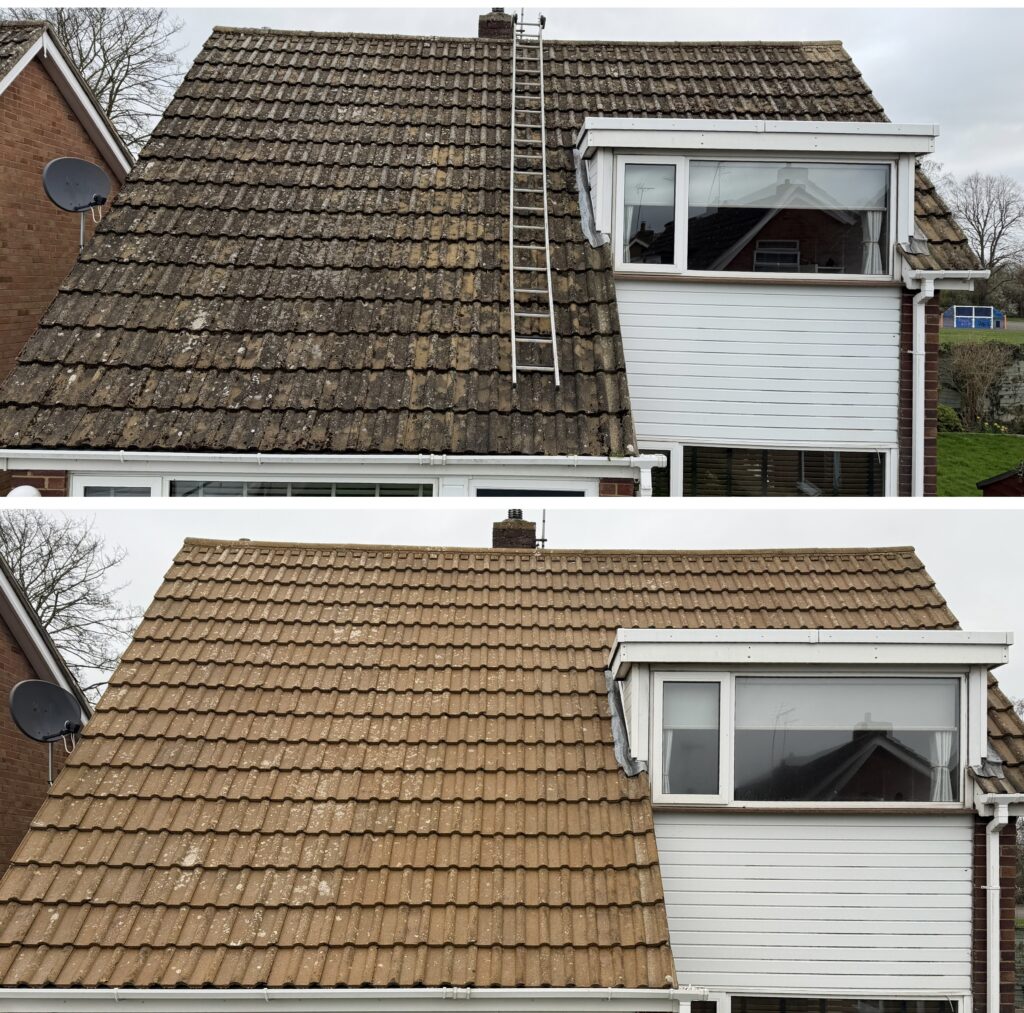
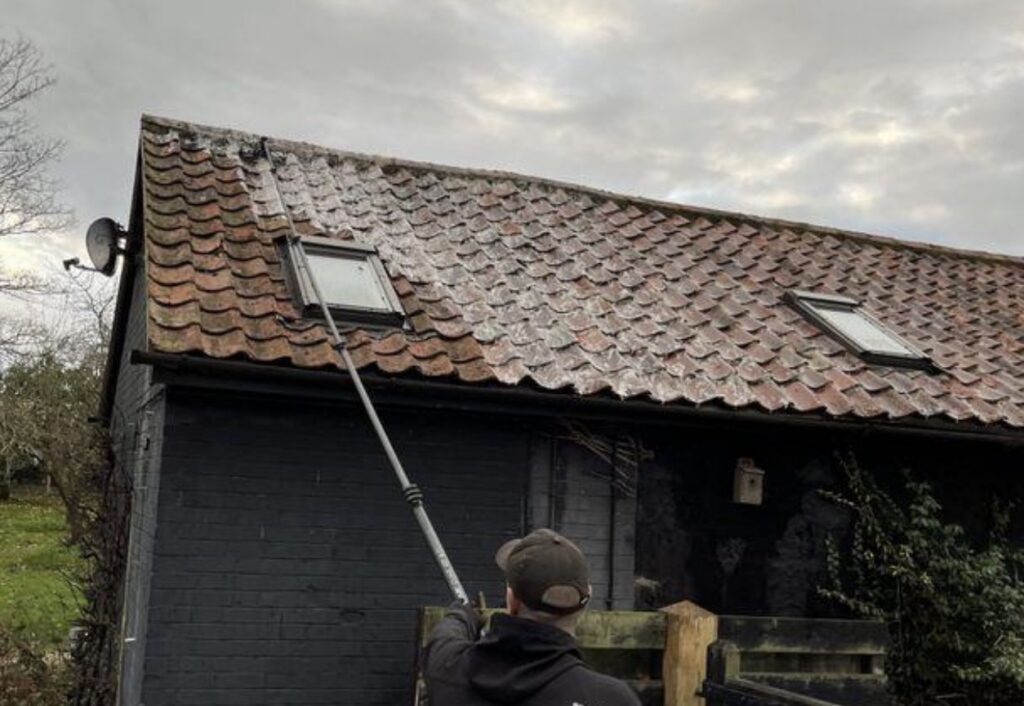
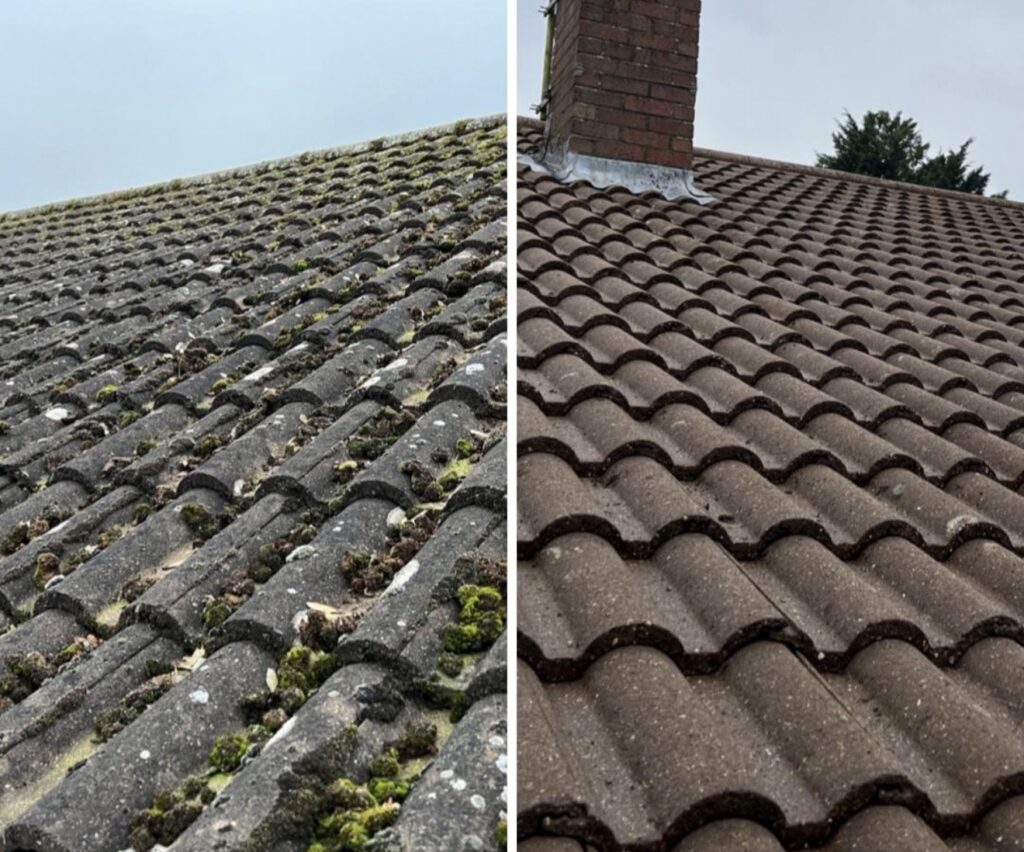
Images from Sky Scrapers Ltd work showing the methods described on this page.
Where this applies locally
Towns where this comes up most often on our patch:
- Softwashing & Biocide Treatment in AmpthillBedfordshire · MK45
- Softwashing & Biocide Treatment in BedfordBedfordshire · MK40
- Softwashing & Biocide Treatment in Milton KeynesBuckinghamshire · MK1
- Softwashing & Biocide Treatment in LutonBedfordshire · LU1
- Softwashing & Biocide Treatment in FlitwickBedfordshire · MK45
- How does soft washing work?Method guide
- Why pressure washing damages roof tilesGuide
- A sensible cleaning schedule for the outside of your houseMaintenance guide
Want a professional to handle it?
Sort the slippery paving
Treated rather than blasted, with jointing sand replaced where needed and the surface left intact.
Sky Scrapers Ltd · info@sky-scrapers.co.uk
Questions we get asked
Will cleaning wash out the sand in my block paving?
Not with a soft wash approach. Where a rinse is needed, kiln-dried sand is brushed back into the joints as part of the job.
Can you clean imprinted concrete safely?
Yes, at controlled pressure with the sealant in mind. High pressure lifts the coating and leaves patchy areas that stain faster.
How long before the green comes back?
Typically a couple of years on open areas and sooner in permanently shaded corners. A maintenance treatment keeps it ahead of the growth.
Is it safe near planting and lawns?
With sheeting and pre-wetting, yes. The same precautions apply as with any exterior soft washing.
Should the paving be done before or after the roof?
After. Roof and gutter work drops material onto the paving, so cleaning it first means doing it twice.
In short
Block paving, stone, imprinted concrete, tarmac and resin all suffer under a pressure lance. Soft washing kills the algae that makes paving slippery without stripping joints, sealant or binder, and it lasts longer.
Related services
Covering Bedfordshire and surrounding counties