
A sensible cleaning schedule for the outside of your house
Most exterior maintenance is done in a panic, after something overflows or after a neighbour has theirs done and the contrast becomes unbearable. It costs less and looks better if it is simply on a schedule.
This guide sets out realistic intervals for each part of the outside of a typical Bedfordshire home, plus a short seasonal checklist you can run from the ground in ten minutes.
Sensible intervals by element
- Gutters and downpipes: once a year for most homes, twice a year under mature trees or below a mossed roof.
- Roof clean and biocide treatment: when growth is established, then a maintenance treatment every two to three years rather than another full clean.
- Fascias, soffits and uPVC: every one to two years, usually alongside the gutter visit.
- Render and painted masonry: every two to four years, sooner on shaded north and east elevations.
- Conservatory roof and glazing: annually, since it catches whatever the main roof sheds.
- Driveways, paths and patios: every one to two years, sooner where they are shaded and slippery in winter.
Why intervals beat one-off blitzes
Growth compounds. A thin algae film is a treatment; three years later it is moss holding water; ten years later it is a full hand clean, blocked gutters, packed valleys and possibly a repair bill for ridge mortar that has been kept permanently wet.
Maintenance intervals also mean somebody looks at the building regularly. Most of the defects we photograph and report, from a slipped tile to a split gutter union, are cheap to sort at the point they are noticed and expensive once they have been feeding water into a wall for two winters.
Season by season, from the ground
Spring is the time to look at what winter did. Walk round the property after a heavy shower and watch where water goes. Overflow points, drips at joints and dark streaks on walls all show themselves best when it is actually raining.
Summer is the practical window for roof cleaning and render work, because dry, still weather makes for a better job and faster results. It is also the easiest time to cut back planting that is keeping walls damp.
Autumn is gutters. Wait until the leaves are genuinely down rather than clearing in September and doing it again in November. Check valleys, flat roof areas and anywhere behind a chimney stack where debris collects.
Winter is for watching rather than working. Note where frost lingers, where moss looks worst, and which elevation never seems to dry. That is your shortlist for the following summer.
A ten-minute ground-level check
- Stand back from each elevation and look along the gutter line for sagging, plant growth or a run that is holding water.
- Look at the bottom three courses of tile. That is where moss establishes first.
- Check for dark vertical streaks on walls below gutter joints and downpipe brackets.
- Look at valleys and around chimney stacks for packed debris.
- Check that downpipes discharge properly into gullies rather than onto the ground.
Combining visits saves real money
Access setup, ground protection and clear-down are the fixed costs of any exterior job. Doing gutters, fascias and a soft wash in one visit costs meaningfully less than three separate trips, and the property looks consistent afterwards.
For most homes, a sensible rhythm is a full roof clean and treatment when needed, an annual gutter and fascia visit, and render or exterior soft washing folded into that visit every few years.
Adjusting for your property
Under trees, shorten everything. Beside open fields with prevailing wind and good sunlight, you can stretch intervals. North-facing rear elevations and shallow-pitched bungalow roofs always need attention sooner than the rest of the building.
New builds are the common exception. They look clean, so they get ignored, while their gutters fill with mortar dust and construction debris in the first two years.
Our own photographs
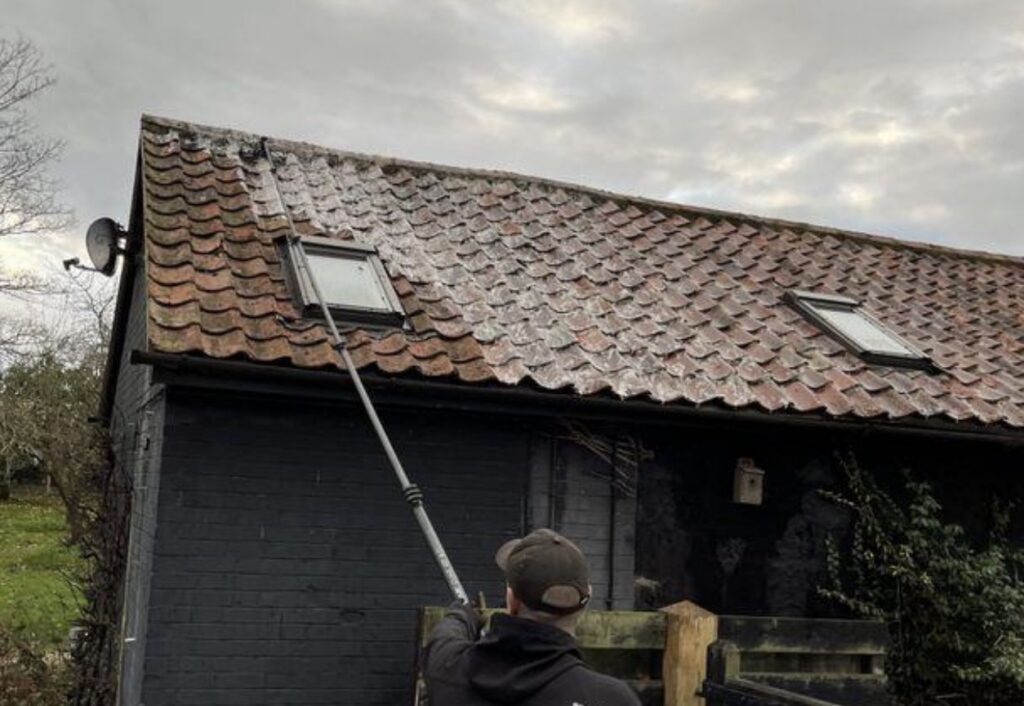
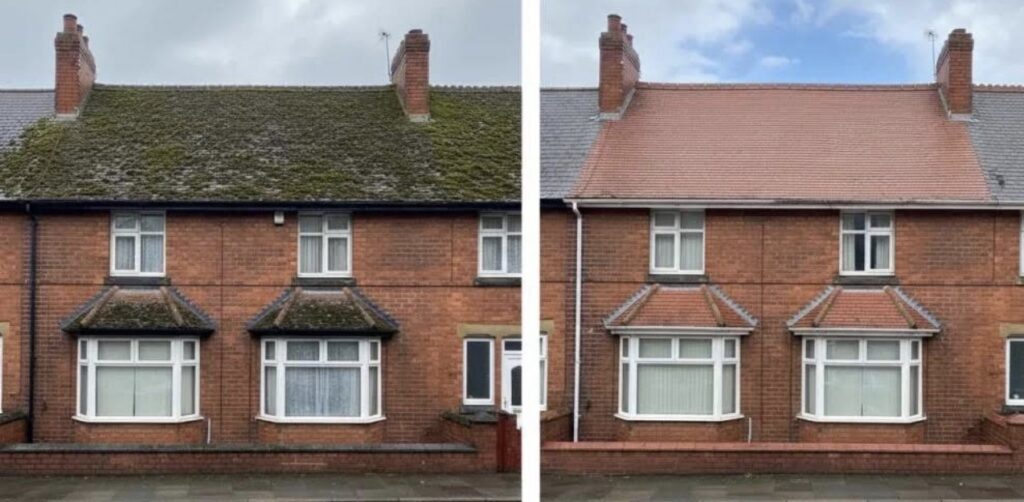
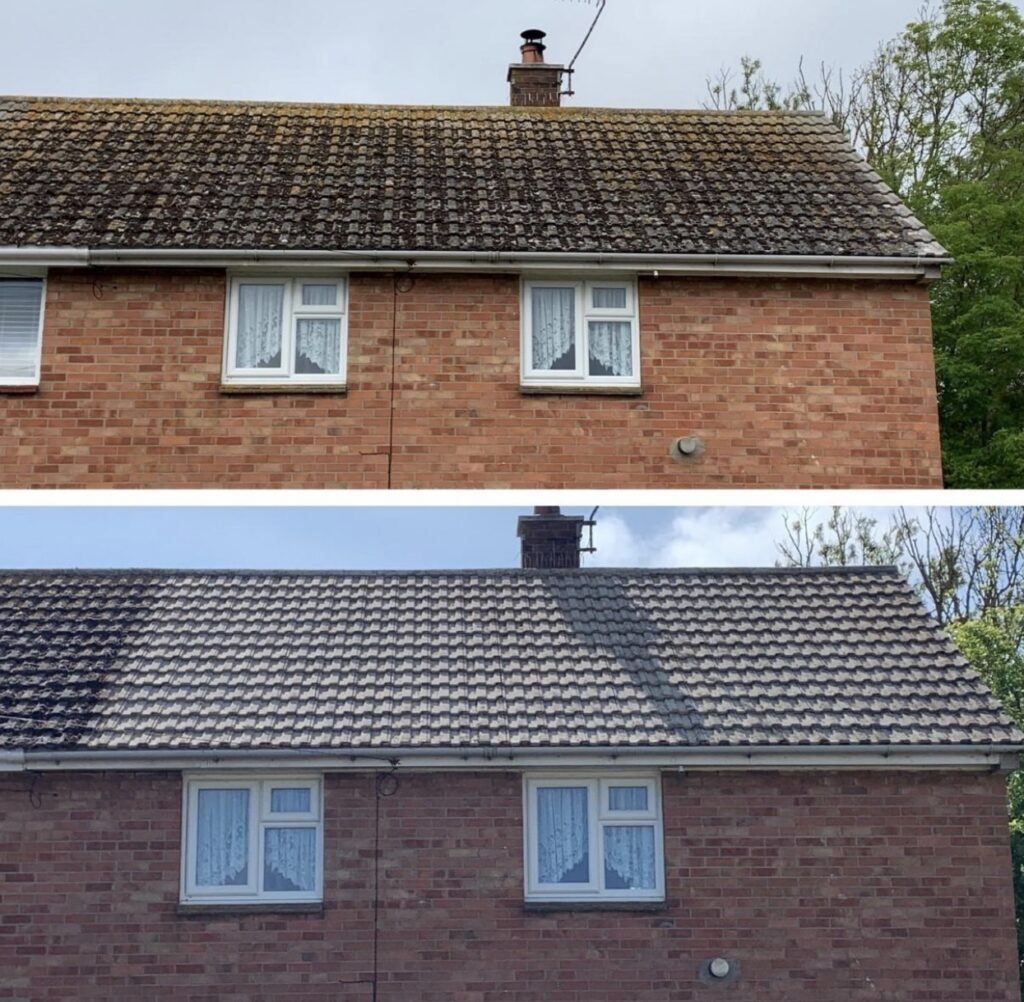
Images from Sky Scrapers Ltd work showing the methods described on this page.
Where this applies locally
Towns where this comes up most often on our patch:
- Hand Roof Cleaning in AmpthillBedfordshire · MK45
- Hand Roof Cleaning in BedfordBedfordshire · MK40
- Hand Roof Cleaning in LutonBedfordshire · LU1
- Hand Roof Cleaning in FlitwickBedfordshire · MK45
- How often does a roof actually need cleaning?Guide
- How often gutters actually need cleaningMaintenance guide
- The best time of year to have a roof cleanedSeasonal guide
Want a professional to handle it?
Get on a sensible schedule
Tell us what your property has and we will suggest realistic intervals, not a maintenance contract you do not need.
Sky Scrapers Ltd · info@sky-scrapers.co.uk
Questions we get asked
Is annual roof cleaning necessary?
No, and anyone recommending it is overselling. A properly cleaned and treated roof should not need doing again for years. Gutters are the annual job.
When is the best time of year to book?
Spring and summer give the best conditions for roof and render work. Gutters are best done in late autumn once the leaves are down.
Can everything be done in one visit?
Usually yes, and it costs less than separate visits because the access setup and clear-down are shared.
How do I know if my roof needs doing yet?
Look at the bottom courses and the north-facing slope. Visible cushions of moss, filled gutters or plant growth in the run mean it is time.
Do you offer a reminder for the next visit?
We are happy to get in touch when the next gutter clear is due rather than leaving you to remember it.
In short
Gutters annually, fascias every year or two, roof cleaning when growth establishes with a treatment every few years afterwards, render every few years. Combining visits saves money and catches defects early.
Related services
Covering Bedfordshire and surrounding counties