
Fascia and soffit care: what these boards do and how to keep them right
Fascias and soffits do a job that is easy to overlook precisely because it is meant to be invisible when working properly — fascias carry the gutter and close off the roof edge, while soffits ventilate the loft space and box in the underside of the eaves. Both take a constant low-level battering from gutter overflow, algae growth and general weathering.
Because they sit at the roofline, they get cleaned far less often than more visible parts of the house, which means dirt, algae staining and, in the case of timber boards, deterioration can build up for years before anyone notices from the ground.
Why fascias and soffits get dirty
Fascias sit directly beneath the gutter, so any overflow runs straight down the board, carrying grit, moss residue and algae with it. Over time this leaves streaking that is very different from general dust — it tends to run in vertical lines from specific overflow points rather than an even film.
Soffits, being underneath the eaves, are more sheltered from rain but collect airborne algae and general grime more slowly and evenly, along with cobwebs and insect activity around the ventilation slots.
uPVC vs timber: different considerations
- uPVC fascias and soffits do not rot, but they do discolour and streak, and prolonged algae growth can etch into the surface texture over many years if never cleaned.
- Timber fascias and soffits are vulnerable to rot where paint or stain has failed and water has been sitting against the wood, particularly below a persistently overflowing gutter.
- Both materials benefit from the gutter above being kept clear, since overflow is the single biggest contributor to fascia staining and, for timber, deterioration.
- Peeling paint or visibly soft timber on a fascia board is a decorating and repair matter rather than a cleaning one, and worth addressing before it spreads.
How this fits with roof and gutter maintenance
Fascia and soffit cleaning is most efficient done alongside a gutter clear, since the same access and the same cause — an overflowing or debris-filled gutter — usually explains both problems. Addressing gutters without ever looking at the fascia beneath them tends to mean the staining simply reappears at the next heavy rain.
Our own photographs
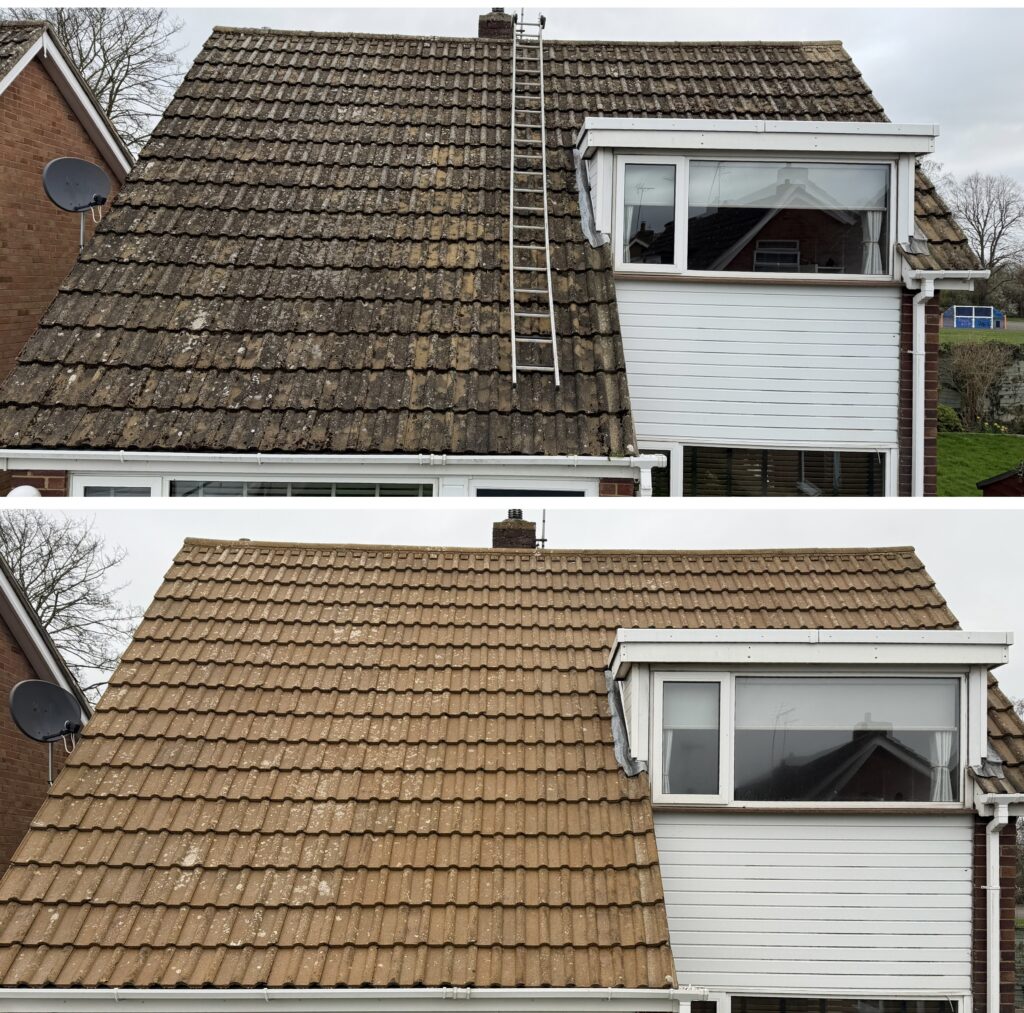
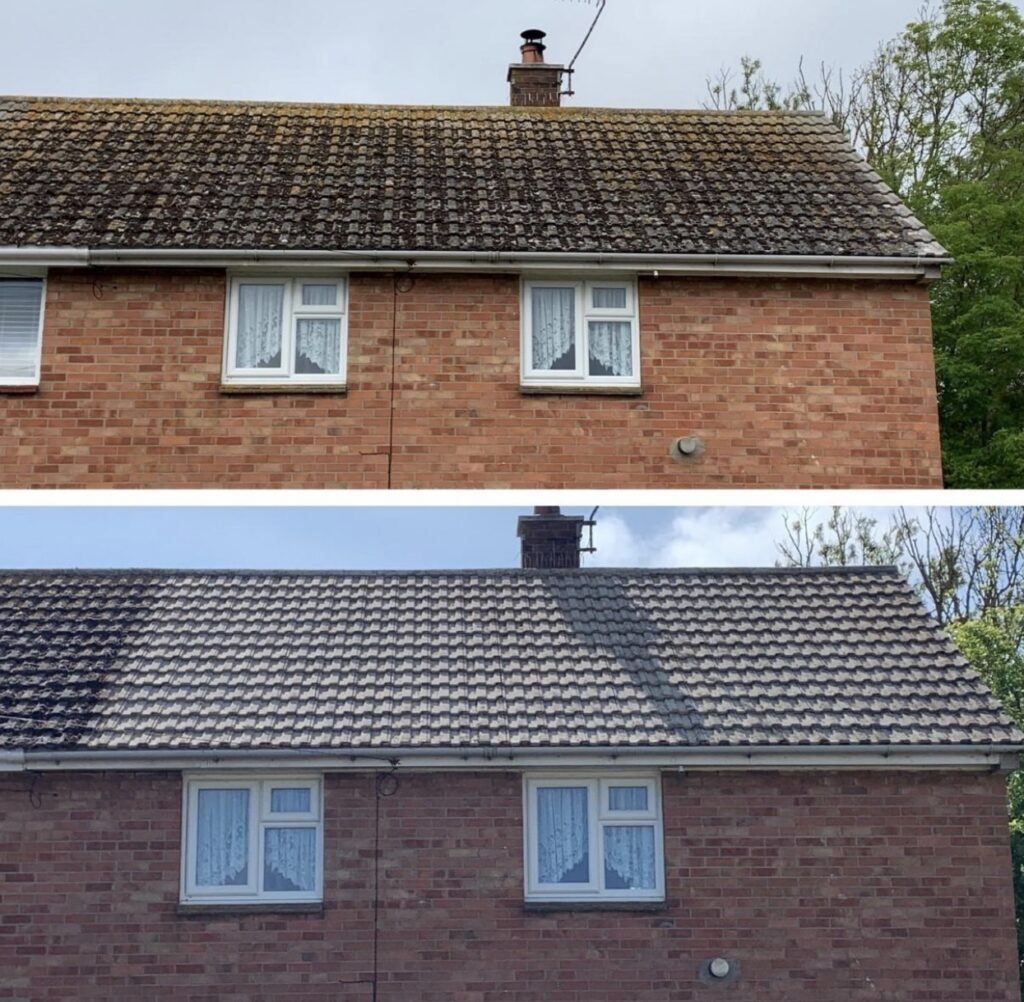
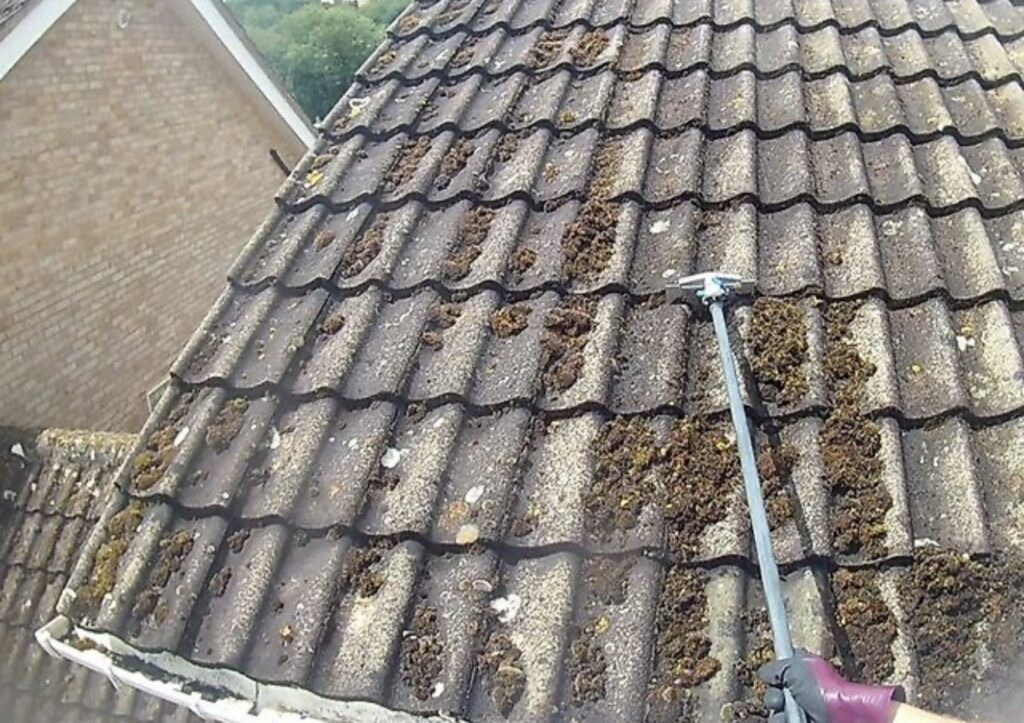
Images from Sky Scrapers Ltd work showing the methods described on this page.
Where this applies locally
Towns where this comes up most often on our patch:
Questions we get asked
Can fascia staining be removed without damaging the board?
Yes, with appropriate low-pressure cleaning suited to the material. uPVC and sound timber both clean without needing aggressive methods.
How do I know if my timber fascia needs repair rather than cleaning?
Soft, spongy timber, visible rot, or paint that has lifted away from bare wood underneath are signs of a repair or redecoration need rather than something cleaning alone will fix.
Does cleaning fascias prevent future staining?
Cleaning removes existing staining, but keeping the gutter above clear is what actually prevents it recurring, since overflow is the main cause.
Should soffits be cleaned as often as fascias?
Usually less often, since they are more sheltered, but they are worth checking whenever gutters and fascias are attended to, particularly for cobwebs and insect activity around vents.
Book fascia and soffit cleaning alongside your gutters
Get in touch and we can look at gutters, fascias and soffits together in a single visit for a tidier, more efficient result.
Sky Scrapers Ltd · info@sky-scrapers.co.uk
Summary
Fascias take the brunt of gutter overflow staining; soffits collect airborne grime more slowly. Both are best addressed alongside gutter clearing, since a clear gutter is what actually prevents fascia staining recurring.