
Chimney stacks and flashing: where debris builds up unseen
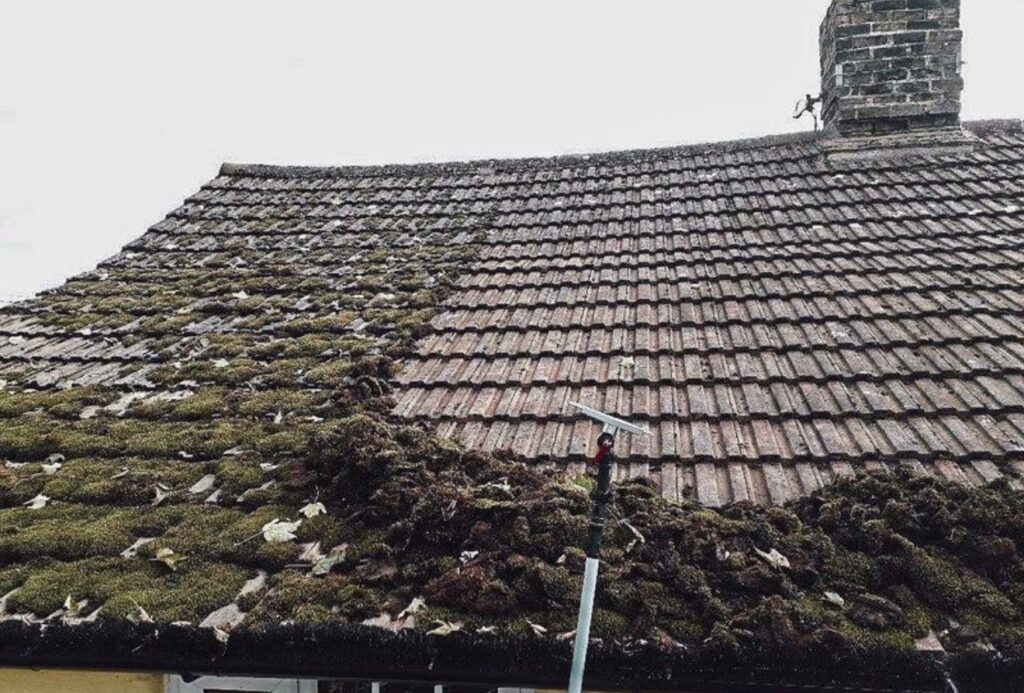
A chimney stack interrupts a roof pitch, and every interruption creates a junction where water has to be redirected rather than allowed to run straight down. Flashing does that job, but moss, leaf litter and general debris collect against the upstand exactly where the flashing meets the tile, and from the ground you cannot see any of it building up.
It is one of the more common places we find a real problem hiding behind what looked like a minor cleaning job from the driveway.
Why debris collects here specifically
A chimney stack sits proud of the roof surface and acts like a small dam against wind-blown debris, catching leaves and moss spores that would otherwise blow clear of an open pitch. The apron and stepped flashing around the base then has a permanent shaded, damp micro-environment behind it, which is ideal moss growing conditions even on a roof that is otherwise fairly clean.
What we clear and check
- Moss and leaf debris packed against the upstand on the weather side of the stack.
- Growth sitting on top of lead flashing, which we lift clear of by hand rather than scraping across the lead itself.
- The soaker and apron junctions, where a lifted or displaced flashing edge is the most common real cause of a chimney leak.
- Mortar fillets or flaunching at the top of the stack, flagged if cracked rather than cleaned around.
Where cleaning ends and roofing begins
We clear growth and debris from around a chimney and check the flashing is sitting correctly. If flashing has come away from its chase, mortar fillets have cracked, or there is evidence of water ingress at the stack, that is a roofing repair and we will tell you rather than cleaning around a fault and leaving you unaware of it.
Our own photographs
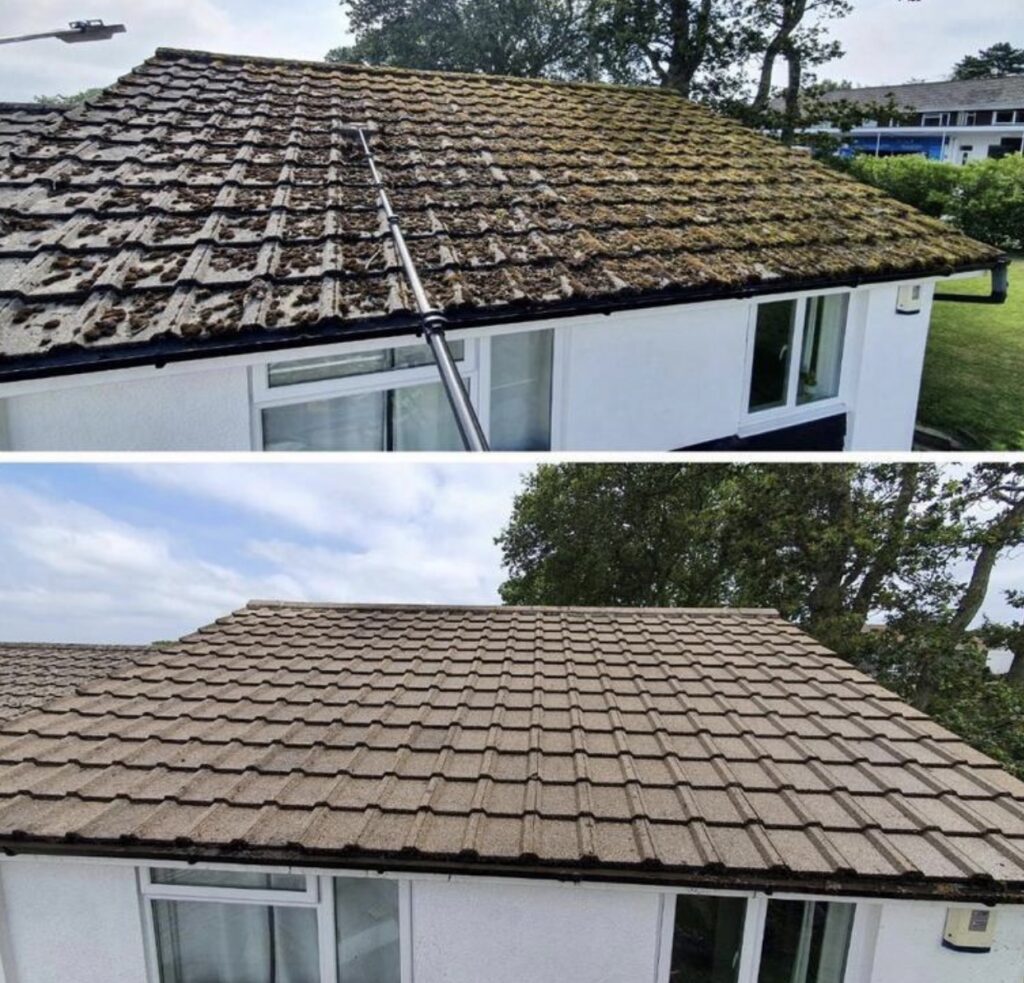
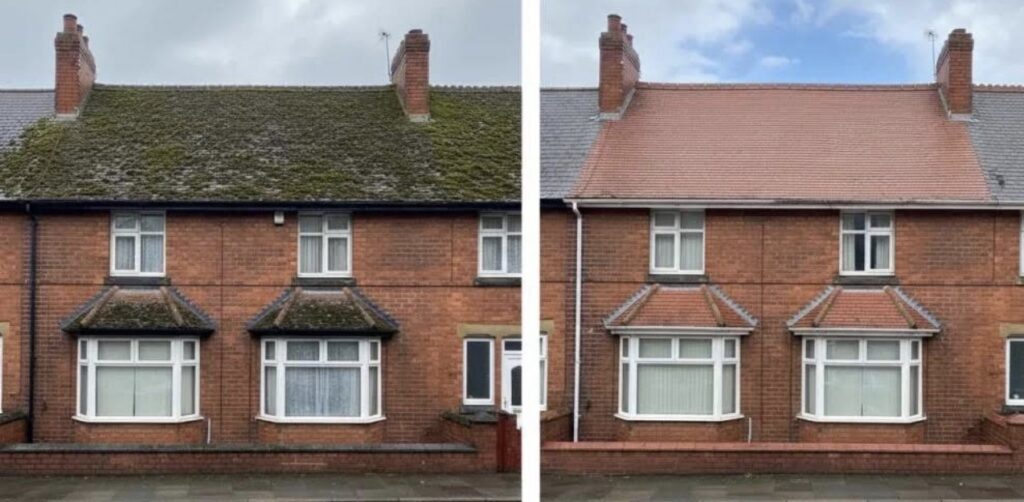
Images from Sky Scrapers Ltd work showing the methods described on this page.
Where this applies locally
Towns where this comes up most often on our patch:
- Hand Roof Cleaning in BedfordBedfordshire · MK40
- Hand Roof Cleaning in AmpthillBedfordshire · MK45
- Hand Roof Cleaning in SandyBedfordshire · SG19
- Moss in valleys and along the ridgeCommon problem
- Period and listed property roofs cleaned entirely by handBuilding type
- Crusty lichen on roof tiles and why it is harder to shift than mossCommon problem
Questions we get asked
Why does moss always seem worst around the chimney?
The stack breaks up airflow and catches wind-blown debris, and the flashing junction creates a permanently shaded, damp spot — both of which favour moss over the more exposed parts of the roof.
Can cleaning damage lead flashing?
Not with the right method. We lift moss and debris clear of lead by hand rather than scraping directly across it, since lead marks and thins with abrasive contact.
Will you tell me if the flashing itself needs replacing?
Yes. If we find flashing that has lifted, corroded or come away from its chase, we will flag it rather than clean around a fault that is likely to leak.
Is chimney cleaning usually done as part of a full roof clean?
Yes, it is included where a chimney is present rather than treated as a separate job, since it is part of the same access and the same roof.
Get your chimney stack checked and cleared
If you have noticed a damp patch near a chimney breast internally, it is worth having the stack and flashing looked at as part of a roof clean.
Sky Scrapers Ltd · info@sky-scrapers.co.uk
In short
The area around a chimney stack collects debris that is invisible from the ground and creates its own damp microclimate. Clearing it properly, and flagging any flashing issue found, protects one of the most leak-prone junctions on the roof.