
Moss in valleys and along the ridge: the two places it actually causes leaks
Most roof moss is a slow cosmetic problem. Moss in a valley or packed along a ridge is different — these are the two locations on a roof where water is deliberately concentrated and funnelled, so any obstruction there has an outsized effect on where water actually ends up.
A valley carries the combined run-off of two roof pitches down a single narrow channel, and a ridge sits at the highest, most wind-exposed point of the roof. Moss builds differently in each and needs clearing differently too.
Why valleys silt up with moss so fast
A valley is essentially a gutter built into the roof itself, and it receives water, grit and debris from two pitches instead of one. Moss that would sit harmlessly on a flat expanse of tile becomes a dam in a valley, backing water up under the tiles on either side rather than letting it run to the eaves.
We clear valleys by hand, working from the top down so debris moves towards the outlet rather than being pushed further into the channel, and we check that the lead or GRP lining underneath is intact once the moss is out.
Ridge moss is a different mechanism
- Ridge tiles are bedded on mortar or fitted with a dry-ridge system, and moss growing along the joint traps moisture against that bedding or seal.
- On mortar-bedded ridges, moss and root growth can accelerate mortar failure that was already underway from age and weathering.
- On dry-ridge systems, growth around the union clips and seals is more of a maintenance issue than a structural one, but still worth clearing.
- We remove growth from ridge lines by hand and flag any mortar that looks like it needs a roofer rather than clean around a failing joint.
The order we work in
On a job involving valleys and ridge growth, we clear the ridge first so debris does not fall into a valley we have already cleaned, then work down each pitch towards the valley, then finish the valley itself. It sounds obvious once explained, but working in the wrong order just means redoing the valley.
Get valley or ridge moss cleared
If you can see a green line running down a valley or along the ridge from the ground, it is worth getting looked at before the next heavy rain.
Sky Scrapers Ltd · info@sky-scrapers.co.uk
Our own photographs
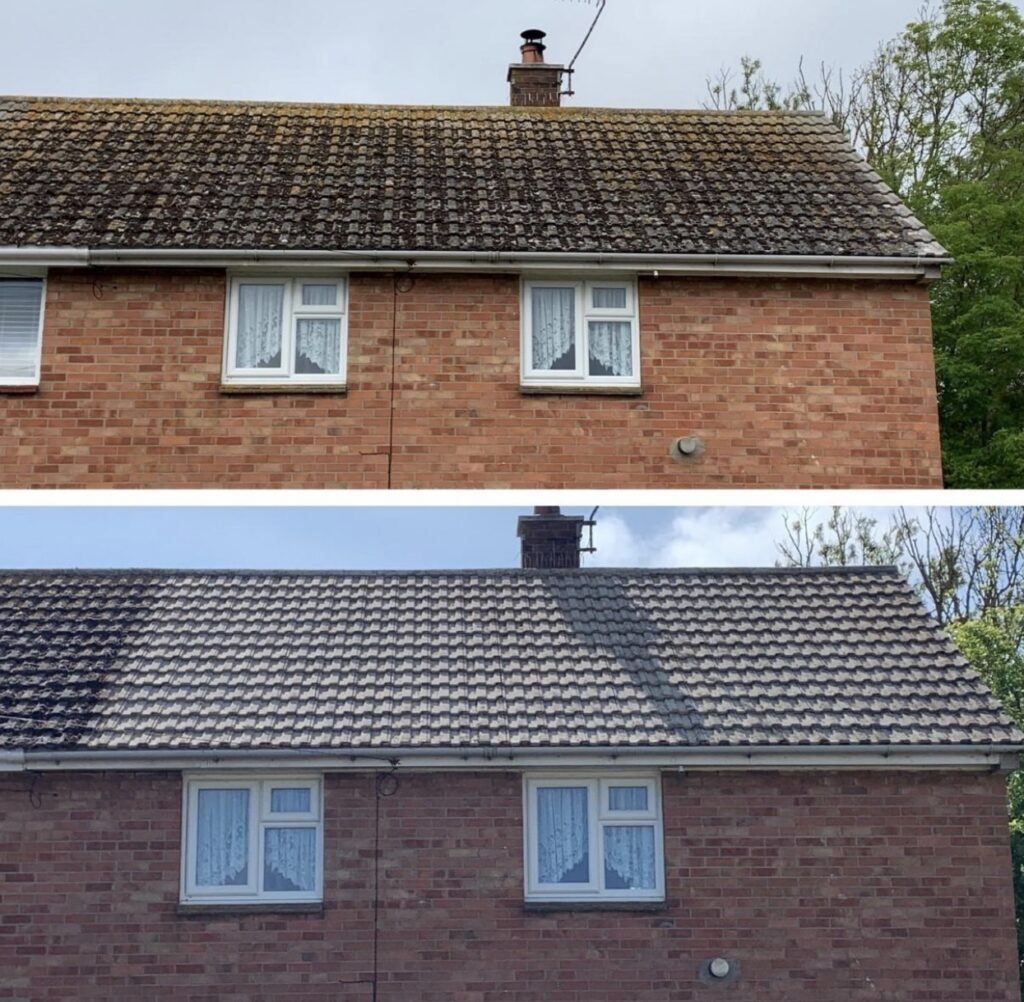
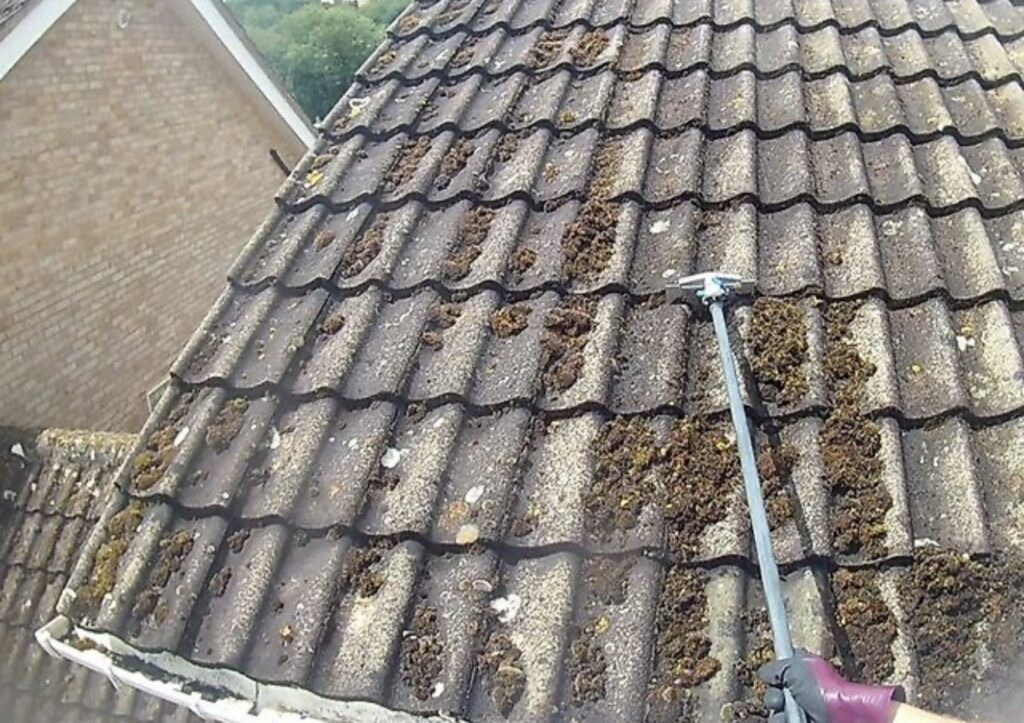
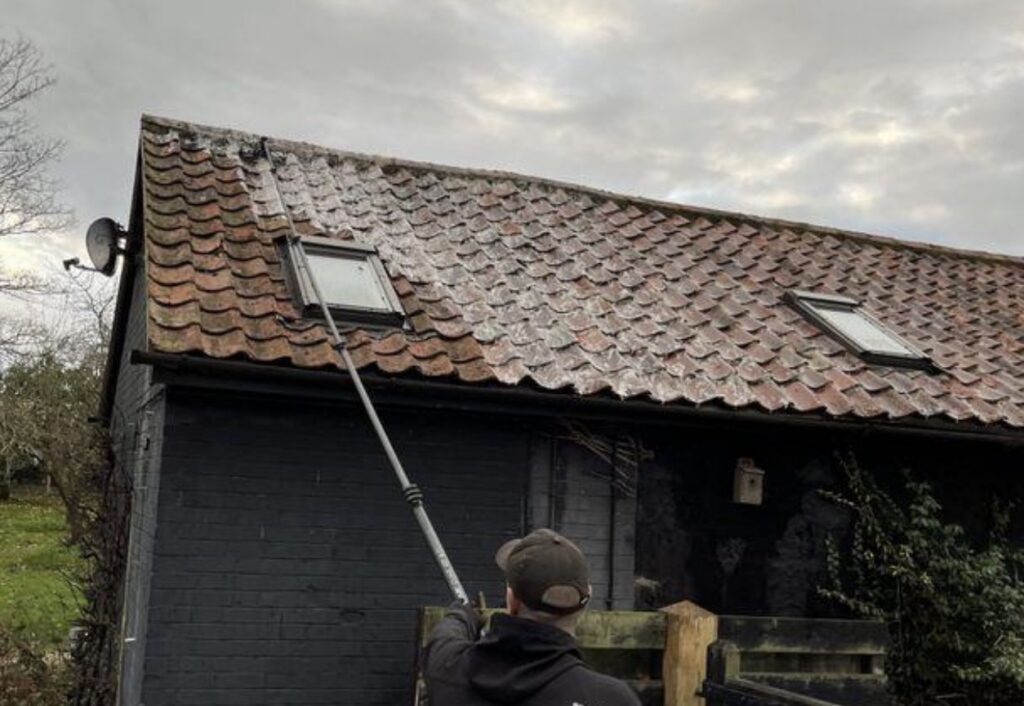
Images from Sky Scrapers Ltd work showing the methods described on this page.
Where this applies locally
Towns where this comes up most often on our patch:
- Roof Moss Removal in AmpthillBedfordshire · MK45
- Roof Moss Removal in FlitwickBedfordshire · MK45
- Roof Moss Removal in BiggleswadeBedfordshire · SG18
- Moss is blocking your guttersCommon problem
- Why the north-facing slope is always the one covered in mossCommon problem
- Crusty lichen on roof tiles and why it is harder to shift than mossCommon problem
Questions we get asked
Is moss in a valley more urgent than moss on the main roof?
Generally yes, because a valley concentrates water from two pitches into one channel. An obstruction there has a much bigger effect on drainage than the same amount of moss spread across an open pitch.
Can you tell if a valley lining is damaged under the moss?
Once the moss is cleared we can see and check the lining underneath — lead, GRP or interlocking valley tile — and will flag any splits, corrosion or displacement we find.
Does moss cause ridge mortar to fail?
It can accelerate failure that is already underway from age and weathering, by holding moisture against the joint. It is rarely the sole cause but it does not help.
What's different between a mortar ridge and a dry ridge for cleaning purposes?
Mortar ridges need us to check bedding condition as we clear growth, since failing mortar needs a roofer. Dry-ridge systems are more straightforward but we still check the seals and clips are intact.
Summary
Moss in a valley or along a ridge sits in exactly the places a roof relies on to move water safely. Clearing it by hand, in the right order, is what stops it becoming a leak.