
Biocide treatment and safety around your garden and pets
Anyone about to have chemicals applied above their garden is right to ask what is in them and what happens to it. It is one of the most common questions we get, and it deserves a proper answer rather than reassurance.
This guide explains what roof biocides do, how a careful team manages the risk to planting, ponds, pets and neighbouring property, and what you can do on the day to make everything straightforward.
Need this sorted?
Need biocide roof treatment? Get a quote from Sky Scrapers.
What a roof biocide is
It is a diluted solution designed to kill algae, lichen and moss and to break down the residue those organisms leave in the surface. It is applied at low pressure so it stays where it is put rather than drifting as a fine mist.
It is not a coating, sealant or paint. It does not stay on the roof indefinitely; it acts on the growth and then degrades. That is why treatment is repeated periodically rather than being a one-off permanent fix.
Strength is matched to the surface and to the level of colonisation. Using a stronger mix than the job needs is bad practice, not thoroughness.
How we protect the garden
- Planting below and around the work area is sheeted, or thoroughly wetted down first so foliage cannot absorb concentrated solution.
- Ponds and water features are covered before any treatment goes up, without exception.
- Vegetable beds, greenhouses and anything being grown for eating are identified at survey and either covered or excluded from the work area.
- Application is planned around wind direction, and we stop if conditions mean solution could carry beyond the target surface.
- Paths, patios, garden furniture and vehicles are moved clear or protected before the work begins.
Pets and people on the day
The simple rule is that pets stay indoors while treatment is being applied and until the treated area and the ground below it are dry. Cats in particular have a habit of appearing on the very fence or shed roof you would rather they avoided.
Children should be kept out of the working area for the same reason, and because there is falling debris and access equipment involved regardless of the chemistry.
Windows and doors on the elevation being treated are best kept closed during application. We will tell you when we are moving to a new elevation so you can open up again.
Neighbouring property
On terraced and semi-detached houses, the neighbour's roof, garden, washing line and car are all within reach of a careless application. A courteous heads-up before the day avoids almost every problem, and we are happy to speak to neighbours ourselves.
Where a shared or adjoining roof slope is involved, we agree the extent of the work in advance so there is no confusion about what has been treated and what has not.
What you can do to help
Move cars off the drive, bring in washing, cover or move anything precious in the immediate area, and tell us about ponds, koi, delicate planting, vegetable beds or beehives before the day rather than during it.
If you have particular concerns, say so at quote stage. There are usually options, including keeping the treatment away from one part of the property or doing the work in a different order.
Why doing nothing has risks too
It is worth putting the chemistry in context. A heavily mossed roof holds water against the covering, keeps mortar permanently damp, fills gutters and eventually forces water where it should not go. Treating it properly, once, with sensible precautions is a smaller intervention than the repairs that follow years of neglect.
The alternative that is genuinely worse is a homeowner applying household bleach from a ladder without protection. That is the version that scorches borders and puts someone at height with a bucket.
Our own photographs
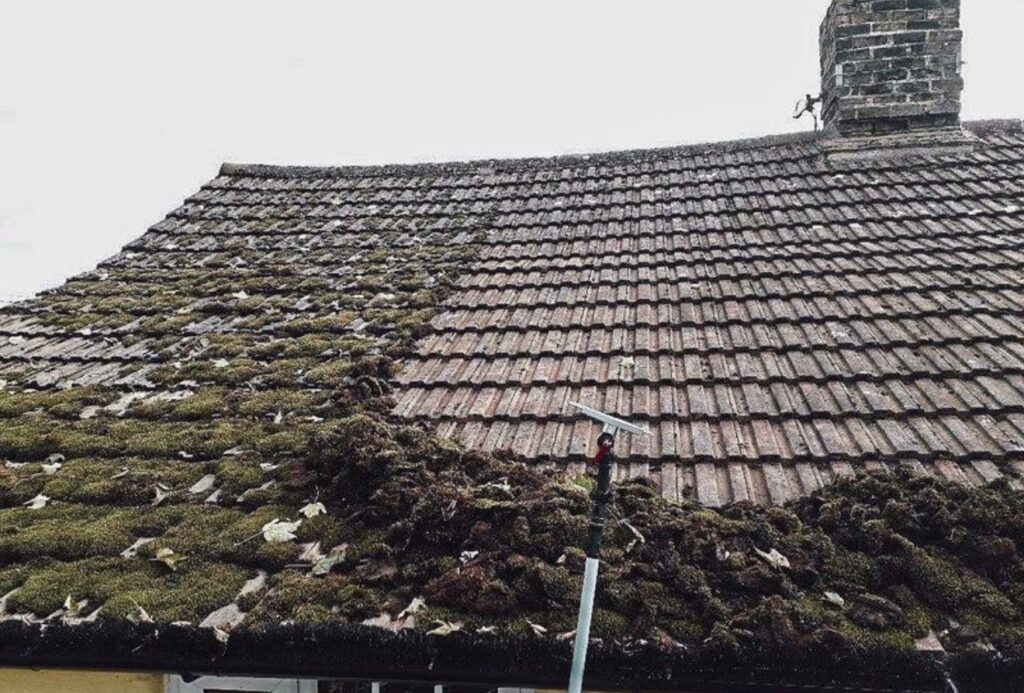
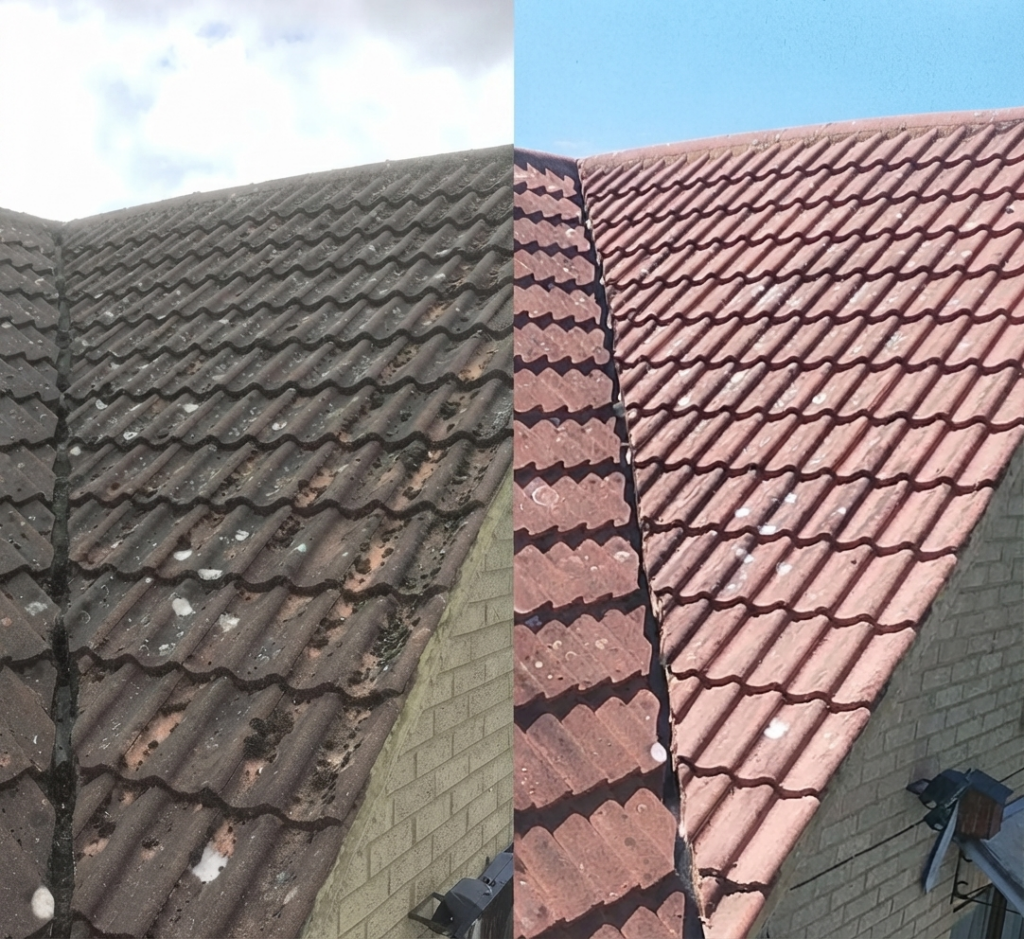
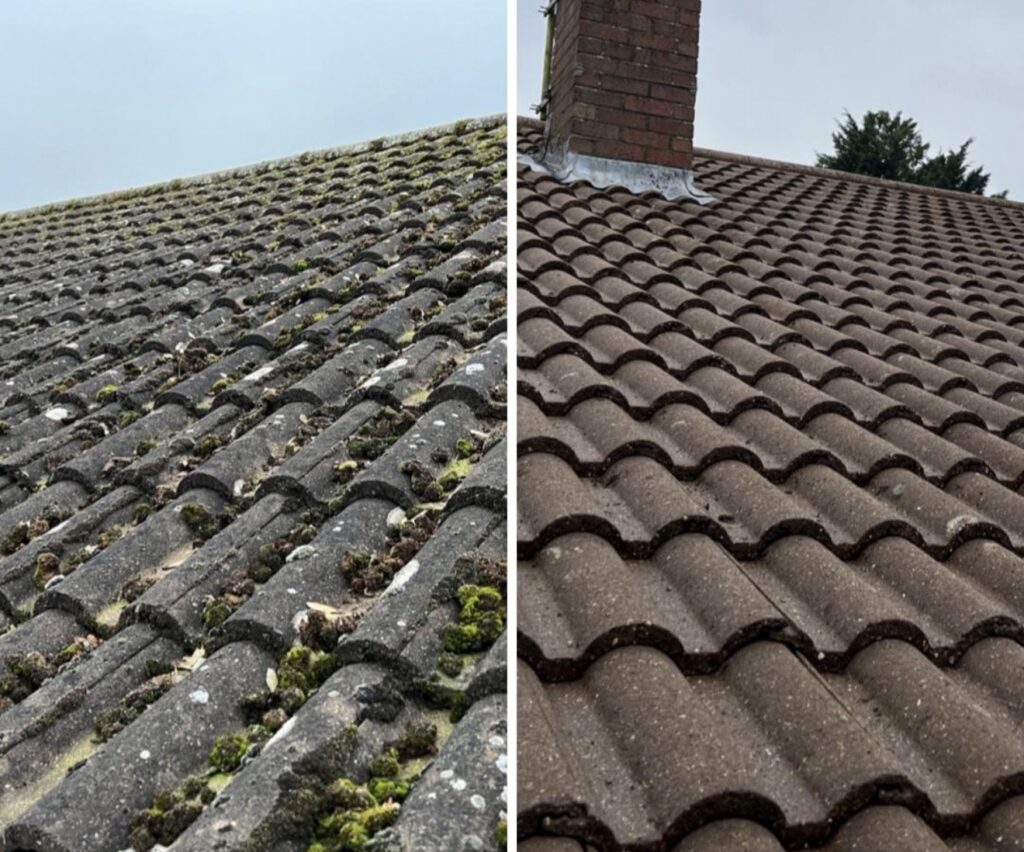
Images from Sky Scrapers Ltd work showing the methods described on this page.
Where this applies locally
Towns where this comes up most often on our patch:
- Softwashing & Biocide Treatment in AmpthillBedfordshire · MK45
- Softwashing & Biocide Treatment in FlitwickBedfordshire · MK45
- Softwashing & Biocide Treatment in BedfordBedfordshire · MK40
- How biocide treatment works after a roof cleanGuide
- What we put in place before anyone goes upProcess
- How does soft washing work?Method guide
Want a professional to handle it?
Ask us anything about the treatment
Tell us about ponds, planting or pets at quote stage and we will plan the work around them.
Sky Scrapers Ltd · info@sky-scrapers.co.uk
Questions we get asked
Will the treatment kill my plants?
Not with proper precautions. Planting is sheeted or wetted down first, ponds are covered, and application is planned around wind so solution stays on the target surface.
How long should pets stay inside?
While the treatment is being applied and until the treated surfaces and the ground below have dried. We will tell you when that is on the day.
Is it safe for a pond with fish in it?
Ponds are covered before any treatment goes up. Tell us at quote stage so we plan the work and the protection around it.
Can I grow vegetables under a treated roof?
Tell us where the beds are and we will cover them or keep the work away from them. It is a common request and easily managed.
Does it smell or leave a residue?
There is a mild odour during application that disperses quickly, and no visible residue on the surface once it has dried.
In short
Roof biocide is a diluted, low-pressure treatment that kills growth and then degrades. Planting is sheeted or wetted, ponds covered, pets kept in until dry and neighbours warned. Say what needs protecting before the day.
Related services
Covering Bedfordshire and surrounding counties