
How to stop algae coming straight back
Cleaning gets rid of what is there. Prevention decides how long you get to enjoy it. On a shaded roof in a damp British winter, the difference between good and poor aftercare can be several years of clean appearance.
This guide sets out what actually slows algae down, what makes no measurable difference, and which of the products sold as permanent solutions are worth considering.
Why algae keeps coming back
Algae is airborne. Spores land on every roof and wall in the country continuously, and they establish wherever there is moisture and something to hold onto. You cannot stop them arriving; you can only make the surface less hospitable when they do.
That is why the three variables that matter are moisture, shade and surface porosity. A porous, shaded, slow-drying surface will green up within a couple of seasons. An open, sunny, dense surface can stay clear for many years.
It also explains why the north elevation and the bottom courses of a roof always go first. They dry last.
What genuinely helps
- A proper biocide treatment after cleaning, which kills residue in the surface pores rather than just removing what is visible.
- Cutting back overhanging branches and tall planting so air and light reach the surface and it dries faster after rain.
- Keeping gutters and downpipes clear so water is not being held against the eaves and running down walls.
- Removing leaf litter from valleys, flat roof areas and behind chimney stacks before it composts into a growing medium.
- A maintenance treatment every couple of years on shaded elevations, which costs far less than a full clean once growth is established.
Biocide, and what it does
Biocide kills the organism and the residue left in the surface. Applied after a hand clean, it stops the rapid regrowth that otherwise happens because scraping never reaches what is embedded in tile pores.
It is not a coating and it does not build a barrier. It works chemically, then breaks down. That is a feature, not a shortcoming, because a treatment that stayed on the surface indefinitely would also change how the surface behaves.
Our full roof cleans include a written 24-month biocide guarantee, which is the period we are confident about rather than an open-ended claim.
Copper and zinc strips
Metal strips fitted at the ridge release ions that inhibit growth on the courses immediately below when rain washes over them. The effect is real but limited: it protects the strip below the fixing rather than the whole roof, and it fades with distance down the slope.
They are worth considering on a roof that has just been cleaned and treated, as a supplement. They are not a substitute for cleaning a roof that is already colonised, and they need to be fitted without damaging the ridge or the covering.
What does not work
Pressure washing as prevention is counterproductive. It opens the tile surface, which increases porosity, which speeds up recolonisation. Roofs that are jet washed regularly get worse over time, not better.
Sealants and roof coatings are a longer conversation and we have a separate honest guide on them. In brief, they change the roof covering into something with a maintenance liability, and on many roofs that is a worse position than an untreated tile.
Household bleach applied casually from a ladder is neither effective at depth nor safe for the planting below, and it is one of the more common reasons we get called to scorched borders.
A realistic maintenance rhythm
Full clean and treatment when growth is established, gutters cleared annually, a check of valleys and flat areas each autumn, and a maintenance soft wash on shaded elevations every two to three years. That keeps most properties in Bedfordshire looking cared for without ever needing another heavy clean.
Where a property sits under mature trees, expect to shorten those intervals rather than accept the growth. It is cheaper to keep on top of it than to start again.
Our own photographs
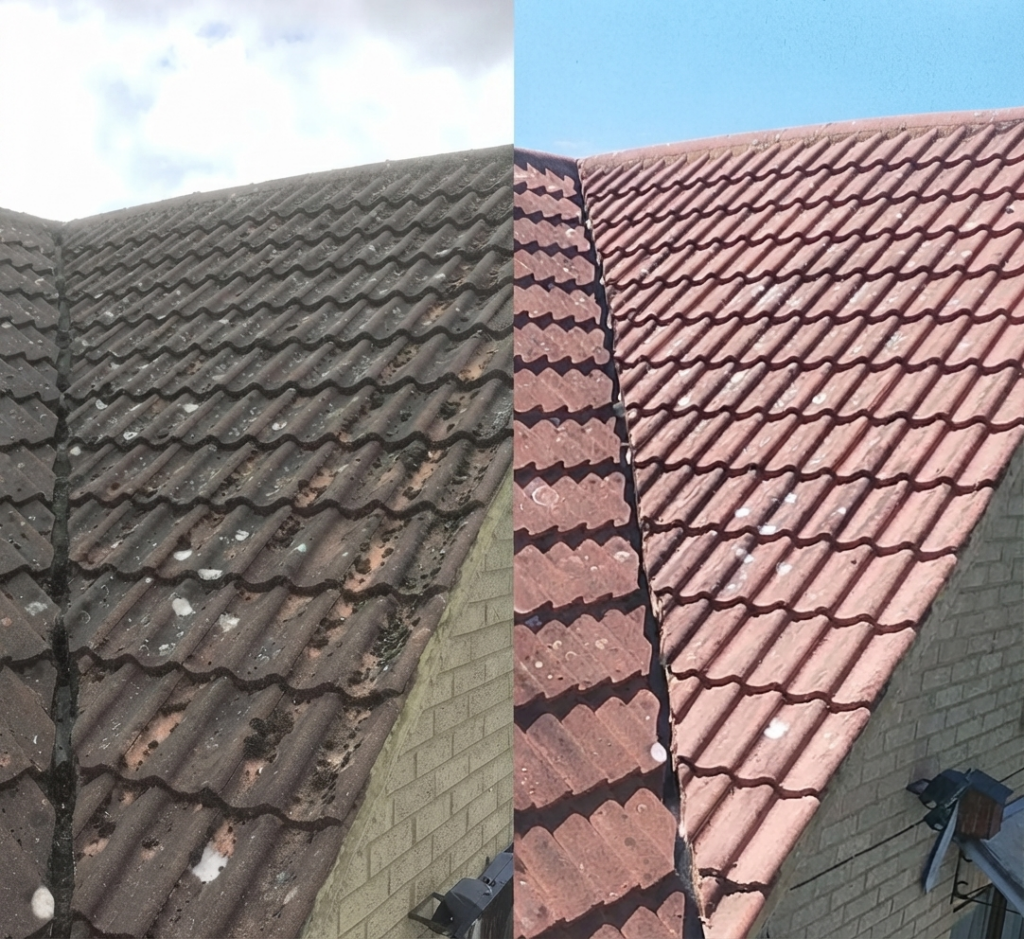
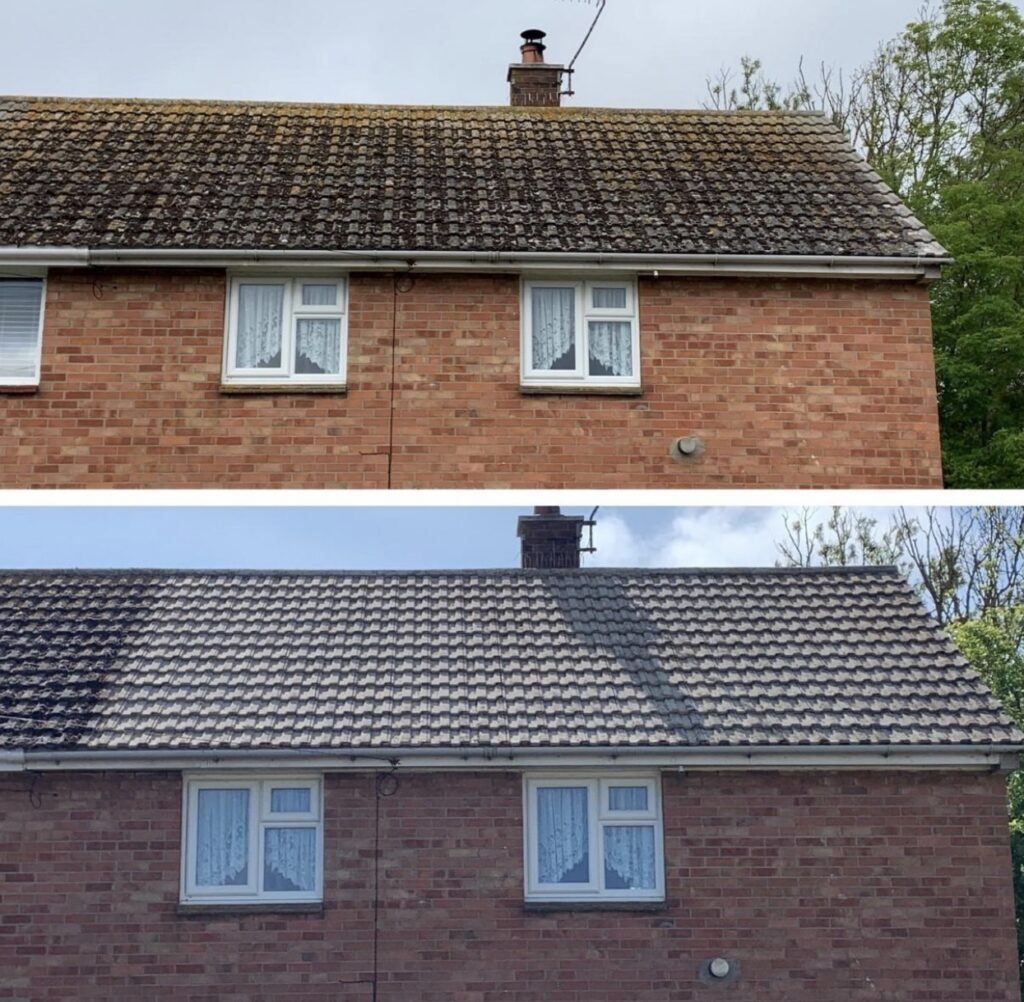
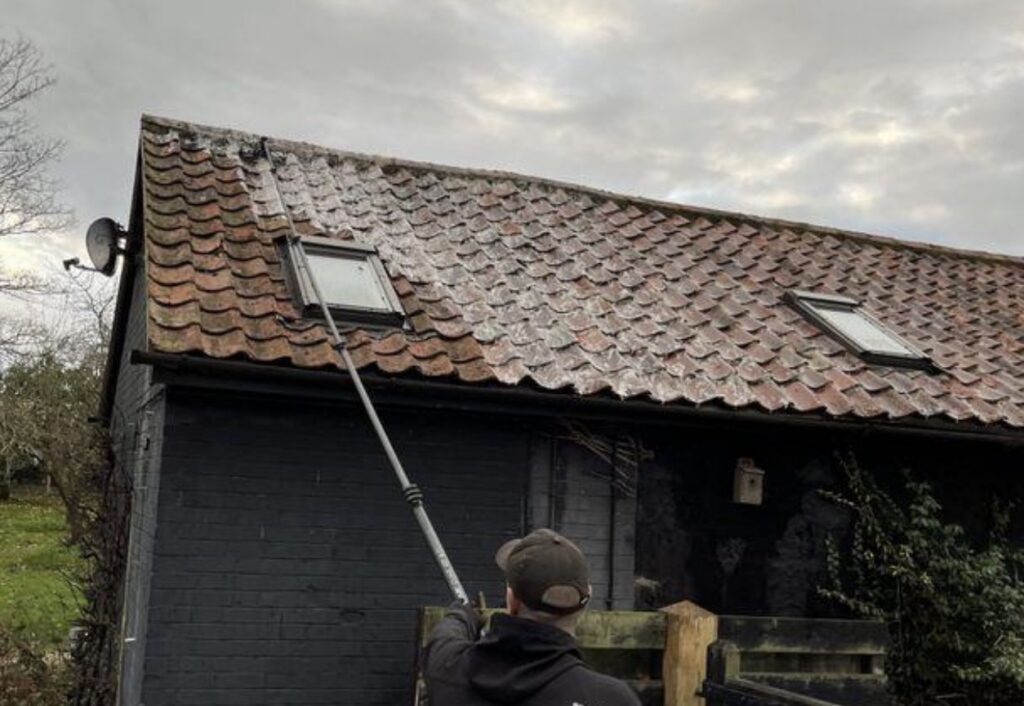
Images from Sky Scrapers Ltd work showing the methods described on this page.
Where this applies locally
Towns where this comes up most often on our patch:
Want a professional to handle it?
Keep it clean for longer
Ask about a maintenance treatment for shaded roofs and walls, or a full clean with our written 24-month biocide guarantee.
Sky Scrapers Ltd · info@sky-scrapers.co.uk
Questions we get asked
Can algae be prevented permanently?
No. Spores land continuously, so prevention is about slowing establishment rather than eliminating it. Good aftercare buys years, not permanence.
Do copper strips actually work?
They inhibit growth on the courses below where they are fitted, and the effect reduces further down the slope. Useful as a supplement after cleaning, not a substitute for it.
How often should a maintenance treatment be done?
Every two to three years on shaded elevations suits most properties, and less often on open, sunny roofs. It is far cheaper than letting growth re-establish.
Is bleach a cheap alternative to biocide?
No. It is harsher on planting, less effective on residue in the surface and does nothing that a properly applied treatment does not do better and more safely.
Does cutting back trees really make a difference?
A large one. Light and air movement dry a surface faster after rain, and dry surfaces colonise far more slowly.
In short
Algae returns wherever a surface stays damp and shaded. Biocide treatment, clear gutters, cut-back planting and a maintenance wash every couple of years hold it off. Pressure washing and casual bleach make things worse.
Related services
Covering Bedfordshire and surrounding counties