
Aftercare: how to keep a roof clean for longer
The work does not end the moment a roof is clean and treated. What happens around the property in the following months and years has a real effect on how long that clean, treated state lasts, and a few sensible habits can meaningfully extend the interval before a roof needs full attention again.
None of this requires going anywhere near the roof yourself — the most effective aftercare steps are ground-level and low-effort, but they are easy to overlook once the visible job of cleaning is done.
Practical aftercare steps
- Keep gutters clear, since blocked gutters hold water against the eaves and encourage regrowth exactly where a roof is most vulnerable.
- Trim back overhanging branches where practical, reducing shading, leaf litter and the airborne spore load close to the roof surface.
- Do a simple visual check from the ground each spring and autumn, catching early signs before they become established growth.
- Avoid walking on the roof yourself for any reason, since footfall damage undoes the benefit of careful cleaning far faster than natural regrowth would.
- Address any water pooling or drainage issues on the roof itself promptly, since standing water is what growth needs most.
Why aspect and shading still matter after treatment
Treatment slows regrowth, but it does not change the fundamental physical conditions of a roof — a shaded, north-facing pitch will always be more prone to regrowth than a sunny, well-drained one, treatment or not. Realistic expectations for different parts of the same roof matter here: a front pitch in full sun might stay clean for a very long time, while a shaded rear pitch under trees may need attention sooner, regardless of how well the whole roof was treated.
When to book the next visit
Rather than working to a fixed calendar reminder, use the visual checks described above as your trigger — book a follow-up when early signs of growth reappear, particularly on shaded areas, rather than waiting for the whole roof to look visibly tired again. Catching it early keeps future visits quicker and less involved than the original clean.
Book a follow-up when the time is right
Keep an eye on your roof using the checks above, and get in touch when it is worth a look — we would rather see a roof at the early-signs stage than after years of neglect.
Sky Scrapers Ltd · info@sky-scrapers.co.uk
Our own photographs
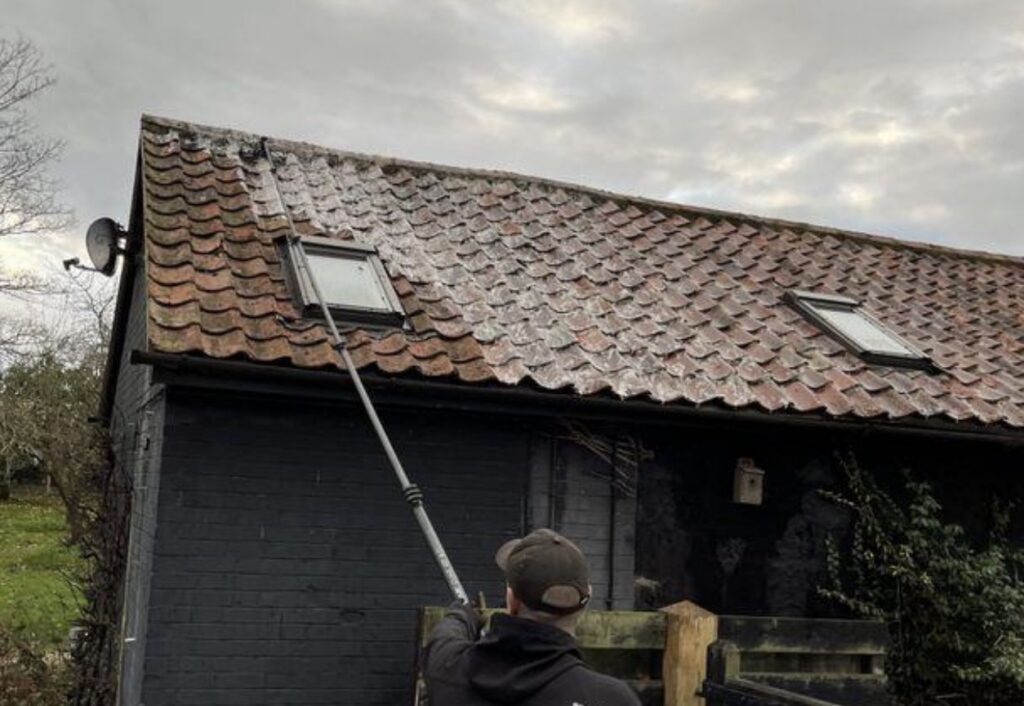
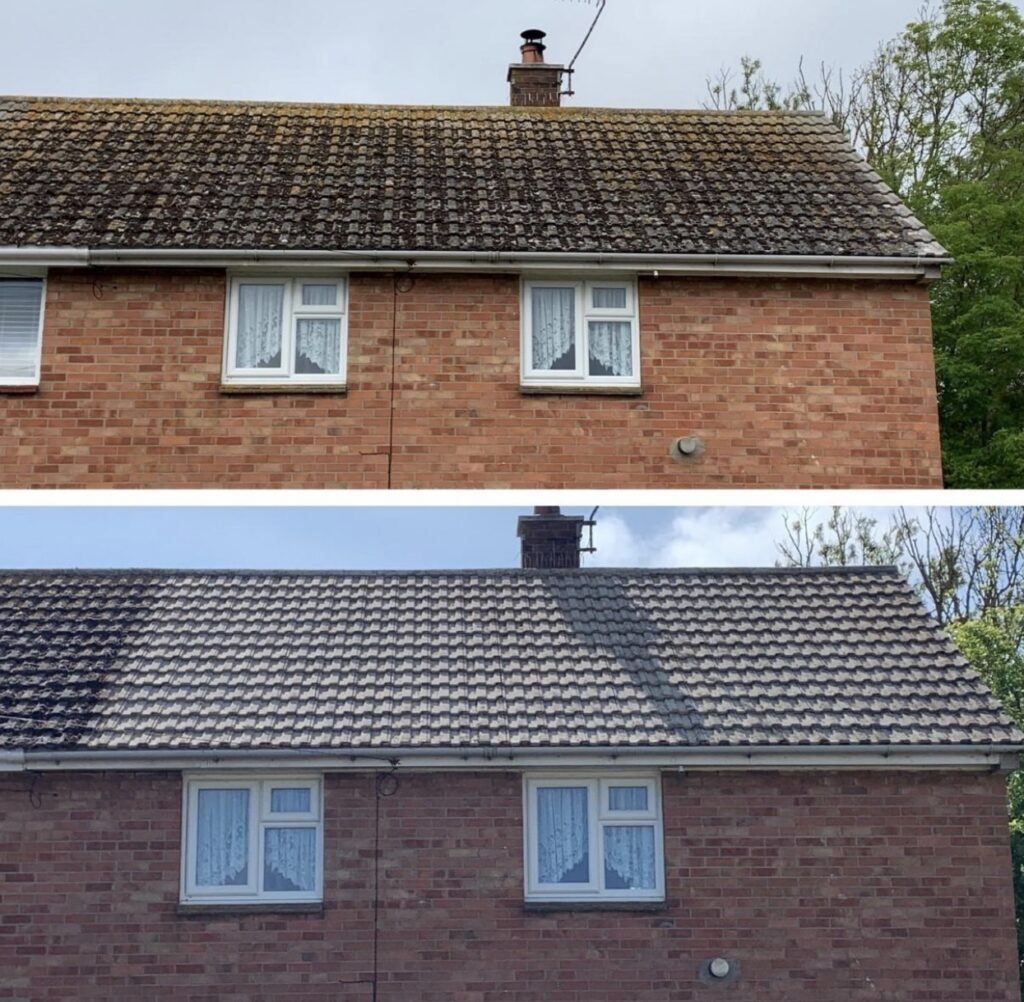
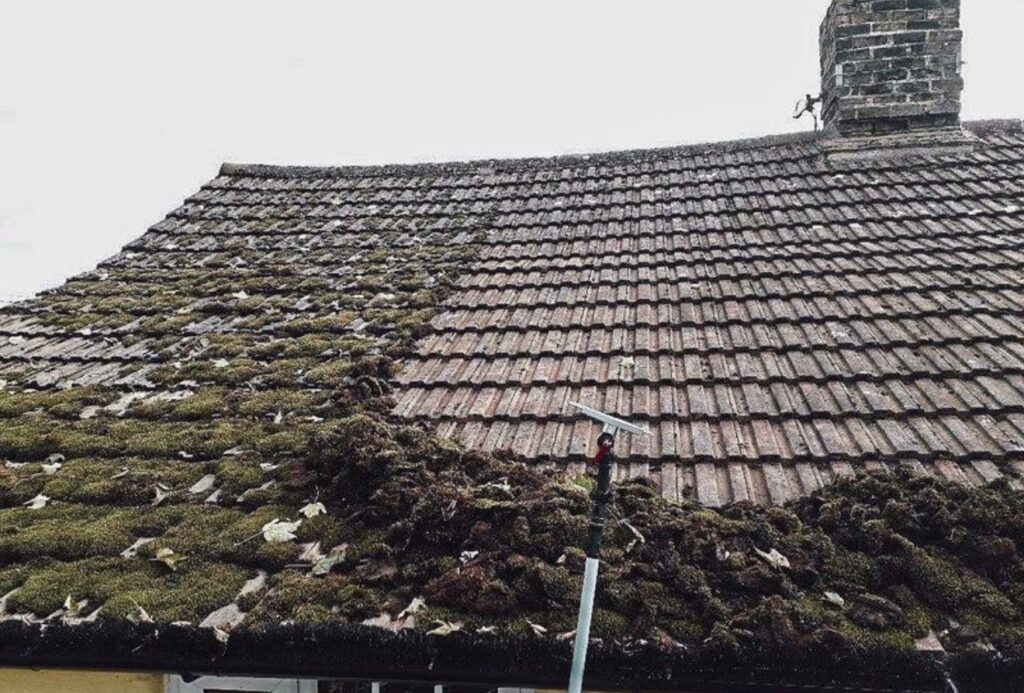
Images from Sky Scrapers Ltd work showing the methods described on this page.
Where this applies locally
Towns where this comes up most often on our patch:
Questions we get asked
Does keeping gutters clear really affect the roof itself?
Yes — blocked gutters hold water at the eaves line, which is exactly the damp, sheltered condition that moss and algae need most, so clear gutters genuinely help slow regrowth there.
Is there a product I can apply myself to maintain the roof between visits?
We would be cautious about recommending DIY products for roof application, given the access risks involved in applying anything to the roof surface yourself — see our guide on DIY moss removal risks.
How do I know if my roof is regrowing faster than expected?
Compare it against your own spring and autumn ground checks — a return of green tinting or moss cushions noticeably sooner than in previous cycles is worth a look.
Does trimming trees near my roof really make a difference?
Yes, meaningfully — reduced shading and lower leaf litter both slow the rate at which moss and algae re-establish on affected pitches.
Summary
Clear gutters, trimmed overhanging vegetation, regular ground-level checks and avoiding foot traffic on the roof all extend the benefit of a clean and treatment. Book follow-up visits based on early signs, not a fixed calendar.