
What actually happens if you leave the moss alone
Roof cleaning is sold with a lot of alarm. It is worth separating what moss genuinely does to a building from what gets said to close a sale, because the honest version is still a good enough reason to deal with it.
This guide follows an untreated roof through the years and sets out what changes, what it costs and at which point the problem stops being cosmetic.
Need this sorted?
Need roof moss removal? Get a quote from Sky Scrapers.
Years one to five: cosmetic
The first thing to appear is algae: a thin green-black film, worst on the north-facing slope and the bottom courses. At this stage nothing is being damaged. The roof looks tired, and that is all.
This is also the cheapest possible moment to act. A soft wash treatment at this stage costs a fraction of a full clean later and there is no bulk material to remove or take away.
Years five to ten: the moss establishes
- Cushions form in the tile joints and along the bottom two or three courses where water lingers longest.
- Valleys and the areas behind chimney stacks begin to pack with material.
- Granules and moss fragments start washing into the gutters with every downpour.
- The roof begins holding significant water weight after rain, and dries much more slowly than it did.
- Ridge and verge mortar joints stay damp for longer periods, which is where frost damage starts.
Years ten and beyond: the real consequences
Gutters block properly rather than partially. Water then runs down the wall instead of through the drainage, which produces staining, saturated masonry, green growth on the render and eventually damp inside.
Blocked valleys are the more serious version of the same problem, because water backing up in a valley goes under the tiles rather than over the wall.
Frost is the mechanism that turns moss into damage. Moss holds water in joints and against mortar; when that water freezes it expands, and repeated cycles break down pointing, cement fillets and the bedding under ridge tiles. That is how a cleaning job becomes a repointing job.
Weight is real but usually overstated. A soaked, heavily mossed roof carries a meaningful additional load, but on a sound structure it is rarely the thing that causes a problem. Blocked drainage and frost damage to mortar are the genuine risks.
What is oversold
Moss does not eat tiles. Concrete and clay are not food, and lichen roots do not dissolve a sound covering. What growth does is hold moisture against the surface and into the joints, and it is the moisture and frost that do the work.
Claims that an unclean roof will fail structurally, void your buildings insurance or halve the value of your house are sales talk. What is true is that an obviously neglected roof affects how a property presents to buyers and surveyors, and that overflowing gutters cause real, chargeable damage.
The cost curve
The cost of dealing with a roof rises much faster than the growth does. Treatment on a light film is the cheapest intervention available. A hand clean with waste removal on twenty years of growth is a full day of careful labour. Repointing a ridge that has been kept wet for a decade is a different budget again.
That is the entire argument for acting early, and it is more persuasive than anything about structural collapse.
When leaving it is the right call
If a roof is genuinely near the end of its life and due for replacement in the next couple of years, cleaning it is usually money better kept. We will tell you that rather than taking the work.
Similarly, if you are dealing with a light film and the gutters are clear, waiting a season and doing it properly at the right time of year is perfectly sensible.
Our own photographs
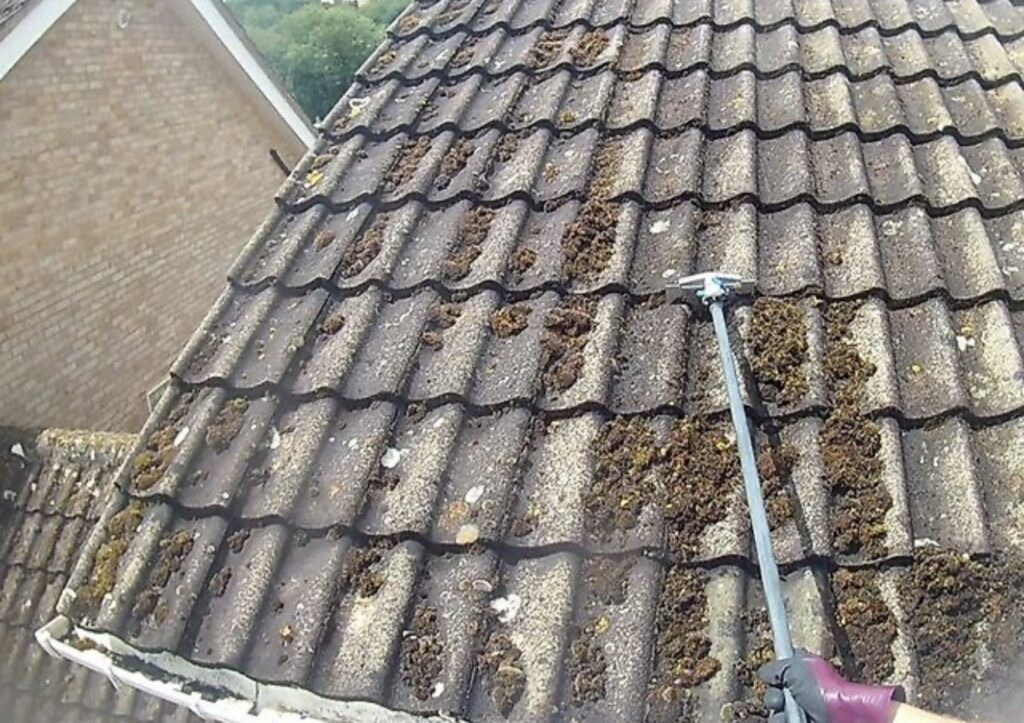
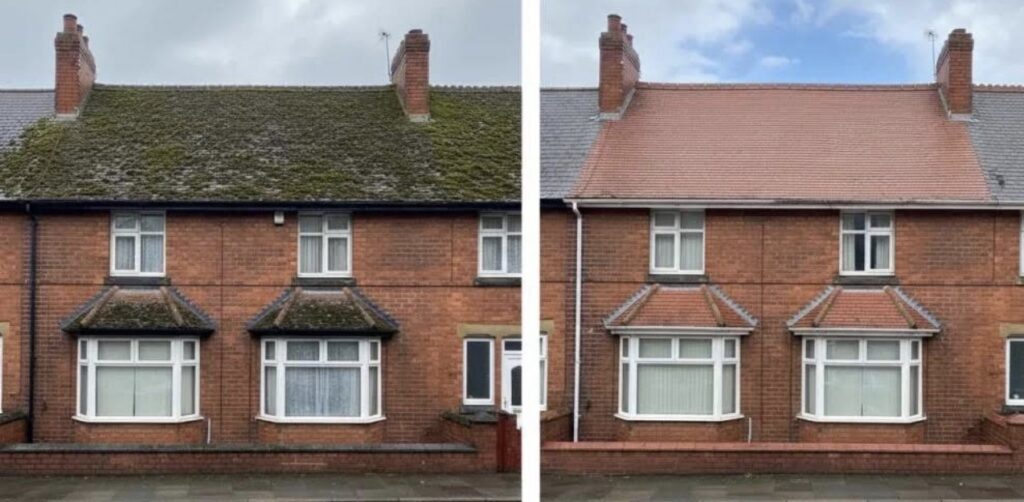
Images from Sky Scrapers Ltd work showing the methods described on this page.
Where this applies locally
Towns where this comes up most often on our patch:
- Roof Moss Removal in BedfordBedfordshire · MK40
- Roof Moss Removal in LutonBedfordshire · LU1
- Roof Moss Removal in AmpthillBedfordshire · MK45
- Is moss on a roof actually a problem, or just cosmetic?Guide
- How urgent is it? Triaging what you can see from the groundDiagnosis guide
- When we would tell you not to bother cleaning your roofHonest advice
Want a professional to handle it?
Deal with it before it gets expensive
Free, honest assessment, including telling you if your roof does not need doing yet.
Sky Scrapers Ltd · info@sky-scrapers.co.uk
Questions we get asked
Does moss actually damage roof tiles?
Not directly. It holds moisture against the surface and in the joints, and frost acting on that moisture damages mortar, pointing and bedding over time.
Is the weight of moss a structural risk?
On a sound roof, rarely. The genuine risks are blocked gutters and valleys and frost damage to mortar rather than the load itself.
How long can I leave it?
A light film can wait a season. Once cushions have formed and gutters are filling, delaying simply increases the cost of the eventual clean.
Will an unclean roof affect selling the house?
It affects presentation and can prompt questions during a survey. It is not a structural defect, but buyers read it as neglect.
Is it ever not worth cleaning?
Yes. If the covering is near the end of its life and due for replacement, cleaning is money better spent elsewhere and we will say so.
In short
For the first few years moss is cosmetic. After that it blocks gutters and valleys and keeps mortar wet, and frost turns that into repointing work. The tiles are not being eaten, but the cost of fixing it climbs steadily.
Related services
Covering Bedfordshire and surrounding counties