
Is moss on a roof actually a problem, or just cosmetic?
Moss on a roof gets talked about in fairly alarmist terms by some cleaning companies, and dismissed as purely cosmetic by others. The realistic answer sits between those two positions: light to moderate moss is mostly a visual issue, but growth left unaddressed for years can start to cause genuine problems for the covering underneath.
This page sets out that distinction plainly, without exaggerating the risk to sell a job or downplaying it to the point of being unhelpful.
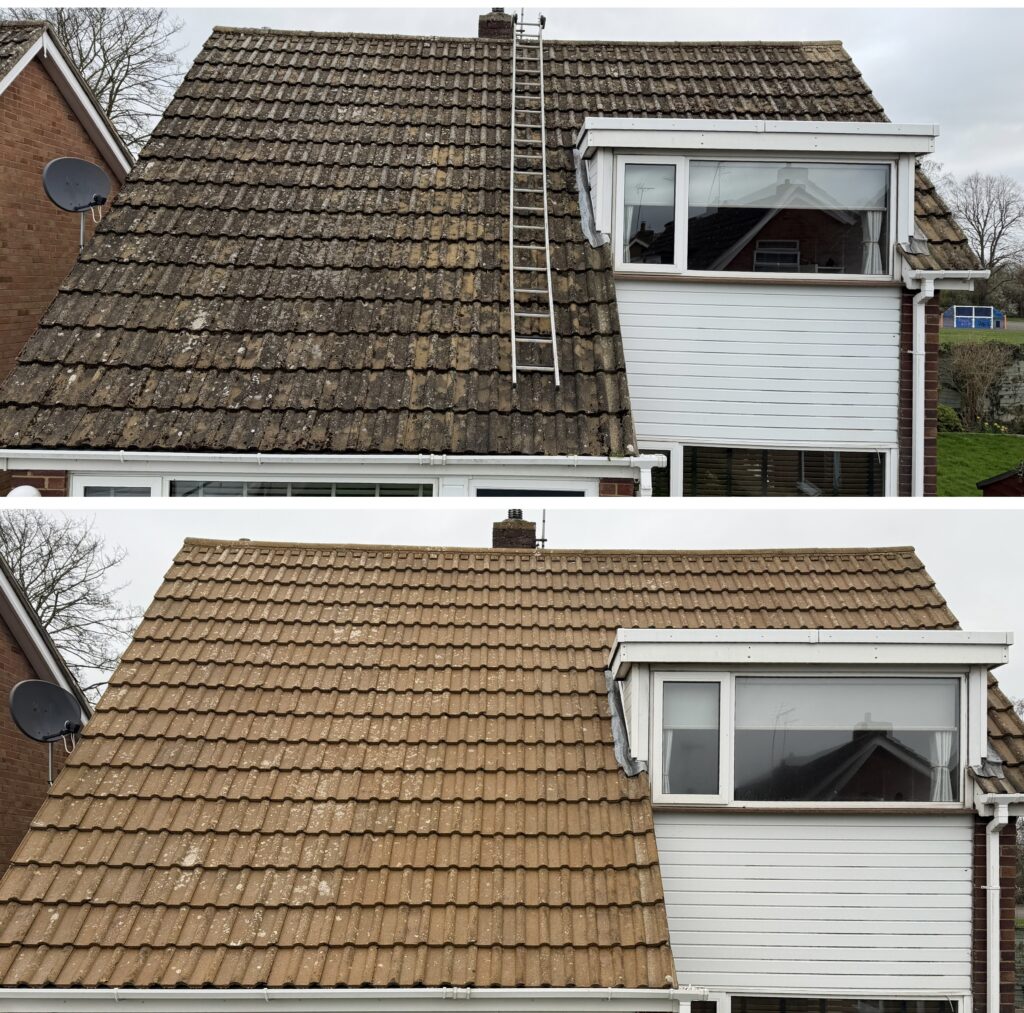
Why light moss is mostly cosmetic
A light dusting of moss or algae film on a well-maintained roof does not, on its own, threaten the covering. Tiles and slates are designed to shed water even with some surface growth present, and the main effect at this stage is visual — a roof that looks tired and green rather than one that is failing.
How the risk builds over time
- Thick moss mats hold water against the tile surface for far longer than a clean tile would, keeping the covering permanently damp.
- Moss growing into the overlaps between tiles can lift tile edges slightly, creating a path for water to track further under the covering than it should.
- Established growth adds weight, particularly when saturated after rain, which is rarely significant on its own but is an added load on an already ageing roof.
- Moss at the eaves can restrict water flow into the gutter, encouraging water to sit at the tile edge instead of running clear.
- In cold weather, saturated moss can freeze, and the expansion can stress tile edges that are already lifted.
Where the balance sits
The practical takeaway is that moss is worth addressing well before it reaches the thick, established stage, both because it is easier and cheaper to deal with at that point and because it genuinely reduces the small risks described above. Waiting until moss has been growing unchecked for many years is when it stops being purely a cosmetic issue.
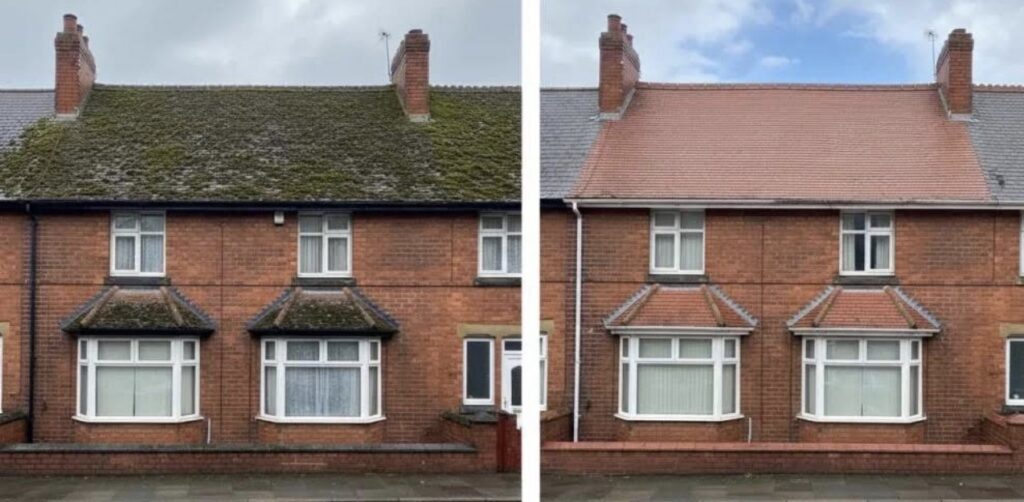
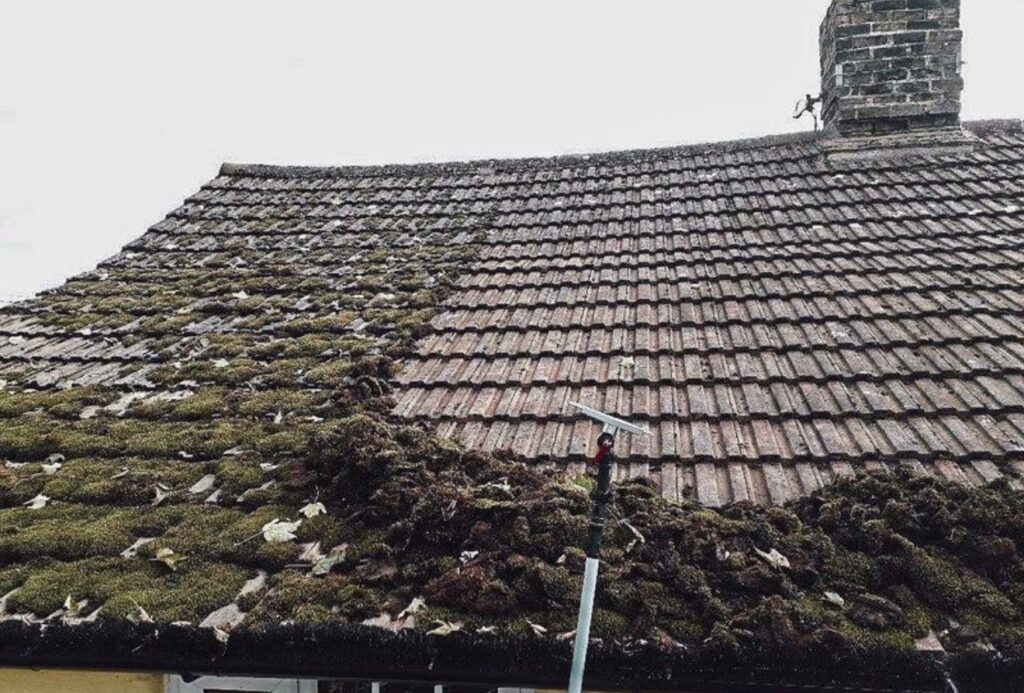
Our own photographs
Images from Sky Scrapers Ltd work showing the methods described on this page.
Where this applies locally
Towns where this comes up most often on our patch:
Questions we get asked
Will a small amount of moss cause my roof to leak?
On its own, unlikely in the short term. The risk builds as growth thickens and holds water against the tile and into the overlaps over an extended period.
Does moss damage the roof structure underneath?
Moss itself acts on the tile surface and overlaps rather than the structural timbers, but a roof that has been allowed to stay wet for a long time is more vulnerable generally.
Is moss on chimneys and ridge tiles a concern?
It is worth attention because ridge and chimney junctions are already common points for minor leaks, and moisture-holding growth in these areas adds to that risk rather than reducing it.
Should I remove moss myself if it looks minor?
Even light moss removal carries real risk if done without the right footing and tools — see our guide on DIY roof moss removal risks before attempting it yourself.
Get a straight view on your moss level
Send us a photo of your roof and we will tell you honestly whether it is a cosmetic issue or worth addressing sooner rather than later.
Sky Scrapers Ltd · info@sky-scrapers.co.uk
Summary
Light moss is largely cosmetic; thick, established moss held against the tile for years starts to genuinely affect the covering. Addressing growth early keeps it in the cosmetic category.