
The checks that happen before the first ladder goes up
Working at height goes wrong at the bottom of the ladder far more often than at the top. Soft ground, a sloping drive, a hidden drain cover or a gust that was not there ten minutes ago account for most of it.
Customers rarely see this part of the job and almost never ask about it, which is a shame, because it is the clearest signal of whether a company is competent.
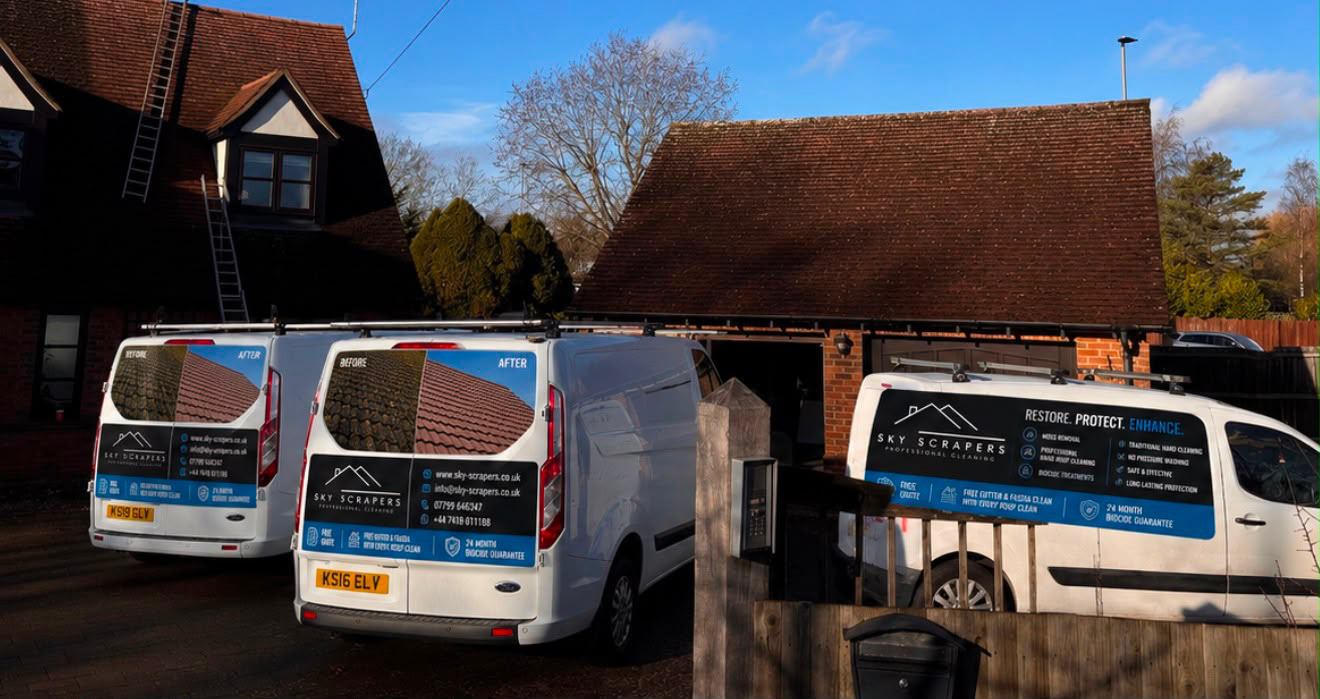
Ground level, first
- Firm, level footing with no drain cover, soft border or loose slab under the stiles.
- Nothing fragile directly below the working area, including glass, pots and garden features.
- Overhead cables and service runs identified before anything is raised near them.
- Pedestrian and vehicle movement considered, with cones out where a lane or shared drive is involved.
- Pets and children accounted for, and gates that could be opened unexpectedly secured.
The equipment itself
Ladders are inspected rather than assumed, tied or footed rather than balanced, and set at the correct angle rather than the convenient one. Roof ladders and staging are used where the work needs the roof to carry a person.
We use our own equipment, maintained by us, rather than whatever happens to be on the van that week. That matters because familiar kit in known condition is safer kit.
The roof, before it is loaded
Covering type and condition, the state of the ridge and verge, any obviously slipped or cracked tiles, whether previous work has left damage, and where the safe walking lines are if any.
Anything of concern is photographed and shown to you. Where we find chimney or ridge defects that need putting right, that is work our own team carries out, so the person who found it is the person who fixes it.
The weather window
Wind speed is checked before starting and monitored during the day. A morning that starts still and turns gusty by mid-afternoon means coming down, and we would rather move a job than finish one badly.
Frost, ice and heavy rain are treated the same way. No deadline is worth someone coming off a roof, and any customer who understands that is a customer we can work for properly.
Our own photographs
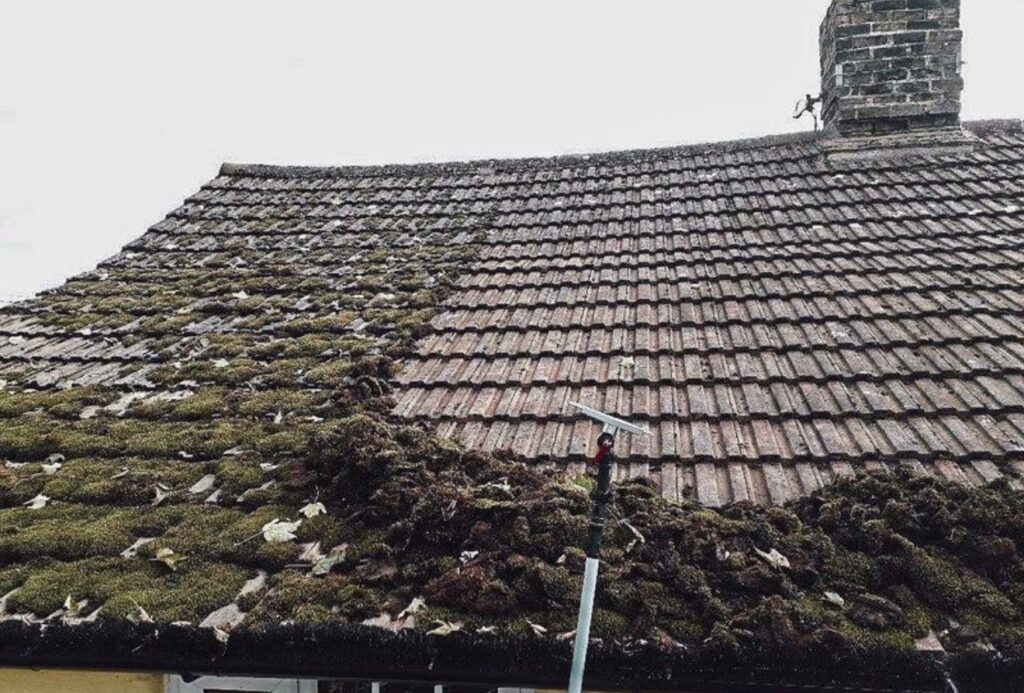
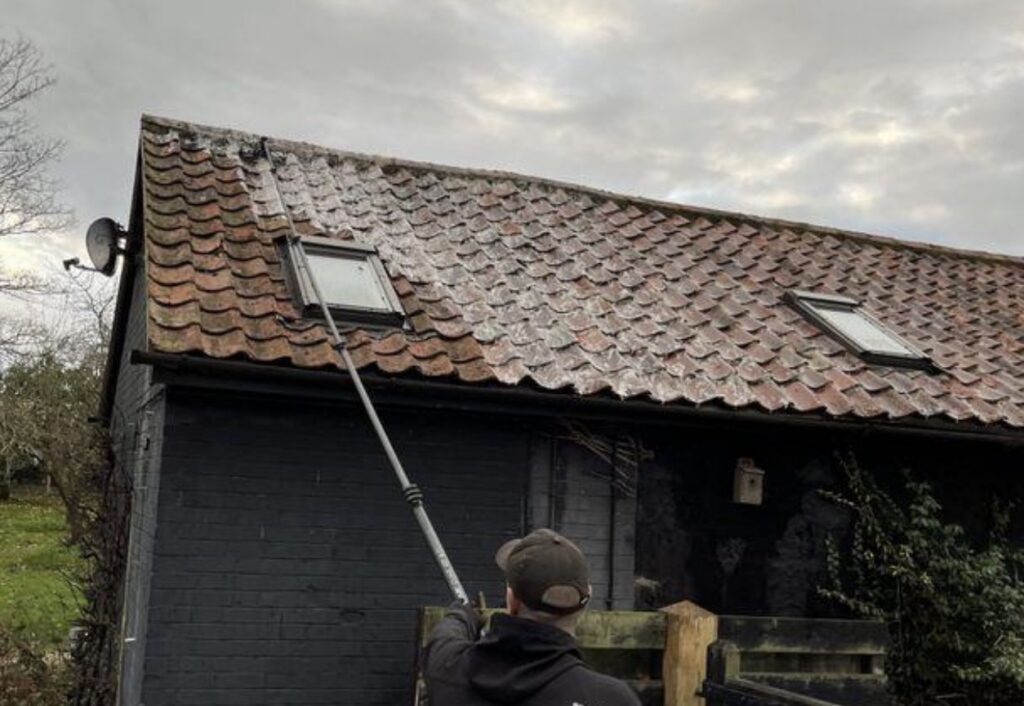
Images from Sky Scrapers Ltd work showing the methods described on this page.
Where this applies locally
Towns where this comes up most often on our patch:
Questions we get asked
Why should I care how the ladder is footed?
Because most falls start at ground level. Footing, angle and what is underneath say more about a company's competence than anything on its website.
Will you stop work if the wind picks up?
Yes. We come down, secure the site and rebook. No job is worth pushing through gusty conditions.
Do you use your own equipment?
Yes, our own access equipment, maintained by us, carried in our own signwritten vans and used by our own uniformed team.
What if you spot something dangerous on the roof?
We photograph it and tell you. If it is chimney or ridge work we can put it right ourselves, and if it is structural roofing we say so plainly.
Ask us how we would work safely
Any company should be able to explain its access plan for your property before quoting. Ask us and we will.
Sky Scrapers Ltd · info@sky-scrapers.co.uk
In short
Check the ground, the cables, the equipment, the covering and the wind before anything goes up, photograph concerns, and stop when conditions turn.