The real risks of removing roof moss yourself
It is entirely understandable to look at a mossy roof and think it is a job you could do yourself with a ladder and a stiff brush over a weekend. Some of it genuinely could be — the issue is less about ability and more about the specific risks involved, several of which are not obvious until something has already gone wrong.
This page sets these out plainly, not to talk anyone out of maintaining their own property, but because the two most common calls we get after a DIY attempt are for a fall injury near-miss and for cracked tiles that then need repair before any cleaning can even begin.
The risks that matter most
- Falls from height — the single most serious risk, and one that scales with roof height and pitch regardless of experience.
- Cracked or dislodged tiles from standing directly on the covering without a roof ladder to spread weight.
- Incomplete treatment — scraping visible moss off the surface without addressing what is left in the overlaps, meaning it returns quickly.
- Pressure washer misuse — a hired pressure washer used on tiles at close range can strip the protective surface and drive water under laps.
- Damage to gutters, aerials or roof-mounted fittings from unfamiliar footing or tools being dropped.
Why professional access equipment matters more than skill
Most DIY roof incidents are not caused by lack of skill in the cleaning task itself — brushing moss off a tile is not technically difficult. They are caused by inadequate access equipment: a single extension ladder used for a job that needs a roof ladder or proper staging, or a pitch worked from an angle that puts the person off balance for the whole task.
This is the gap that is hardest to close with enthusiasm alone, because the right equipment for working safely and without damaging the roof is not something most households own or use regularly enough to be confident with.
What is reasonable to do yourself
Ground-level checks, gutter clearing from a stable, properly footed ladder at a safe height, and general observation of roof condition are all reasonable DIY tasks. Actually working on the roof surface itself — walking pitches, scraping moss, applying treatment — is where the balance of risk shifts considerably.
Let us take on the roof-level risk
If you have been considering doing this yourself, get in touch first — we are happy to talk through what is actually involved before you commit to a weekend on a ladder.
Sky Scrapers Ltd · info@sky-scrapers.co.uk
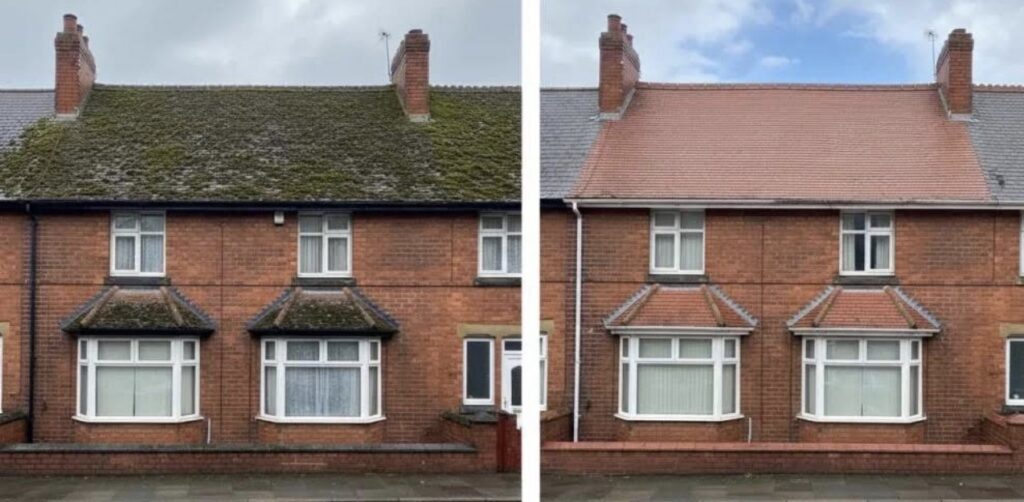
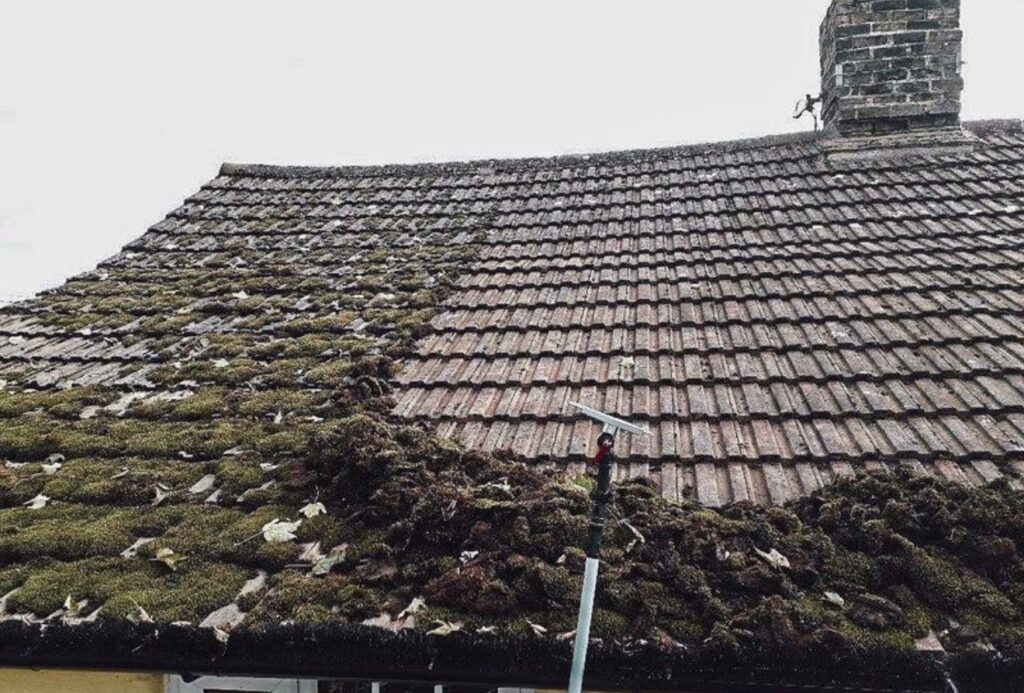
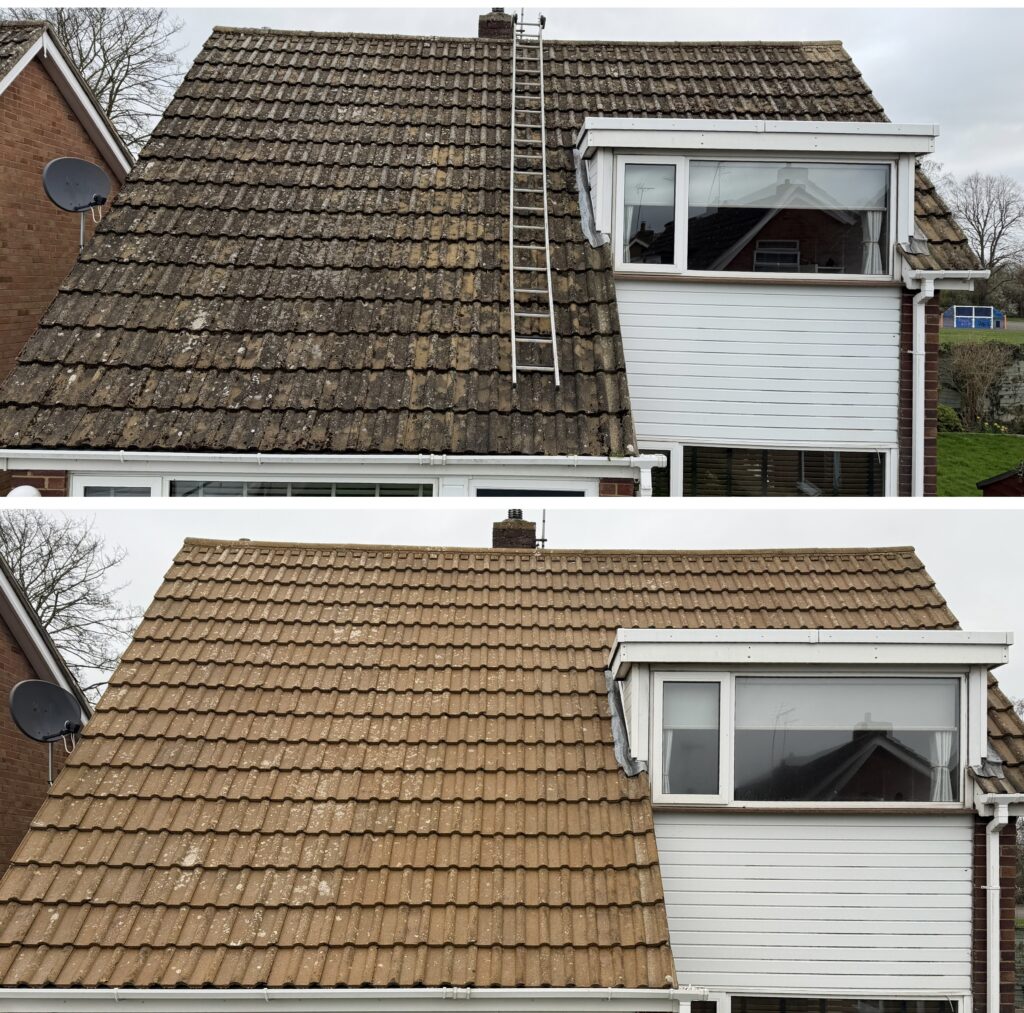
Our own photographs
Images from Sky Scrapers Ltd work showing the methods described on this page.
Where this applies locally
Towns where this comes up most often on our patch:
Questions we get asked
Is it ever reasonable to clean a low, single-storey roof myself?
The risk is lower but not absent — falls from single-storey height still cause serious injury, and tile damage from unsupported footing happens regardless of roof height.
Can a hired pressure washer be used safely on a roof?
We would not recommend it. Even at reduced settings, pressure washing on close range to a roof tile risks stripping the protective surface and forcing water under overlaps.
What is the biggest mistake people make attempting DIY roof moss removal?
Standing directly on the tile surface without a roof ladder to spread weight, which is how most cracked tiles happen, often without the person even noticing at the time.
If I've already had a go and cracked a tile, what should I do?
Get it assessed before more water gets in — a single cracked tile is a straightforward repair if dealt with promptly, but left through a wet spell it can lead to a bigger problem.
Summary
The main risks of DIY roof moss removal are falls, tile damage from unsupported footing, and incomplete treatment that lets moss return quickly. Ground-level checks are reasonable DIY; working the roof surface carries real risk.