
Working at height: what should happen on your roof
Short answer: every roof job should start with a decision about access, made before anyone leaves the ground, and the person doing it should be insured. Most domestic roof accidents come from skipping the first part.
This page sets out how safe access is chosen, what a properly run site looks like from your driveway, and the questions worth asking any company before they start.
How access gets decided
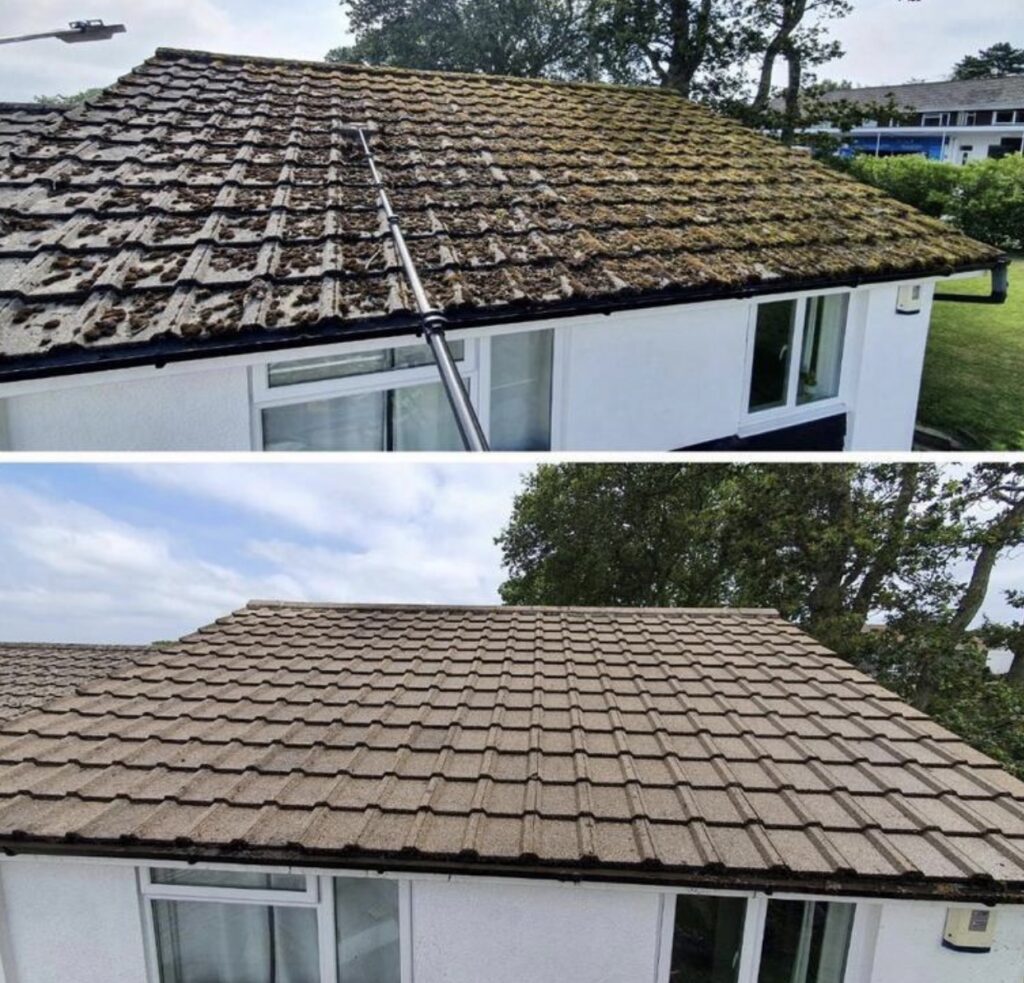
The principle behind the working at height rules is simple: avoid working at height where you can, use equipment that prevents a fall where you cannot, and only then look at reducing the consequences of one. In practice that means we use pole-based methods from the ground where the job allows, and only go up where the work genuinely requires it.
When access is needed, the choice is between ladders and roof ladders for short-duration work, towers where the work is longer or the position awkward, and powered access on high or difficult elevations. That decision is made on the specific roof, not on what happens to be in the van.
What a properly run job looks like
- A survey and access plan before anything is touched.
- Ladders tied or footed, on firm level ground, at the correct angle.
- An exclusion zone below the work, with the area kept clear of people, cars and pets.
- Ground sheeting to protect planting and paving from falling debris.
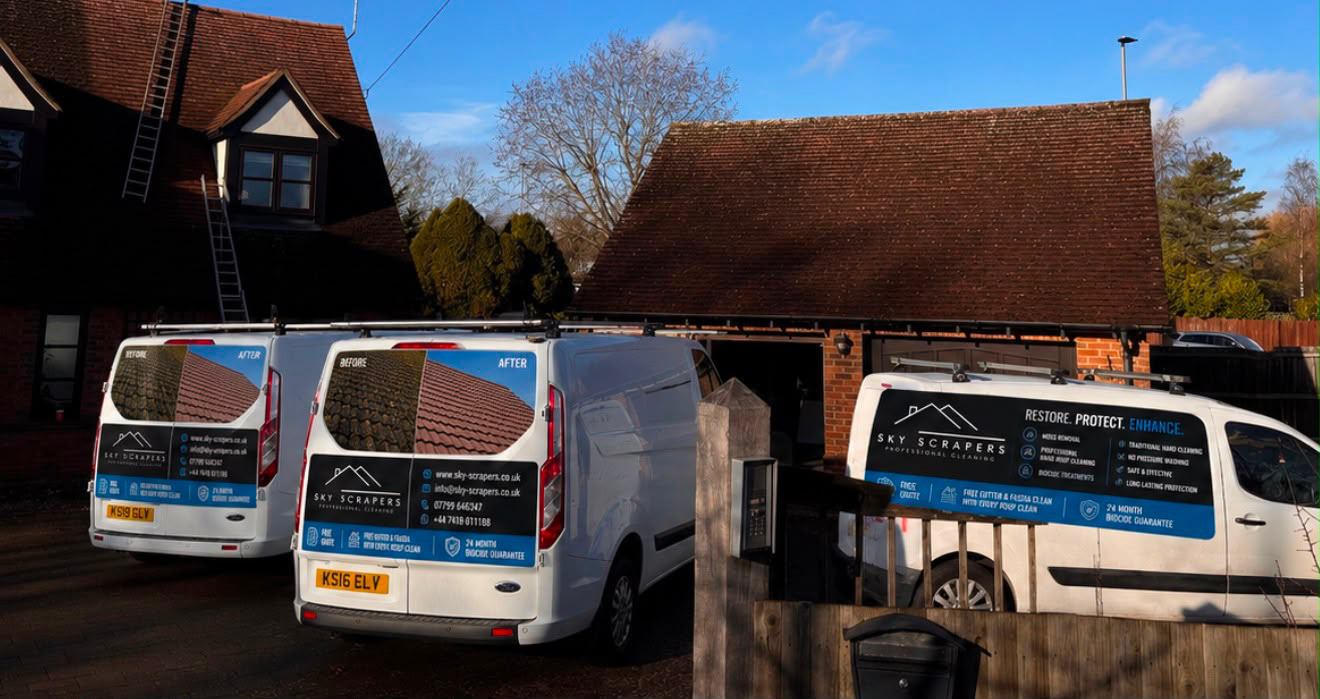
- Uniformed team members in signwritten vans, so you know who is on your property.
- Full insurance in place, and a company that answers the question straight when you ask about it.
Questions worth asking before booking
Ask what access equipment will be used and why. Ask whether the people on site are employed by the company you are hiring. Ask them to confirm they are insured. We are a family-run, fully insured local team using our own people, and we are happy to answer all three before you commit to anything.
Our own photographs
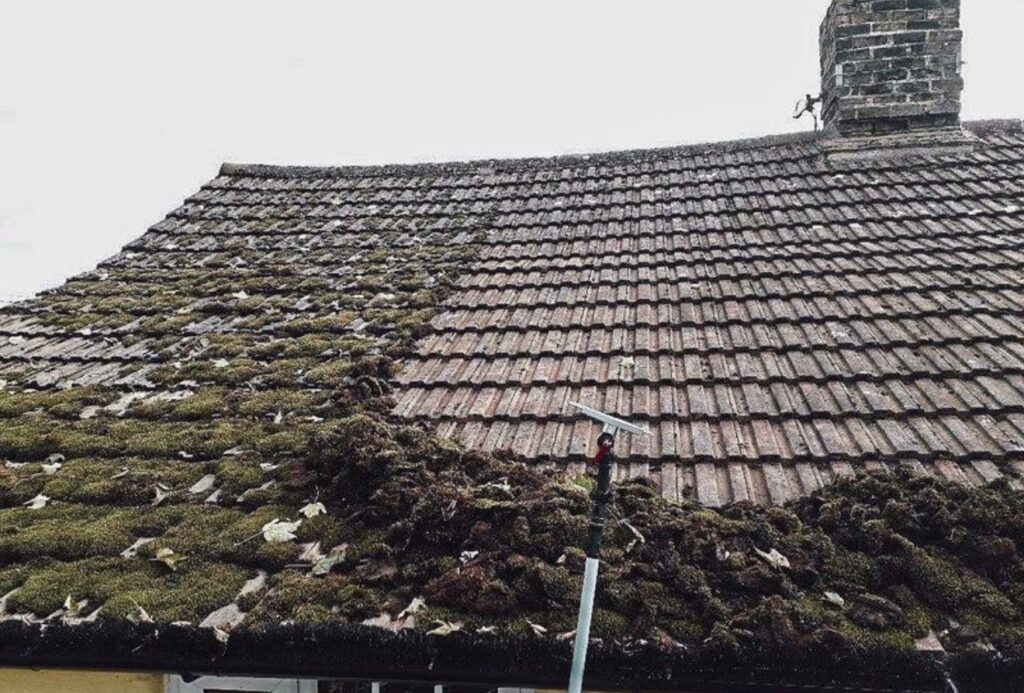
Images from Sky Scrapers Ltd work showing the methods described on this page.
Where this applies locally
Towns where this comes up most often on our patch:
Questions we get asked
Do you need scaffolding for every roof clean?
No. Scaffolding is one option among several. Many roofs can be worked safely from ladders and roof ladders, or from the ground with pole systems, and we choose per property.
Are you insured?
Yes, we are fully insured. It is a fair question to ask anyone working at height on your home, and you should expect a straight answer.
Do I need to move my car?
Usually yes, along with anything else under the working area. We will tell you what to clear before the day so the exclusion zone is straightforward.
Is pole work from the ground as effective?
For some jobs, yes, and it removes the height risk entirely. For heavy moss that needs physical clearing, hand work on the roof is still the honest answer.
Ask us anything about how we work
We will explain the access plan for your roof before you book, in plain terms. Free quote, no obligation.
Sky Scrapers Ltd · info@sky-scrapers.co.uk
Summary
Access is planned before anyone climbs, with pole work preferred where it suits, ladders or towers where it does not, an exclusion zone below, and full insurance behind it all.