
Roof safety: where the sensible line is
Every year in the UK, falls from height cause more serious domestic injuries than almost any other maintenance activity, and the majority involve ordinary ladders at ordinary houses. Not scaffolding, not commercial sites: garden ladders against gutters.
This guide is not about scaring anyone off a stepladder. It sets out what is genuinely reasonable for a homeowner to do, what is not, and how professionals manage the risk when they take it on.
The four things that cause most accidents
- Ladder placement. Too steep, too shallow, on soft ground, on a slope or on an uneven patio is the setup behind most falls.
- Overreaching. People move the ladder less often than they should, and the fall happens on the last stretch rather than the first.
- Carrying. Going up with a bucket, a scraper and a hose in one hand removes the ability to hold on.
- Surface condition. Wet moss on a tiled slope is close to frictionless, and it does not look it from below.
Fragile roofs, and how to recognise them
Some roofs will not take a person's weight at all. Older fibre cement and asbestos cement sheeting, corroded profiled metal, polycarbonate and glazed conservatory roofs, and rooflights of any kind are all fragile. Many will look perfectly solid right up to the moment they fail.
Garage roofs, lean-to structures and flat felt roofs over extensions are the classic domestic traps, because they are low and look reassuring. Low does not mean safe: falls through a garage roof onto a concrete floor cause serious injuries.
The right approach on any fragile surface is not to load it. Work from ladders, from crawl boards designed for the purpose, or from equipment on the ground.
What is reasonable to do yourself
Clearing a bungalow gutter from a properly footed ladder on firm, level ground, with someone at home, in dry and still conditions, is within reach of a careful and able homeowner.
Sweeping leaves off a low porch roof from a ladder, checking a downpipe outlet, or clearing a ground-floor extension gutter that you can reach without stretching are all reasonable too.
Everything above single storey, anything requiring you to step off a ladder onto tiles, anything on a wet or mossy surface, and anything above a conservatory, is not.
Weather and timing
Wind is the factor most underestimated. A gust catching a sheet, a bag or a person on a ladder is what turns a routine task into a fall, and gusts near buildings are unpredictable in direction as well as strength.
Frost, wet moss, wet leaves and low autumn sun in your eyes are all reasons to leave it for another day. Professional teams stop work in conditions that homeowners often push through, and that is a large part of why professional accidents at height are less common per hour worked than domestic ones.
How our team manages the same risk
- Access is assessed before anything is set up, including ground conditions, overhead cables and anything fragile below the work area.
- Ladders are footed and secured, and roof ladders are used to spread load rather than walking directly on the covering.
- Our own equipment is used and maintained by us, so its condition is known.
- Work stops for wind and for weather, and the day is rescheduled rather than pushed through.
- We are fully insured, which matters to you as well as to us if something goes wrong on your property.
Insurance and liability, plainly
If you injure yourself on your own roof, that is between you and your own cover. If someone working on your property is injured and they are not insured, the position becomes far less comfortable for the homeowner than most people expect.
Asking for evidence of public liability cover before anybody climbs anything is not rude; it is basic. Any legitimate contractor will produce it without hesitation.
Our own photographs
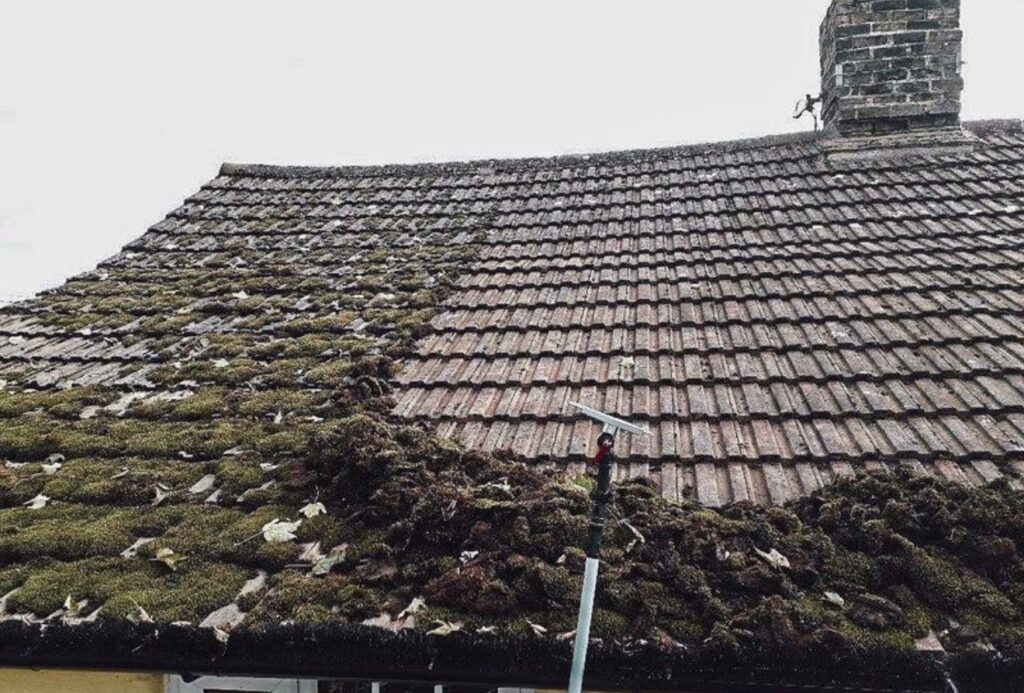
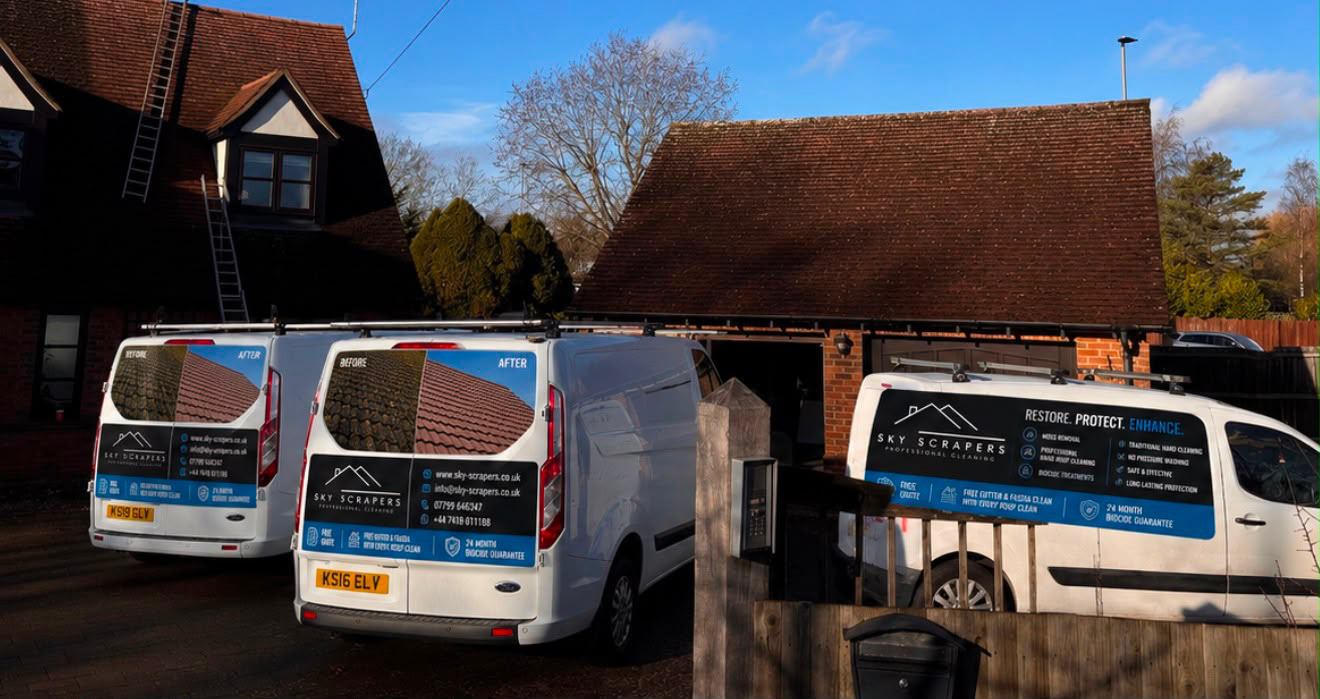
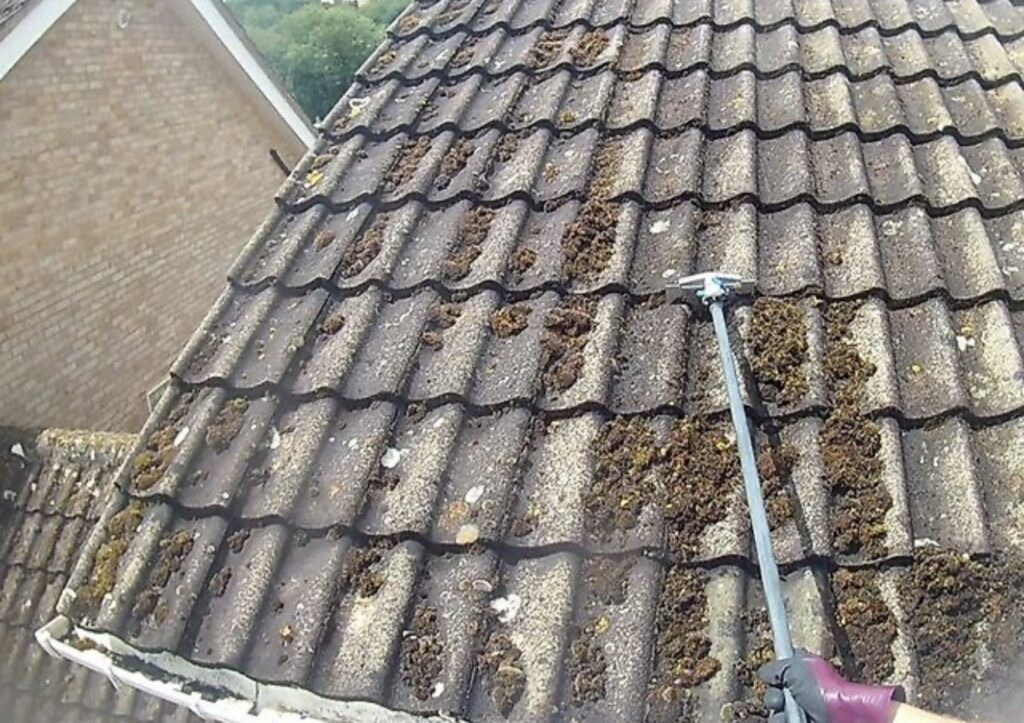
Images from Sky Scrapers Ltd work showing the methods described on this page.
Where this applies locally
Towns where this comes up most often on our patch:
- Hand Roof Cleaning in LutonBedfordshire · LU1
- Hand Roof Cleaning in BedfordBedfordshire · MK40
- Hand Roof Cleaning in Milton KeynesBuckinghamshire · MK1
- Safety and working at height on a roof cleaning jobGuide
- The real risks of removing roof moss yourselfGuide
- Fragile roof coverings and how they are worked safelySafety
Want a professional to handle it?
Leave the high bits to us
Fully insured, working from our own access equipment, with your property protected throughout.
Sky Scrapers Ltd · info@sky-scrapers.co.uk
Questions we get asked
Is it illegal to clean my own roof?
No. Working-at-height regulations apply to work, not to homeowners maintaining their own property. That does not make it safe, and the practical risks are the same either way.
Can I walk on my tiles if I'm careful?
Walking directly on tiles risks both a fall and cracked tiles. Professionals use roof ladders precisely because load spreading is what protects the covering and the person.
What about my garage or flat roof?
Treat every garage, lean-to and older sheet roof as fragile until proven otherwise. Many will not carry a person's weight and the fall is onto a hard floor.
Should I hire scaffolding for a gutter clean?
For most domestic gutter work it is unnecessary. Safe access equipment used correctly is sufficient, and we cover this in our access guide.
How do I check a contractor is insured?
Ask to see the certificate before work starts. We are fully insured and happy to provide evidence on request.
In short
Ladder placement, overreaching, carrying and slippery surfaces cause most domestic falls. Low-level work in dry, still conditions is reasonable; anything above single storey, on wet moss, or over fragile roofing is not worth the risk.
Related services
Covering Bedfordshire and surrounding counties