
Fragile roof coverings and how they are worked safely
Some roof coverings will not carry a person's weight and never could. Others carried it once and no longer will, which is a more dangerous situation because they look no different from the ground.
Recognising which is which, and planning access around it, is the part of this trade where cutting corners has consequences that go well beyond a cracked tile.
Coverings that need treating as fragile
- Older fibre cement sheeting on garages, outbuildings and agricultural roofs, which can fail without warning underfoot.
- Any glazed roof, including conservatories, greenhouses and rooflights, which are never walked on.
- Weathered natural slate, where the fixing nails may have corroded even though the slates look sound.
- Old handmade clay tiles and pantiles, which are brittle at the nib and crack under point loading.
- Felt and single-ply flat roofs over ageing decking, where the problem is what is beneath rather than the surface.
- Anything sitting over a rotted batten or purlin, which is why we look before we load.
Spreading load rather than testing it
The rule that matters is not standing on anything until the load has been spread across several battens and courses. Roof ladders, crawl boards and proper staging distribute weight so no single tile or sheet takes it.
The alternative, which is what most DIY roof damage comes from, is putting a full body weight onto one point of a covering that was never designed for it. Once a nib snaps, the tile is only held by gravity and the one above it.
Working from access rather than from the roof
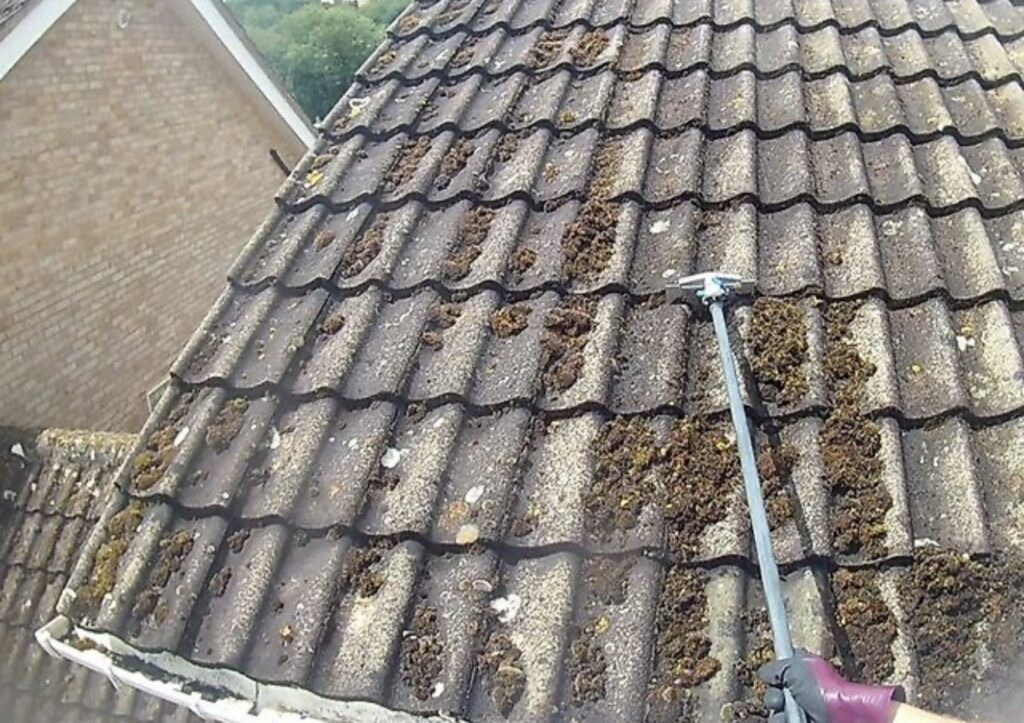
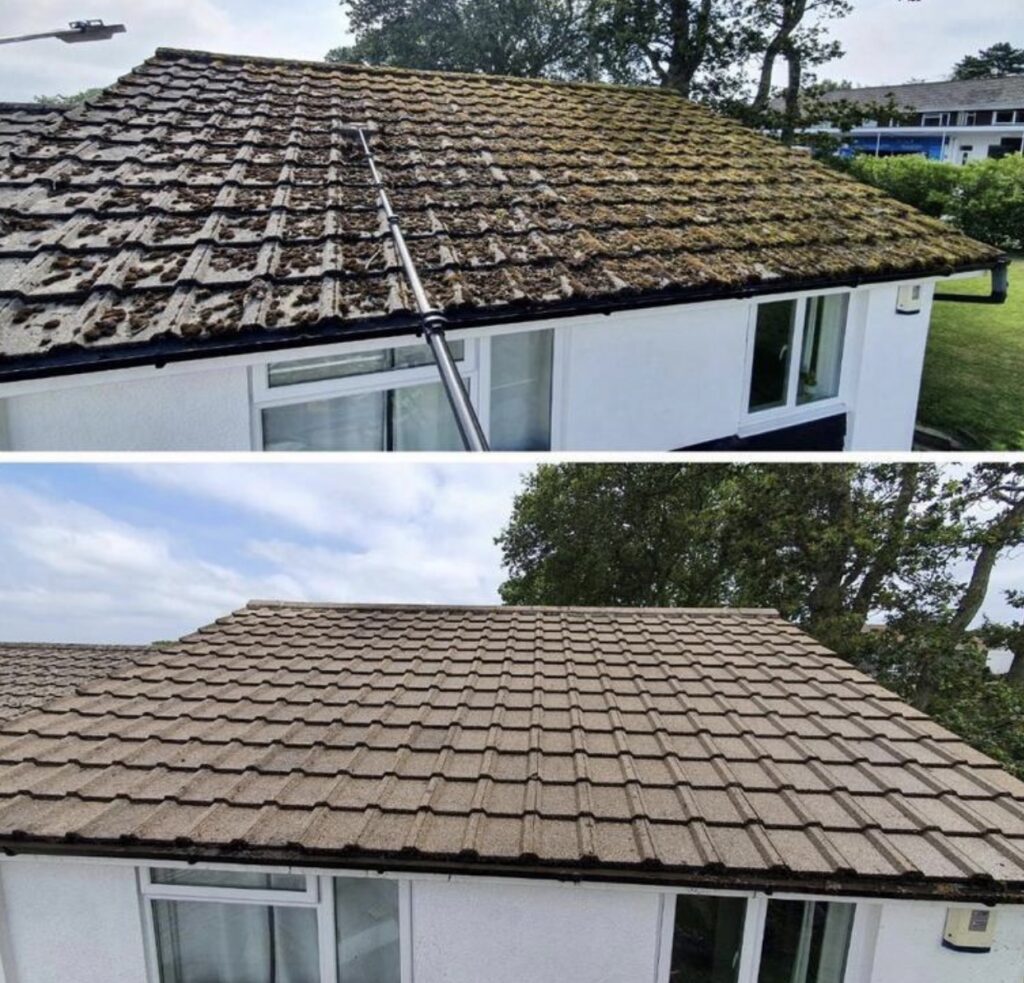
On genuinely fragile coverings the answer is often not to go on the roof at all. Working from ladders, towers or longer reach equipment at the edge keeps everyone off the surface and still gets the work done.
It changes the method too. Where clearing by hand would mean loading a brittle covering, more of the job is done through treatment and less through physical clearing, and we explain that trade-off before quoting.
What we check before starting
Covering type and age, the condition of visible battens and fixings, whether previous work has left damage, what is underneath the working area, and how the weather is likely to change footing during the visit.
We are fully insured for work at height and we photograph existing damage before we begin. If the honest answer is that a roof should not be walked, we say so and adapt the method rather than taking a chance.
Our own photographs
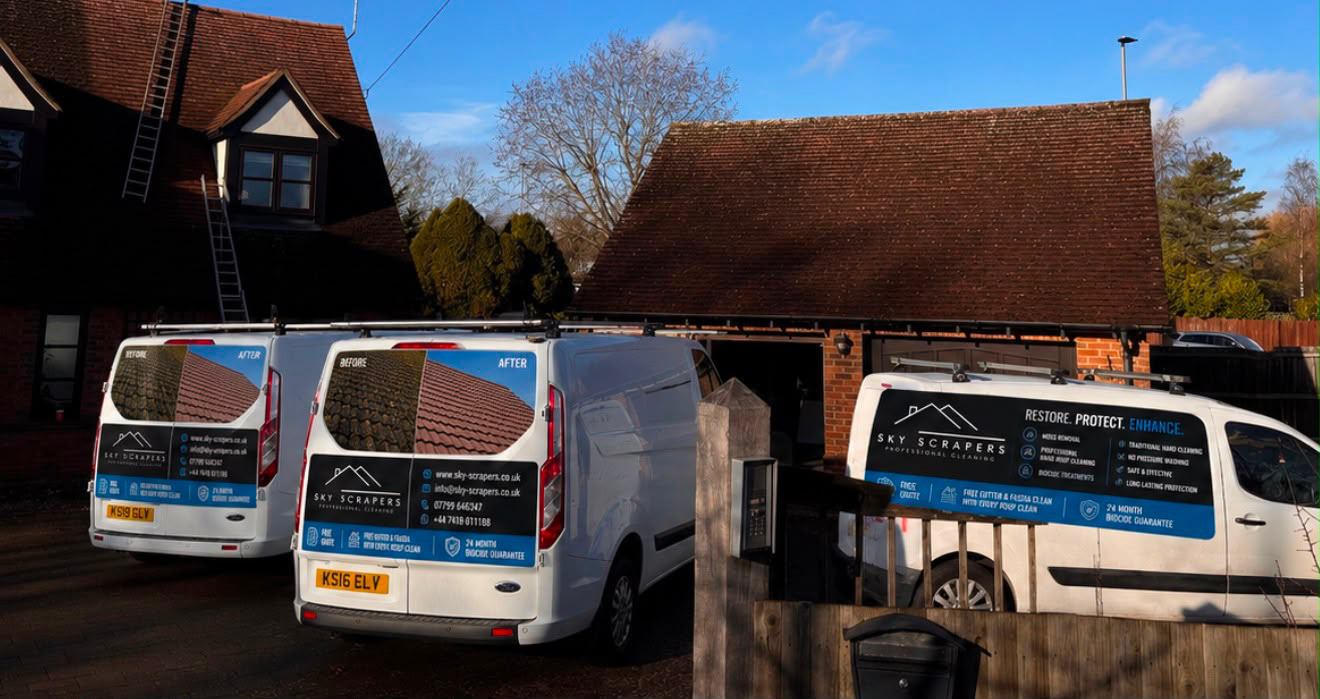
Images from Sky Scrapers Ltd work showing the methods described on this page.
Where this applies locally
Towns where this comes up most often on our patch:
Questions we get asked
How do I know if my roof is fragile?
Age and material are the first clues, particularly older fibre cement sheeting, weathered slate and handmade clay. If in doubt it is treated as fragile until proven otherwise.
Can a fragile roof still be cleaned?
Usually yes, but from access at the edge rather than from the covering, and with more of the work done by treatment than by clearing.
What about my garage roof?
Older garage and outbuilding sheeting is one of the most common fragile coverings we see, and it is never walked on regardless of how solid it looks.
Do you carry insurance for work at height?
Yes, we are fully insured for the work we carry out, including working at height, and we will confirm that before booking.
Unsure whether your roof can be walked?
Send a photo and rough age of the covering and we will tell you how it should be approached before quoting anything.
Sky Scrapers Ltd · info@sky-scrapers.co.uk
In short
Fibre cement, glazing, weathered slate and old clay are treated as fragile. Load is spread or avoided entirely, method adapts, and existing damage is photographed first.