
Pantile roofs: cleaning the roll without cracking it
A pantile's S-profile creates an alternating pattern of raised roll and hollow channel across the roof, and the two halves behave completely differently when it comes to moss. The hollow holds water and debris; the roll sheds it — until moss bridges the gap and turns the whole tile into a shallow trough.
Pantiles are also thinner at the roll than a flat tile is at its edge, and that raised section is exactly where a pressure lance or a careless boot cracks the covering. We treat pantile roofs as a hand-only job from the outset.
Reading a pantile roof before starting
We look at how far moss has bridged from hollow to roll before deciding how aggressive the clearing needs to be. A roof with moss confined to the hollows is a straightforward clean; one where growth has bridged the roll on most tiles needs slower, more careful work because the tile underneath the moss mat is often already thinner than it looks.
Method on pantile
- Hand scraping along the hollow, working with the fall of the tile rather than against it.
- Extra care at the roll, which is the thinnest and most brittle part of the profile.
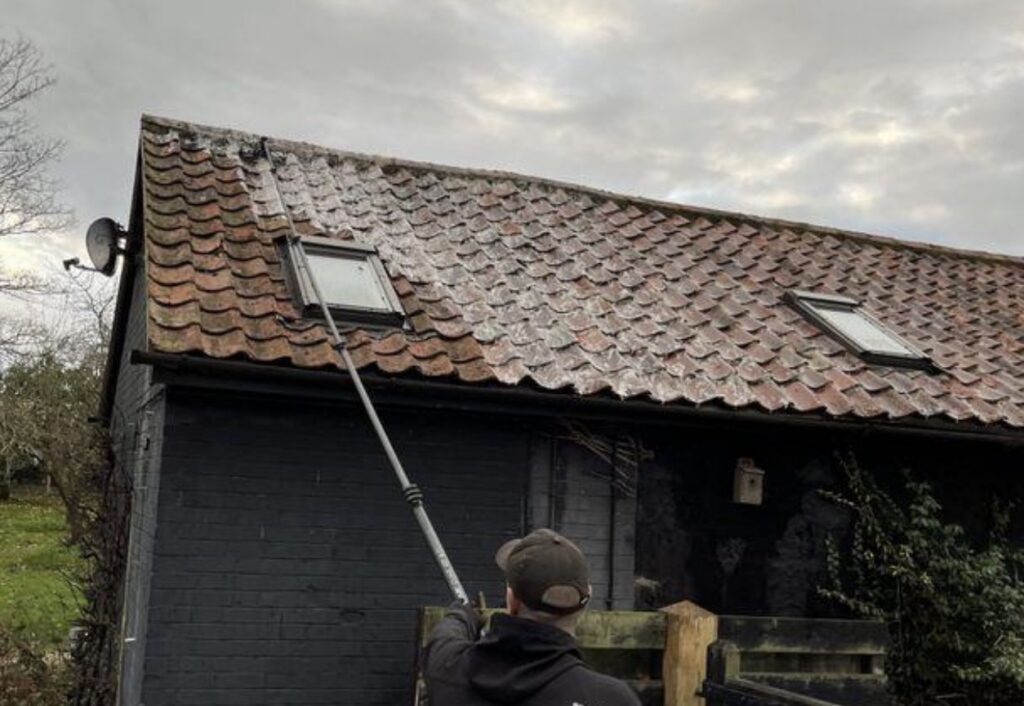
- Roof ladders used to spread load on any pantile roof that has to be walked, given how easily an S-profile tile cracks under a point load.
- Biocide treatment focused on the hollows, where moisture and debris return fastest.
Clay versus concrete pantile
Clay pantiles are more brittle but generally shed growth better once cleaned, because the fired surface is less porous than concrete. Concrete pantiles hold moisture longer in the hollow and tend to need more frequent treatment on shaded pitches. We adjust the approach and the treatment interval advice depending on which you have.
Ask about your pantile roof
Send a photo of the roof and let us know whether it is clay or concrete, and we can advise on the right approach before quoting.
Sky Scrapers Ltd · info@sky-scrapers.co.uk
Where pantiles are common locally
Pantile is a traditional covering across parts of Bedfordshire and Cambridgeshire, particularly on older properties around St Neots, Sandy and the villages towards Biggleswade, where the profile has been used for generations.
Our own photographs
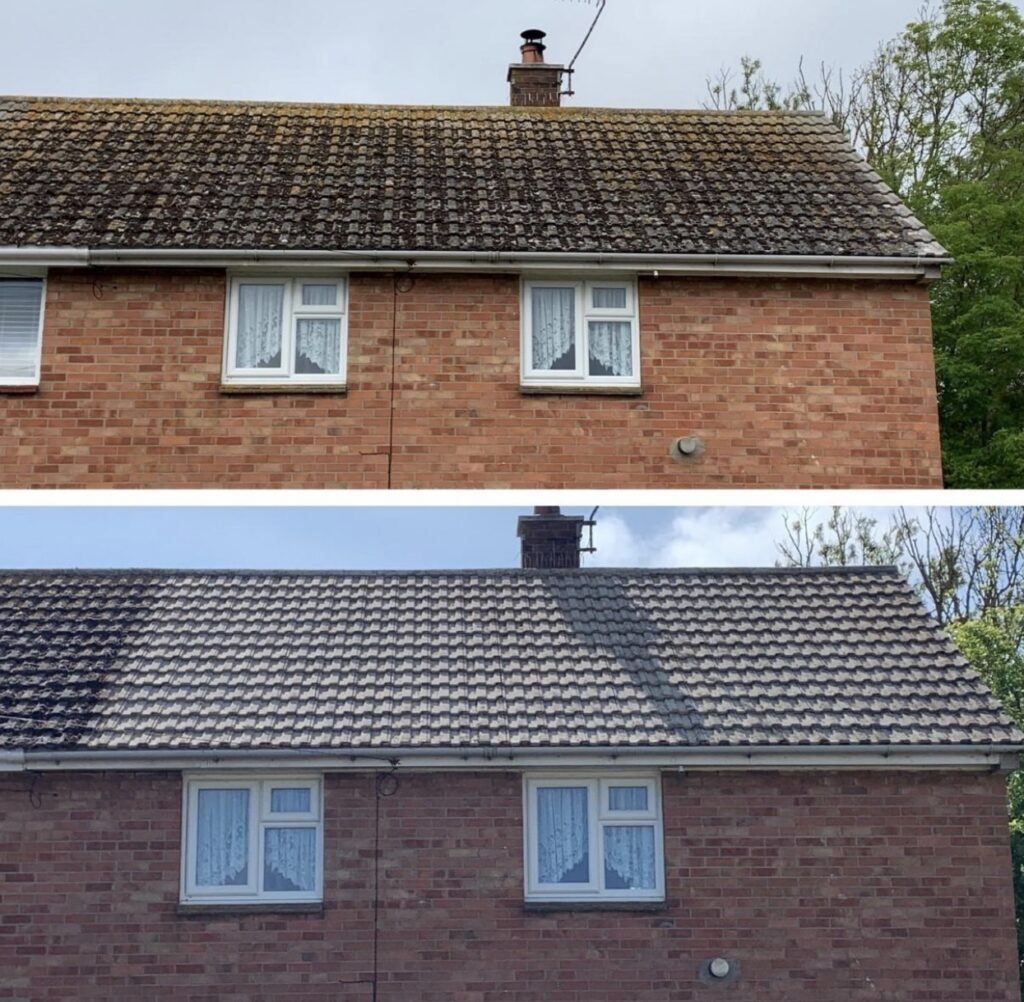
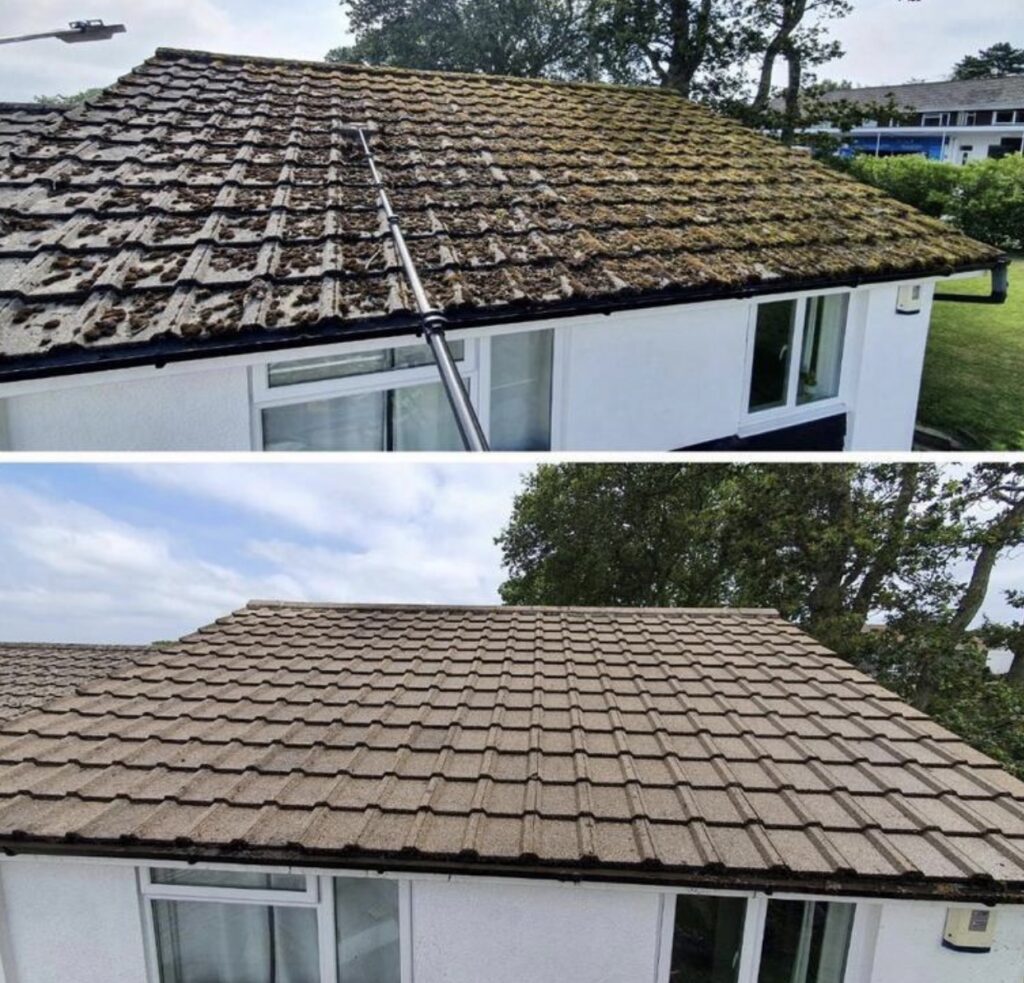
Images from Sky Scrapers Ltd work showing the methods described on this page.
Where this applies locally
Towns where this comes up most often on our patch:
- Hand Roof Cleaning in St NeotsCambridgeshire · PE19
- Hand Roof Cleaning in SandyBedfordshire · SG19
- Hand Roof Cleaning in BiggleswadeBedfordshire · SG18
- Clay peg, plain and pantile roofs cleaned without breaking nibsRoof covering
- Barn conversion roofsBuilding type
- Crusty lichen on roof tiles and why it is harder to shift than mossCommon problem
Questions we get asked
Are pantiles more fragile than flat tiles?
The roll of a pantile is thinner than the body of a flat tile, so yes, it is more vulnerable to point loads and impact. That is why we use roof ladders and avoid standing directly on the roll.
Why does moss grow in the hollow but not the roll?
The hollow channel carries water and collects debris, giving moss the moisture and grit it needs to establish. The raised roll sheds water fast and stays drier, so growth starts later and usually bridges across from an established hollow.
Can you tell if a clay pantile is too worn to clean?
Yes. Old clay pantiles that have thinned or delaminated at the roll are assessed individually, and if cleaning risks removing material we will say so rather than proceed.
Do concrete pantiles need cleaning more often than clay?
Often, particularly on shaded pitches, because the concrete hollow retains moisture longer. We can advise on likely intervals once we have seen the roof.
Summary
Pantile roofs need work planned around the S-profile itself — hollow, roll, hollow — rather than treated as a flat surface. Hand methods and careful load-spreading are what keep the covering intact.