
Roofs under tree cover: why the moss always seems to win
A roof under mature tree canopy fights a battle most other roofs never have to. Overhanging branches cut direct sunlight for large parts of the day, drop leaf litter and sap continuously, and keep humidity higher immediately around the roof surface than open sites nearby. Every one of those factors favours moss.
These roofs are not being neglected any more than the house next door — they are dealing with a genuinely harder set of conditions, and the cleaning plan needs to reflect that rather than pretend a single visit will fix it for good.
The combined effect of tree cover
Shade alone slows drying time. Add continuous leaf and organic debris fall, sap deposits that create a sticky surface for spores to catch on, and often reduced airflow from surrounding foliage, and a roof under canopy can carry two or three times the growth of a similar roof in the open, in the same time period.
What we adjust for a heavily shaded roof
- More thorough clearing of gutters and valleys, since leaf litter accumulates far faster here than on an open roof.
- A biocide treatment chosen and applied with the expectation of a shorter effective interval than a sunnier roof would need.
- A frank conversation about likely re-treatment timing, rather than implying one clean will match the result an open roof gets.
- Checking for sap and resin deposits from conifers or certain broadleaf species, which need slightly different handling to plain organic growth.
Cleaning is not a substitute for pruning
Where overhanging branches are within touching distance of the roof, cutting them back — carried out by a tree surgeon rather than us — does more for long-term moss control than any cleaning schedule can. We will mention it plainly where it is clearly the biggest single factor.
Get a plan for a heavily shaded roof
Tell us about the tree cover and how long since the roof was last cleared, and we can put together a realistic plan rather than a one-off guess.
Sky Scrapers Ltd · info@sky-scrapers.co.uk
Our own photographs
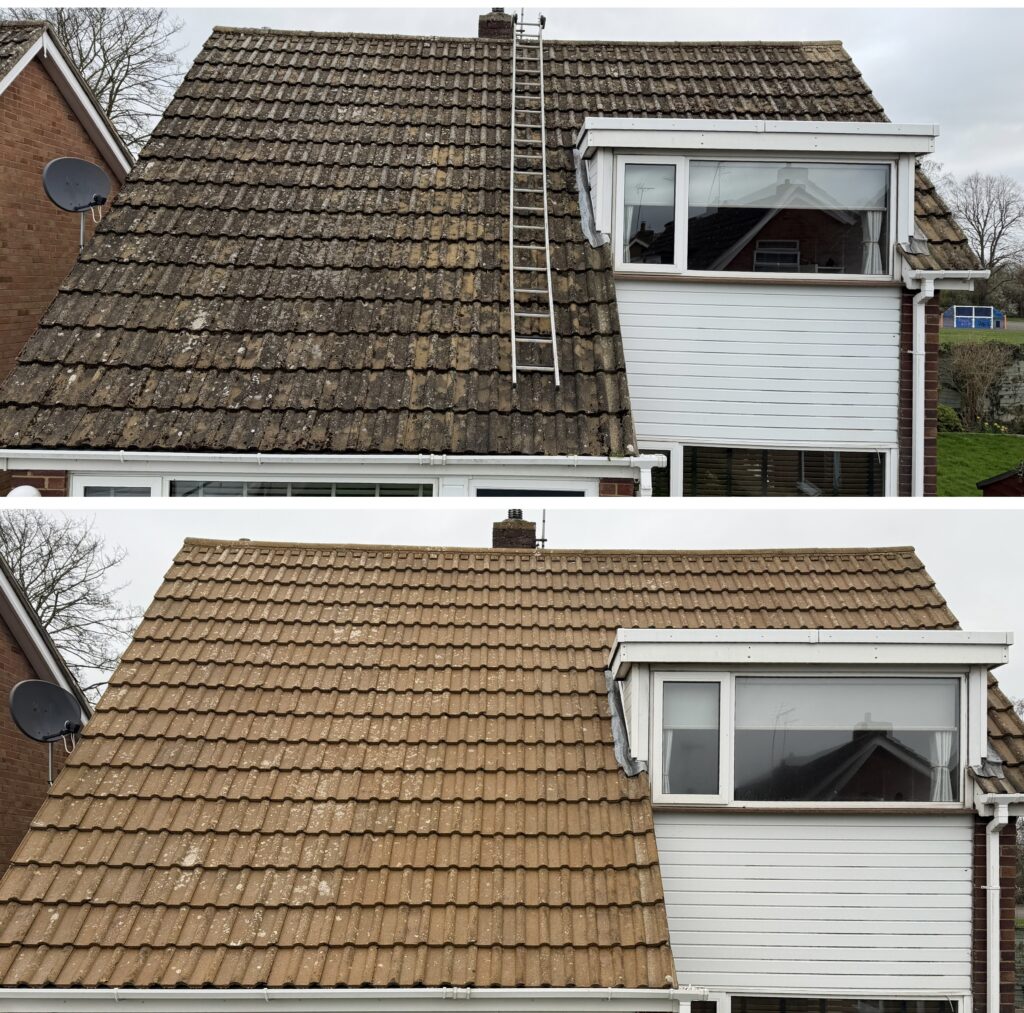
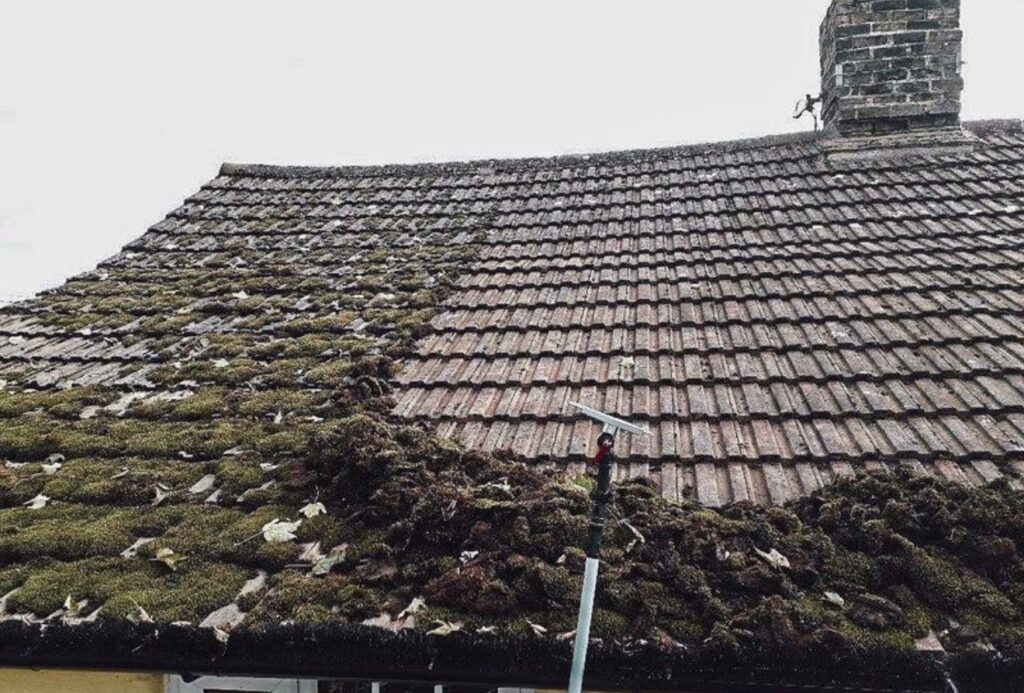
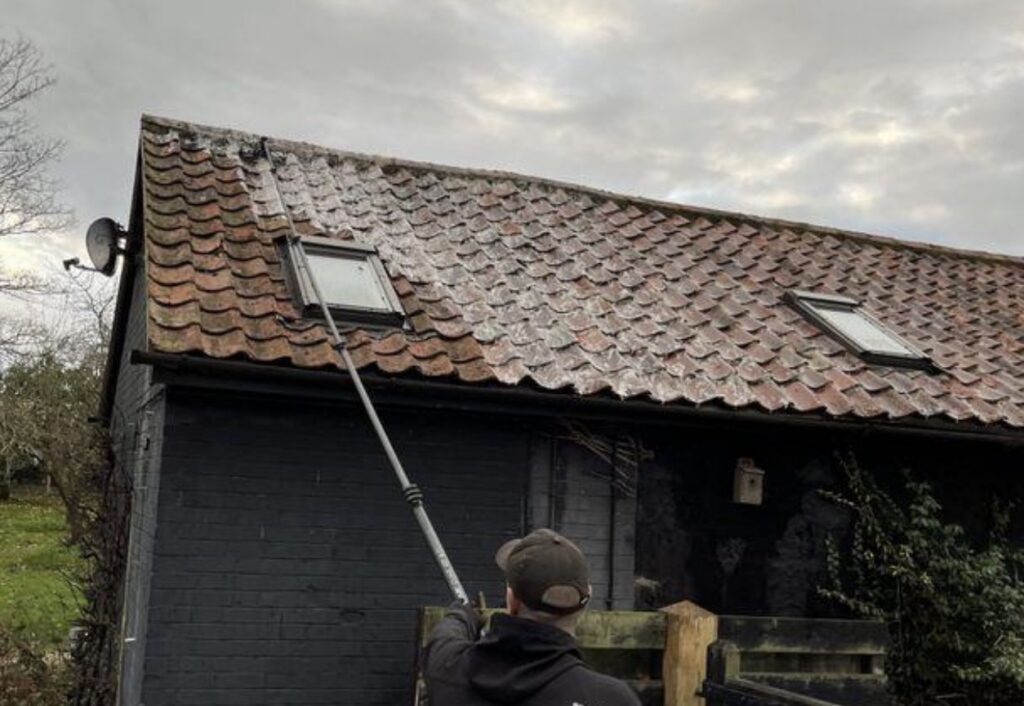
Images from Sky Scrapers Ltd work showing the methods described on this page.
Where this applies locally
Towns where this comes up most often on our patch:
- Roof Moss Removal in Woburn SandsBuckinghamshire · MK17
- Roof Moss Removal in AmpthillBedfordshire · MK45
- Roof Moss Removal in HitchinHertfordshire · SG4
- Why the north-facing slope is always the one covered in mossCommon problem
- Crusty lichen on roof tiles and why it is harder to shift than mossCommon problem
- Moss in valleys and along the ridgeCommon problem
Questions we get asked
Will cleaning last as long on a shaded roof as on an open one?
Realistically, no. Continuous shade, leaf fall and reduced airflow mean growth tends to return faster under tree cover, whatever treatment is used.
Would pruning back the trees help more than repeat cleaning?
Often, yes, if branches are close enough to the roof to be cutting off direct light and dropping debris continuously. That is a tree surgeon's job, but it addresses the cause rather than just the symptom.
Do sap deposits need different treatment to ordinary moss?
They can leave a sticky residue that catches more debris than a plain tile surface, so we handle heavily sapped areas with that in mind rather than treating them identically to open moss growth.
Is a roof under trees at more risk of damage from growth?
The volume of debris and moisture is higher, so yes, in general terms the risk of blocked valleys, gutters and prolonged dampness is greater than on an open roof of the same age.
Summary
Roofs under tree canopy face harder conditions than open ones — more shade, more debris, more moisture. Cleaning still works, but it needs a realistic timescale and, ideally, some pruning alongside it.