
Cleaning a conservatory roof properly
A conservatory is the one part of the house you look at from the inside as well as the outside, which is why a dirty roof on one is so noticeable. Green streaks along the glazing bars, black spotting on the panels and a general dullness that never quite comes off with a hose are the usual complaints.
Conservatory roofs are also fragile, unwalkable and sit directly above your furniture. This guide covers how the job is done safely and what results you can realistically expect.
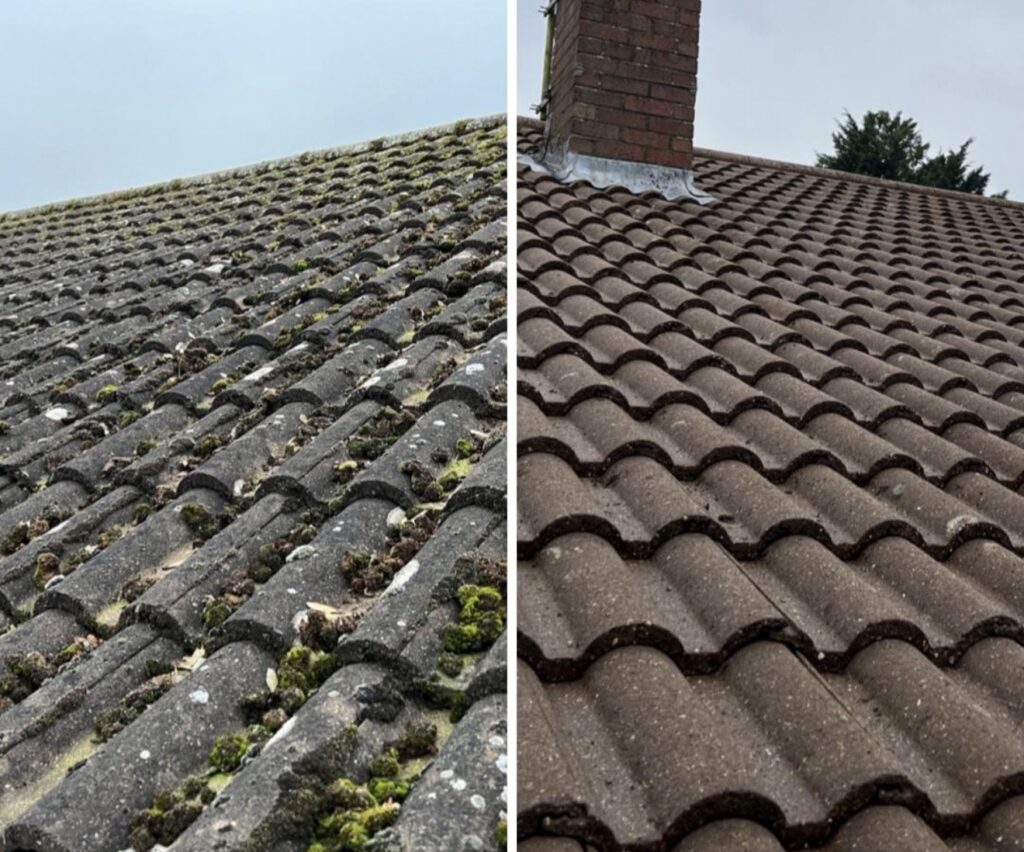
Why conservatory roofs get so dirty
They are shallow, so water sits on them rather than running off. They are usually shaded on at least one side by the house itself. And they catch everything that comes off the main roof above, including moss granules, silt and leaf litter washed down in every downpour.
The glazing bars are the worst affected part. Their profile holds moisture and debris along its whole length, which is why the green lines follow the bars rather than covering the panels evenly.
Polycarbonate adds its own problem. The flutes inside twinwall sheets collect dust and algae internally, and no external cleaning will ever reach that. Panels that have gone green on the inside are a replacement issue, not a cleaning one.
How it is cleaned safely
- Nobody walks on a conservatory roof. The work is done from ladders, from the main roof above where safe, or with pole-fed equipment from the ground.
- Load is never applied to glazing bars or panels; access equipment is set on firm ground and stabilised rather than propped against the frame.
- Low-pressure treatment is used, not a lance. High pressure forces water past the seals and into the conservatory itself.
- Glazing bars, frames, ridge and end caps are cleaned individually because that is where the growth actually lives.
- Gutters on the conservatory and on the main roof above are cleared, since debris from above is what causes the recontamination.
Glass, polycarbonate and solid roofs
Self-cleaning coated glass still needs help. The coating works with rainfall on the panel face but does nothing for the bars or for shaded areas, and aggressive cleaning can damage the coating, so it is treated gently.
Polycarbonate scratches easily and yellows with age. It cleans up well externally, but expect the improvement to be limited by whatever has already happened inside the sheets and to the sheet itself.
Modern solid tiled conservatory roofs are cleaned as a small pitched roof, by hand and treated, with the same care around the junction with the main building.
Do not forget what is above it
Most conservatory roofs get dirty because the main roof and its gutters are shedding onto them. Cleaning the conservatory alone works, but it works for a much shorter time.
Where a conservatory sits below a mossed slope, we usually recommend doing both, in the right order: main roof first, gutters next, conservatory last. Otherwise you clean the conservatory twice.
What to expect afterwards
The improvement is usually immediate and dramatic, because unlike a tiled roof the growth is on a smooth surface and can be rinsed off gently once it has been treated.
What will not change: internal algae in polycarbonate flutes, scratching, crazing, failed seals and blown double-glazed units. We will tell you which of these you have rather than cleaning around them and saying nothing.
Keeping it clear
An annual clean suits most conservatories, timed for late autumn once the leaves are down, or in spring if you want the best of the summer months. Keeping the main roof gutters clear halves the amount of material landing on the glazing in the first place.
Overhanging branches are worth cutting back where you can. Anything that drips onto a shallow glazed roof will leave a mark on it.
Our own photographs
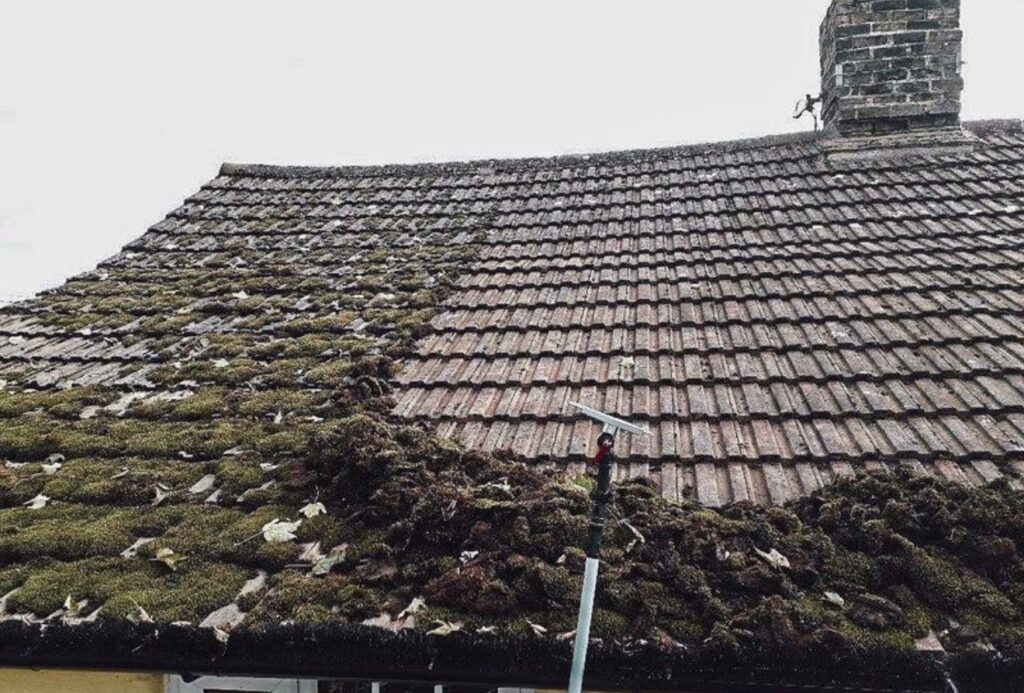
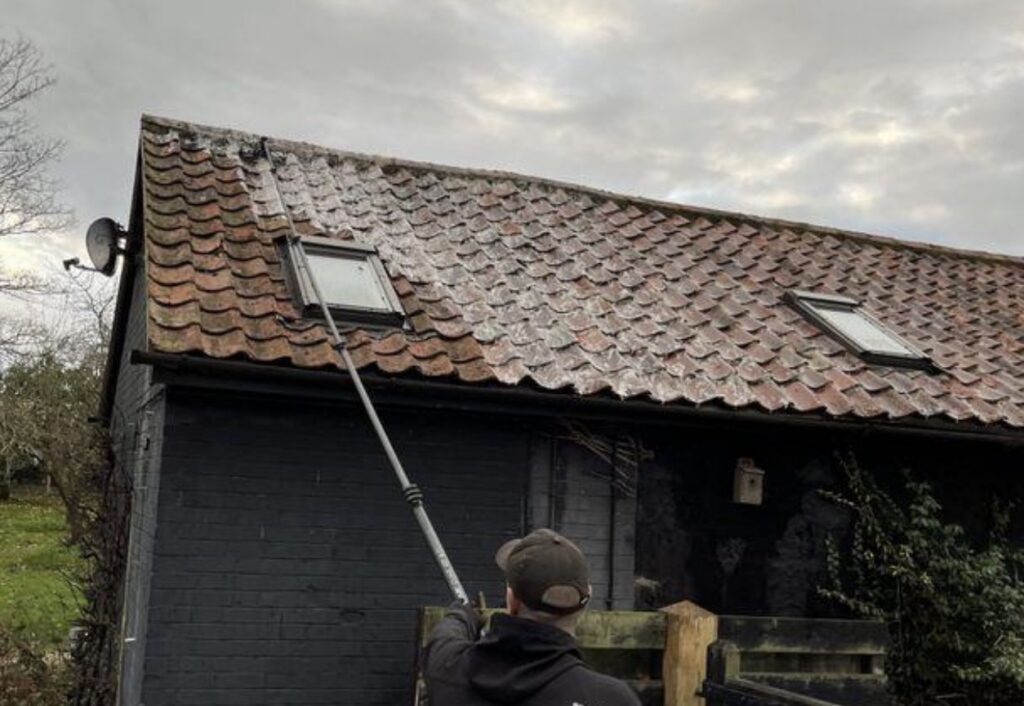
Images from Sky Scrapers Ltd work showing the methods described on this page.
Where this applies locally
Towns where this comes up most often on our patch:
- Softwashing & Biocide Treatment in AmpthillBedfordshire · MK45
- Softwashing & Biocide Treatment in FlitwickBedfordshire · MK45
- Softwashing & Biocide Treatment in BedfordBedfordshire · MK40
- Conservatory roofs, frames and box gutters cleaned at low pressureBuilding type
- How does soft washing work?Method guide
- Gutter cleaningMethod guide
Want a professional to handle it?
Get the conservatory looking right again
Cleaned from safe access at low pressure, with the glazing bars and gutters done properly.
Sky Scrapers Ltd · info@sky-scrapers.co.uk
Questions we get asked
Will you walk on my conservatory roof?
No. Conservatory roofs are not designed to carry weight. We work from ladders, from the main roof where it is safe, or with pole-fed equipment from ground level.
Can you get rid of green inside the polycarbonate?
Unfortunately not. Algae inside twinwall flutes cannot be reached from outside, and that is a panel replacement issue rather than a cleaning one.
Is high pressure ever used on conservatory glazing?
Never. It forces water past the seals and can damage coatings and sealant lines. Everything is done at low pressure.
Should the main roof be cleaned at the same time?
If the main roof is mossed, yes. Otherwise the conservatory recontaminates from above within a season.
How often should a conservatory roof be cleaned?
Annually for most properties. Under trees, or below a heavily colonised main roof, twice a year is more realistic until the source is dealt with.
In short
Conservatory roofs are shallow, shaded and fed by whatever the main roof sheds. They are cleaned from safe access at low pressure, never walked on and never pressure washed, and they stay clean far longer if the roof and gutters above are cleared too.
Related services
Covering Bedfordshire and surrounding counties