
Commercial gutter maintenance and why it prevents flooding
On a house, a blocked gutter causes staining and damp. On a warehouse, factory or retail unit, a blocked internal gutter causes water to come through the ceiling onto stock, equipment or customers.
That difference is why commercial gutter maintenance is a risk management task rather than a cosmetic one, and why it is worth scheduling rather than reacting to.
Need this sorted?
Need gutter and fascia cleaning? Get a quote from Sky Scrapers.
Why commercial gutters fail differently
Industrial and commercial buildings frequently use internal box gutters or valley gutters running between roof slopes, rather than an eaves gutter hanging on the outside of the building. When those block, the water level rises inside the building envelope and eventually goes over the upstand into the roof structure.
The volumes involved are large. A warehouse roof sheds an enormous amount of water in a heavy shower, and a single blocked outlet can overwhelm a gutter run within minutes rather than hours.
Because the gutter is internal, there is usually no visible warning from ground level. The first sign is often water inside.
What blocks them
- Leaf litter and windblown debris, particularly on sites with perimeter planting or nearby woodland.
- Silt and roof coating granules washing down from ageing sheeting.
- Moss and vegetation establishing in the gutter base, which then holds soil and water.
- Bird nesting material at outlets and behind rooflight upstands.
- Packaging waste, cable ties and fixings left from previous roof works or plant installation.
What a documented visit should include
Every run cleared to the base, not skimmed. Outlets and downpipes cleared and flushed with the flow confirmed. Rainwater sumps and syphonic outlets checked where present.
A photographic record before and after each run, referenced so the client can see what was actually done and compare it with the last visit. On commercial sites this record is as valuable as the clearing itself.
A defect report covering split joints, failed sealant lines, corroding gutter sole plates, damaged upstands and any deterioration in the roof covering seen while on site. These are the items that become expensive if nobody notices them for two years.
Full documentation: risk assessment, method statement and insurance evidence, provided before the work rather than requested afterwards.
Safety on a commercial roof
Rooflights are the primary hazard. They are frequently painted over, dirty or the same profile as the surrounding sheet, and they will not carry weight. Older fibre cement and corroded metal sheeting are equally unable to take a person.
Work is planned so that fragile surfaces are not loaded at all. Access is chosen for the building and the exclusion zone below the work is agreed with the site before the day starts.
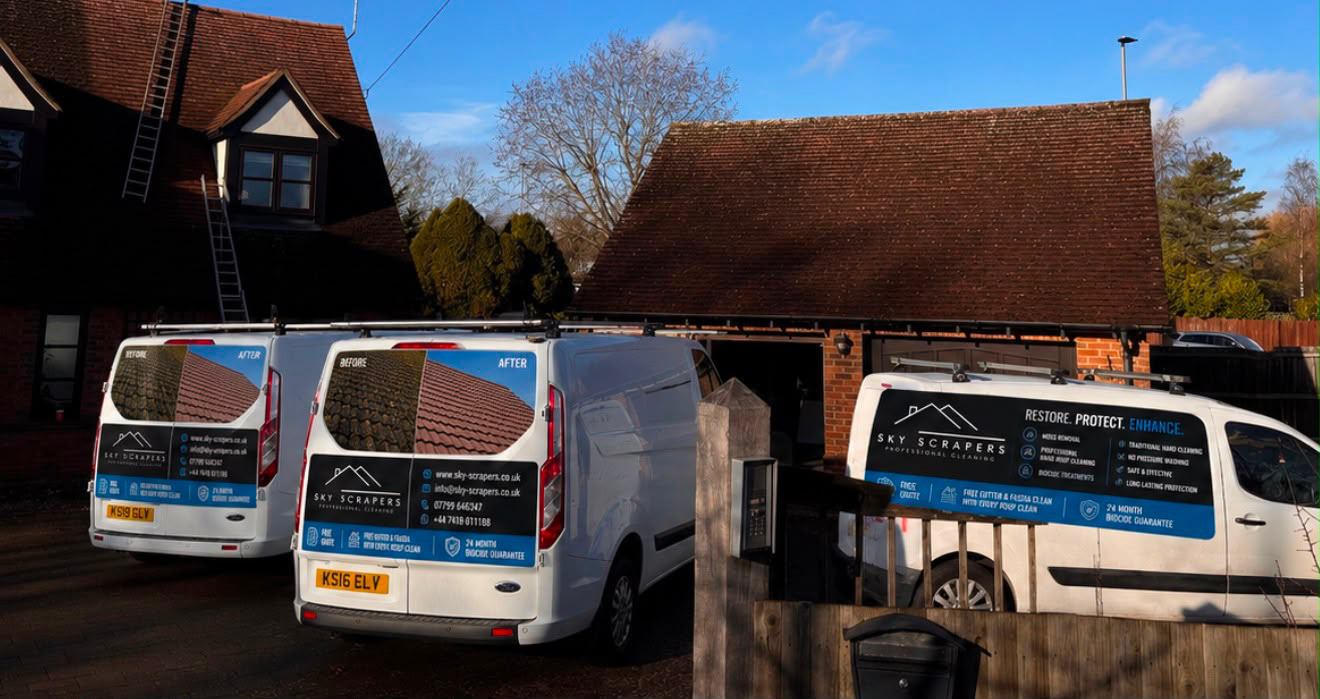
Our team is fully insured, uniformed and arrives in signwritten vans, which matters where site security and visitor management are part of the operation.
How often, and when
Annually as a minimum for most commercial premises, and twice a year where there is significant tree cover, where the roof is shedding granules, or where a previous ingress event has already happened.
Timing matters. Late autumn, after leaf fall and before winter rainfall, is the most useful single visit of the year. Where two visits are scheduled, late spring is the natural second.
Planned maintenance across a portfolio
For agents and property managers looking after several sites, a planned cycle makes budgeting predictable and removes the emergency call-outs that cost far more per visit.
We are happy to quote per property, schedule visits across a portfolio and provide the photographic and defect records for each site so that reporting to owners or tenants is straightforward.
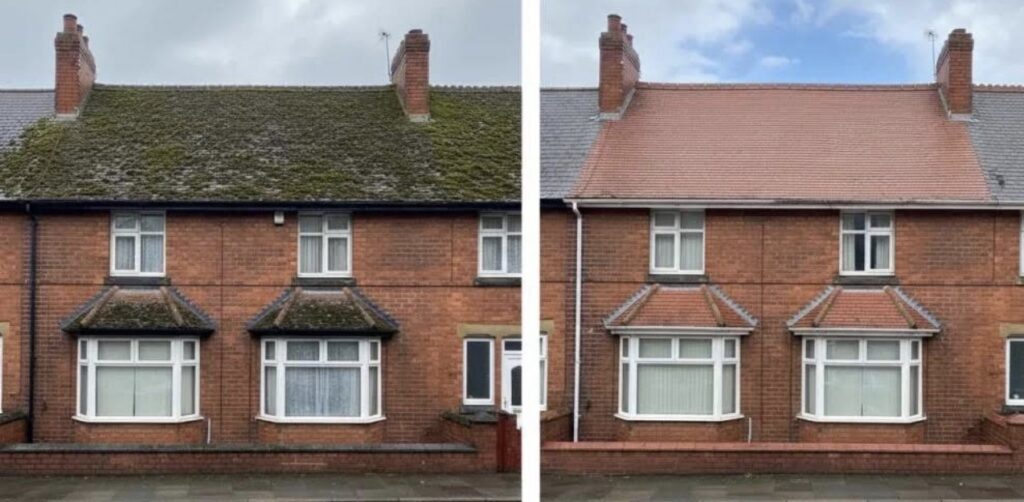
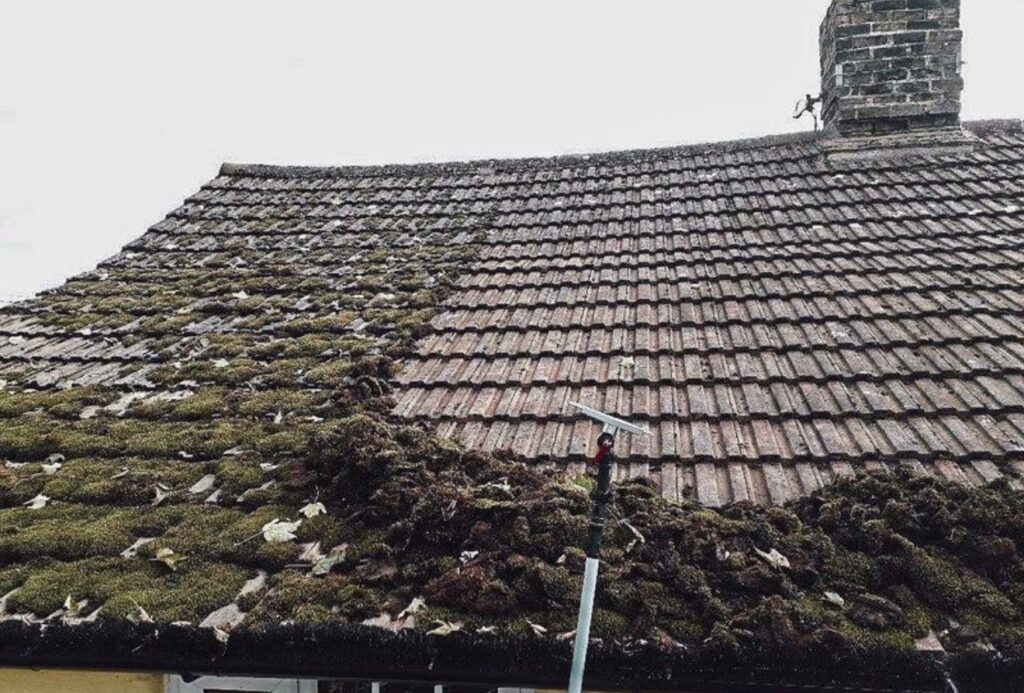
Our own photographs
Images from Sky Scrapers Ltd work showing the methods described on this page.
Where this applies locally
Towns where this comes up most often on our patch:
- Gutter & Fascia Cleaning in LutonBedfordshire · LU1
- Gutter & Fascia Cleaning in BedfordBedfordshire · MK40
- Gutter & Fascia Cleaning in Milton KeynesBuckinghamshire · MK1
- Commercial roof cleaningCommercial guide
- Scheduled roof and gutter maintenance for managing agentsFor managing agents
- Overflowing gutters usually mean the downpipe, not the gutterCommon problem
Want a professional to handle it?
Protect the building before the next downpour
Free site survey, documented visits and photographic records for every gutter run.
Sky Scrapers Ltd · info@sky-scrapers.co.uk
Questions we get asked
How often should commercial gutters be cleared?
At least annually, and twice a year where there is heavy tree cover, ageing sheeting or a history of water ingress.
Do you provide photographic records?
Yes. Before-and-after photographs of each run plus a written defect report are provided as standard on commercial work.
Can the work be done outside opening hours?
Yes. Early starts, evening and weekend access can all be arranged at survey stage to avoid disrupting operations.
Do you handle multiple sites?
We do. Portfolio work can be scheduled on a planned cycle with per-property quoting.
What if you find damage while clearing?
It is photographed and reported with a straight view on urgency, so you can plan repairs rather than discover them during the next storm.
In short
Commercial box and valley gutters flood buildings internally when they block, with no warning from ground level. Clear them annually, flush the outlets, document each run photographically and act on the defect report.
Related services
Covering Bedfordshire and surrounding counties