
Why roof moss thrives in winter, and what to do about it
Winter is when moss on a UK roof does most of its growing. Cold, damp, low-light conditions with long dew periods and infrequent drying spells are close to ideal for moss, which is why roofs that looked reasonably tidy in autumn can look noticeably greener and thicker by late winter.
It is also the season where freeze-thaw cycles can turn a moss problem from purely cosmetic into something with a genuine mechanical effect on the tile edges, which is worth understanding if your roof already has established growth heading into the colder months.
Why winter conditions favour moss
Moss needs consistent moisture and does not need much light, which describes a typical British winter roof almost exactly. Long nights, low sun angle, frequent light rain and heavy dew all keep the tile surface damp for extended periods, while shaded pitches barely dry out between wet spells.
The freeze-thaw effect on established growth
- Saturated moss holds water within its structure and against the tile surface.
- When temperatures drop below freezing, that trapped water expands.
- Repeated freeze-thaw cycles through winter can gradually stress tile edges already lifted slightly by moss growth.
- This effect is far more relevant to thick, established moss mats than to light surface film.
What is sensible to do in winter
If a roof already has established moss heading into winter, it is worth having it assessed rather than leaving it to a full freeze-thaw season, though actual cleaning work depends on safe, settled, frost-free conditions rather than being forced through in poor weather. If your roof only has light growth, winter is a reasonable time simply to keep an eye on it and plan a spring or early-year visit.
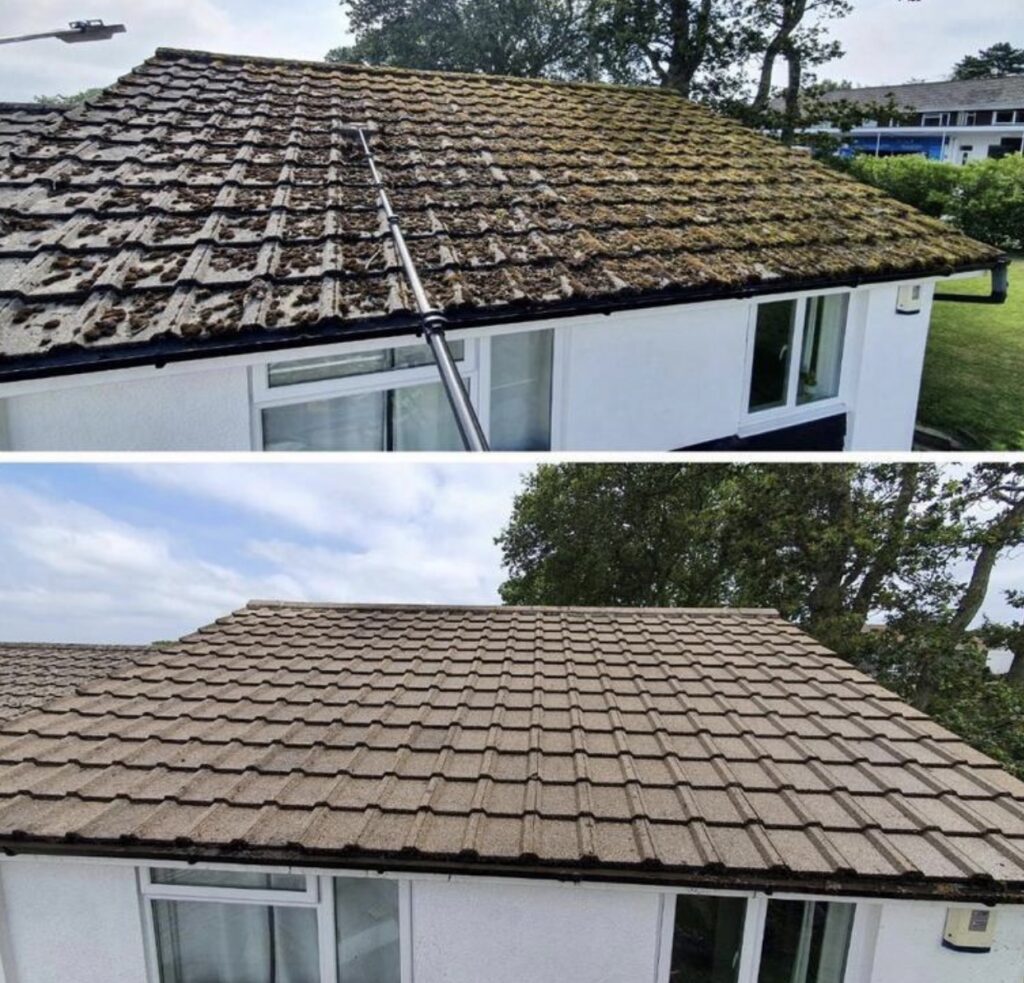
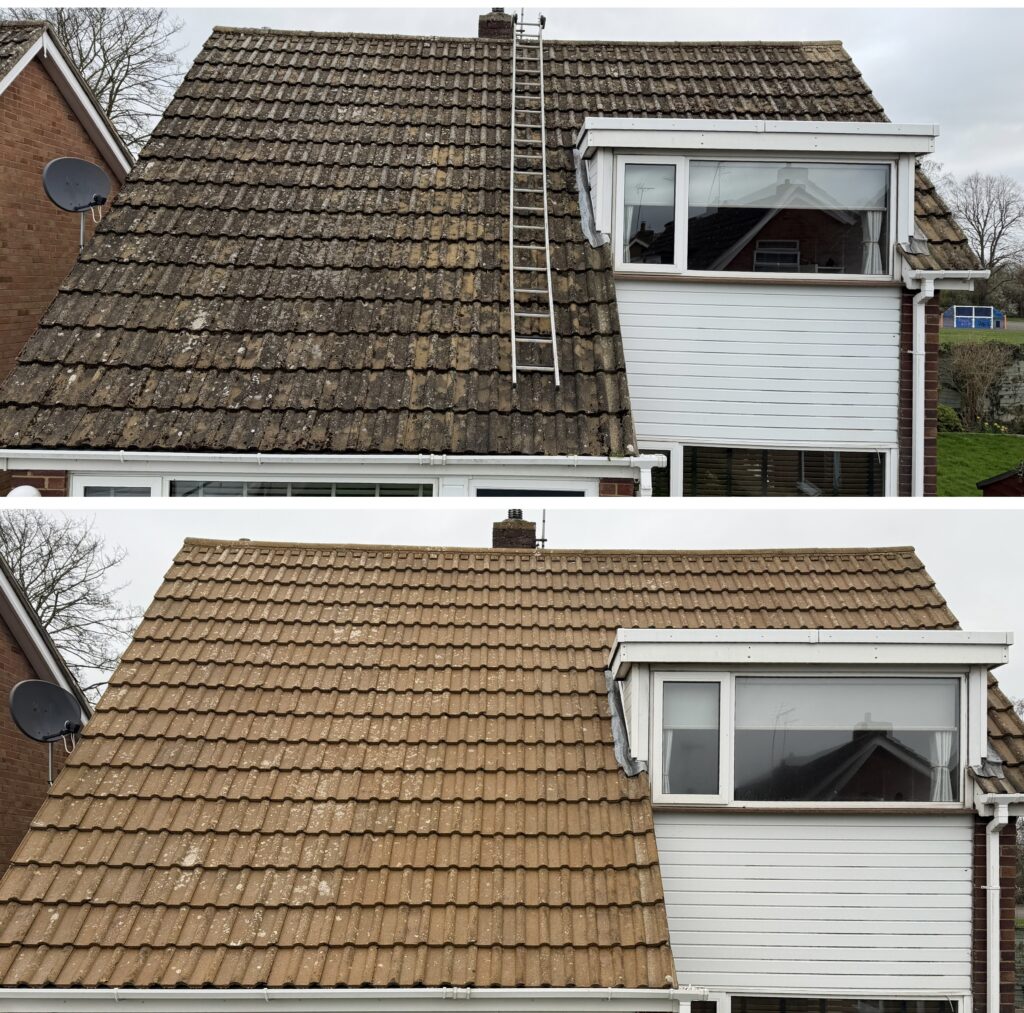
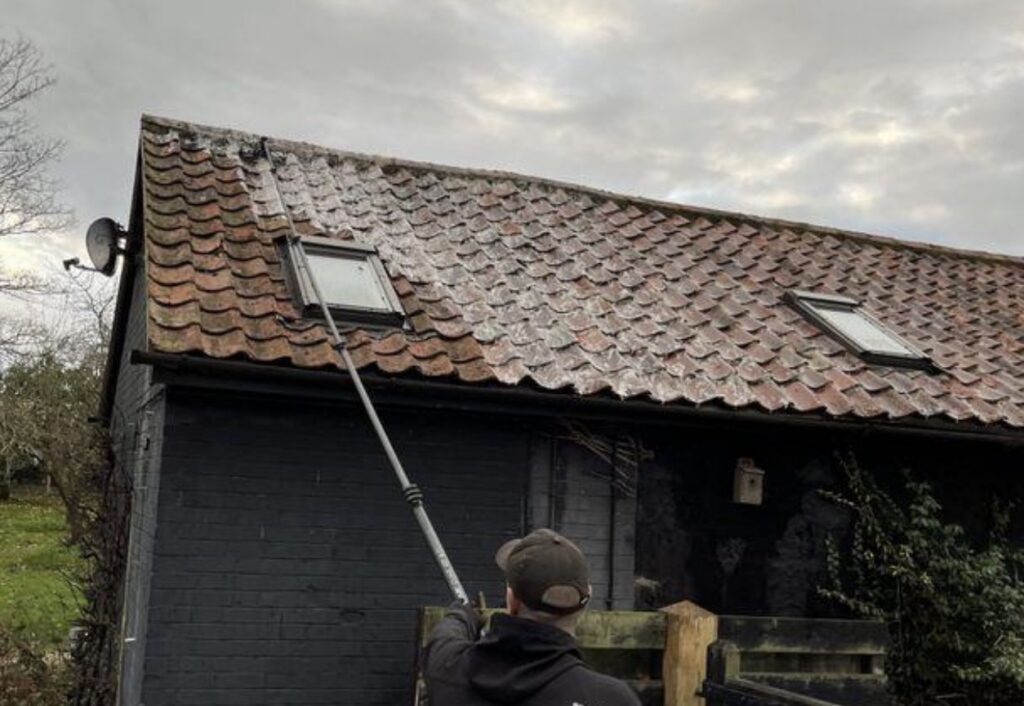
Our own photographs
Images from Sky Scrapers Ltd work showing the methods described on this page.
Where this applies locally
Towns where this comes up most often on our patch:
Questions we get asked
Can roof cleaning be done in winter at all?
Yes, in settled, frost-free conditions. Icy or frosted roofs are avoided for safety, which means winter work depends more on finding suitable weather windows than in other seasons.
Does frost kill moss on its own?
No — moss is generally resilient to cold and often continues growing through winter rather than dying back from frost.
Should I wait until the growing season ends to clean my roof?
There isn't a clean 'end' to moss's growing season in a UK climate — it is more continuous than seasonal crops. Address it when it becomes established rather than waiting for a particular month.
Is winter a good time to check my roof from the ground?
Yes — moss and staining are often at their most visible in winter and early spring, making it an easy time to spot problem areas.
Get your roof assessed before winter takes hold
If your roof already shows moss heading into the colder months, get in touch and we will advise on the sensible next step.
Sky Scrapers Ltd · info@sky-scrapers.co.uk
Summary
Winter's damp, low-light conditions favour moss growth, and freeze-thaw cycles can add mechanical stress to established mats. Cleaning is still possible in settled weather, but is planned around frost-free windows.