
Why does moss grow on roofs?
Moss is not a sign that a roof was badly built or neglected. It is a plant doing exactly what it evolved to do: colonise a surface that stays damp and receives little disturbance. A pitched roof in the English climate offers that in abundance, which is why so many homes in Bedfordshire and the surrounding counties carry it.
Knowing why it grows on your roof in particular helps you decide what to do about it, and whether it will come back quickly after it is removed.
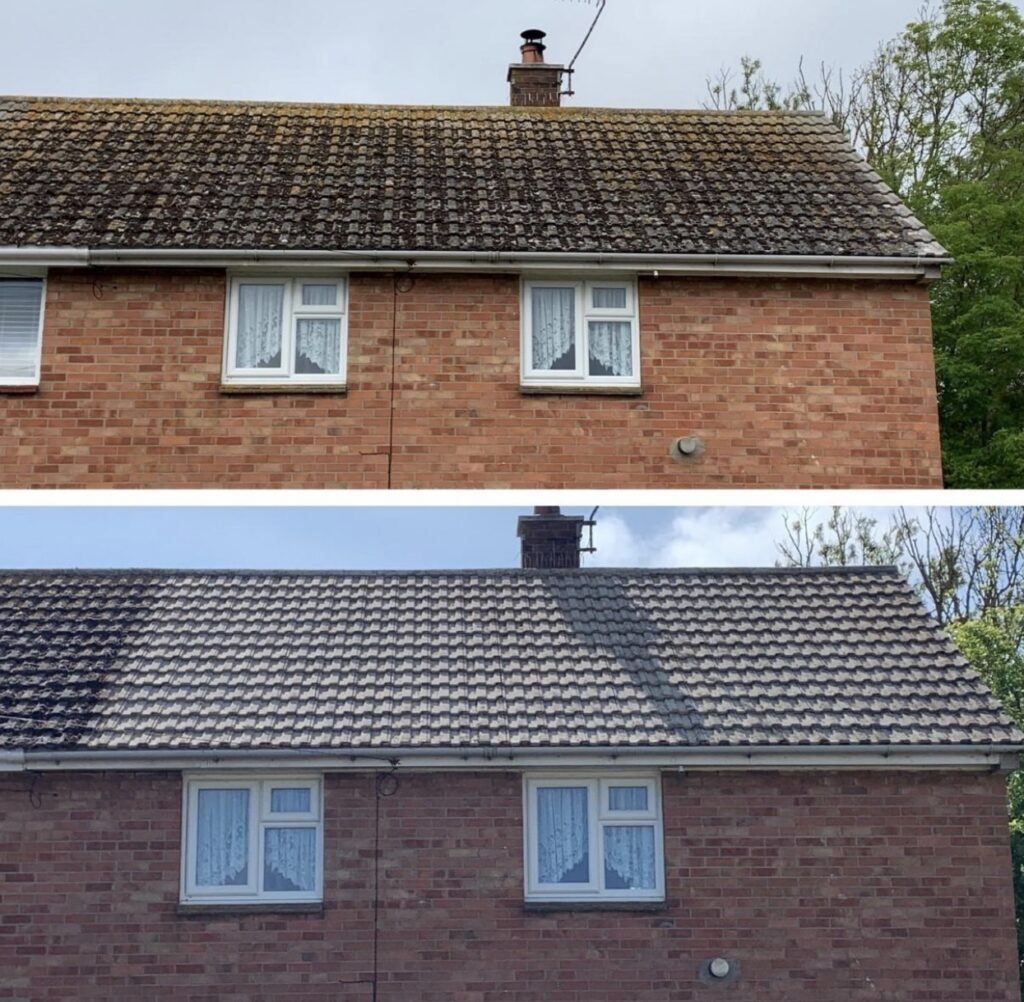
Moss needs three things
- Moisture that lingers. Moss has no roots in the usual sense and takes water straight in through its leaves, so it thrives wherever a surface stays wet for long periods.
- Something to grip. Concrete tiles in particular have a rough, porous face that spores lodge in easily. Smooth slate gives it less to hold, though it still grows in the joints.
- Time without disturbance. A roof is rarely touched, so a colony can build up year after year.
Why one side is worse than the other
Homeowners often notice that the rear slope is green while the front looks fine. The difference is almost always sunlight. A slope facing north, or shaded by trees, a neighbouring house or a tall hedge, dries out far more slowly after rain and dew. The same logic explains why the lower courses and the areas just above gutters are usually worst: water runs down the roof and collects there.
Overhanging trees add a second problem. Falling leaves and needles break down on the tiles into a thin layer of organic matter that holds water and feeds new growth.
The part gutters play
When gutters fill, water backs up onto the bottom row of tiles and stays there. That strip becomes the wettest part of the roof and moss colonises it first. As clumps grow and shed, they fall back into the gutter and block it further, so the two problems feed each other.
Things that make regrowth faster
Pressure washing is the big one. Blasting a roof strips the smooth surface layer from concrete and clay, leaving a rougher, more porous tile that holds more water and more spores than before. This is the reason we never pressure wash roofs and clean them by hand instead.
Scraping without treating also shortens the gap before moss returns, because spores and fragments remain in the tile surface. A biocide treatment after cleaning deals with that hidden layer.
What you can change
You cannot turn a north-facing roof to face south, but you can reduce how long it stays wet. Cutting back branches that overhang the roof lets in light and air and stops leaf litter building up. Keeping gutters clear stops water sitting on the bottom courses. And when the roof is cleaned, having it treated as well slows the return of growth considerably.
Our own photographs
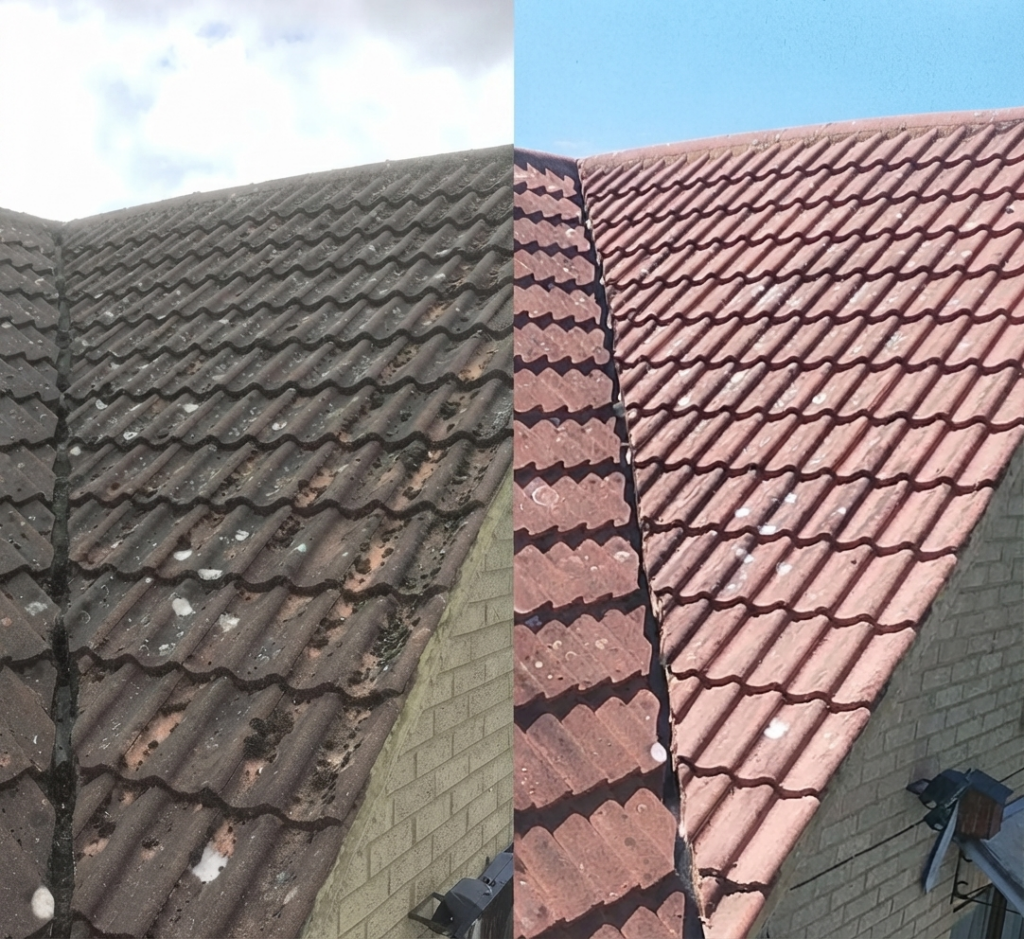
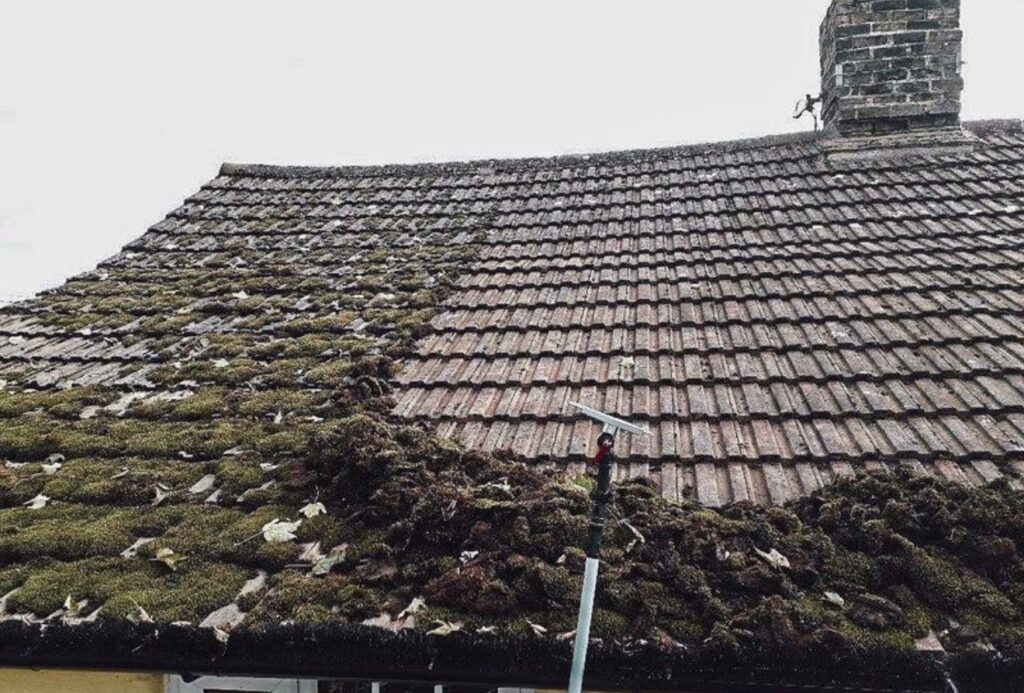
Images from Sky Scrapers Ltd work showing the methods described on this page.
Where this applies locally
Towns where this comes up most often on our patch:
- Roof Moss Removal in FlitwickBedfordshire · MK45
- Roof Moss Removal in BedfordBedfordshire · MK40
- Roof Moss Removal in LutonBedfordshire · LU1
- Why the north-facing slope is always the one covered in mossCommon problem
- Why the moss came back, and how to stop it happening againProblem guide
- Roofs under tree coverCommon problem
Questions we get asked
Is moss on my roof a sign of damage?
Not by itself. It is a sign the surface stays damp. Over time thick moss can hold water against tiles and block gutters, which is why it is worth dealing with before it gets heavy.
Why has my neighbour's roof got less moss than mine?
Usually differences in shade, overhanging trees, gutter condition or whether the roof has been cleaned and treated before.
Does moss grow faster in winter?
Moss grows actively in the cool, damp months, which is when many people first notice it spreading.
Will moss come back after cleaning?
On a shaded, damp roof it eventually will, but a biocide treatment after a hand clean slows that considerably. Full roof cleans carry our written 24-month biocide guarantee.
Can I stop moss growing altogether?
Not permanently in a damp climate, but light, clear gutters and regular treatment keep it to a level that never becomes a problem.
Moss taking over one side of your roof?
Send us a few photos and we will tell you how heavy it is and whether it needs a hand clean, a treatment or both.
Sky Scrapers Ltd · info@sky-scrapers.co.uk
In short
Moss grows where a roof stays damp and undisturbed, which means shaded slopes, lower courses and areas above blocked gutters. Light, clear gutters and a biocide after cleaning are the practical ways to slow it down.