What actually affects the cost of cleaning a roof
Every roof is priced individually because every roof is a different combination of area, pitch, access and condition. There is no honest flat rate that covers a single-storey bungalow and a three-storey Victorian terrace, so rather than quote a number that would be meaningless for most readers, this page sets out the variables that actually move a quote up or down.
Understanding these factors also helps you compare quotes sensibly. If one company is quoting significantly less than another for what looks like the same roof, the difference is usually in one of the items below — access equipment, treatment, or how much growth is actually being removed rather than sprayed over.
The variables that set the price
- Roof area and number of separate pitches — a roof with dormers, valleys and multiple hips takes longer than the same square footage on a simple gable roof.
- Pitch and height — steep or high roofs need more careful access and slower, safer working.
- Access — whether ladders and roof ladders are enough, or whether scaffold towers or a cherry picker are needed.
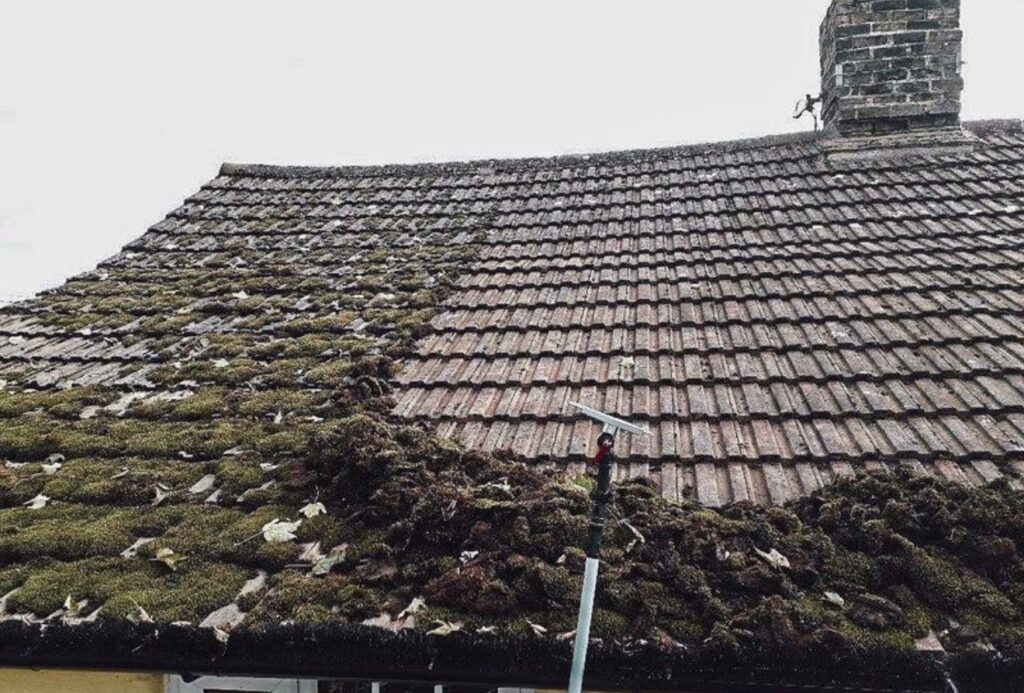
- Level of growth — a light surface film clears far faster than moss that has built up into a thick mat over several seasons.
- Tile or slate type — fragile or historic coverings need slower, more careful hand work.
- Treatment — whether a biocide application is included to slow regrowth, and how much of the roof it covers.
Why two quotes for the same roof can differ
The most common reason two companies quote different figures for the same house is that they are not describing the same job. A quote based on pressure washing the surface takes far less time than a quote based on hand-clearing moss from the overlaps and treating the roof afterwards — and the pressure-washed roof will look worse within a year or two.
Access equipment is the other big swing factor. A roof that can be reached safely from ladders costs less to work on than one that genuinely needs a scaffold tower or powered access, simply because of the extra time and equipment involved in getting to the tiles.
What tends to keep cost down
Regular maintenance is the single biggest lever a homeowner has. A roof treated every few years, before moss has time to build a thick mat, is quicker and easier to clean than one left for a decade. Clear access — trimmed hedges, room for a ladder run, a reachable water point — also removes friction from a job.
Our own photographs
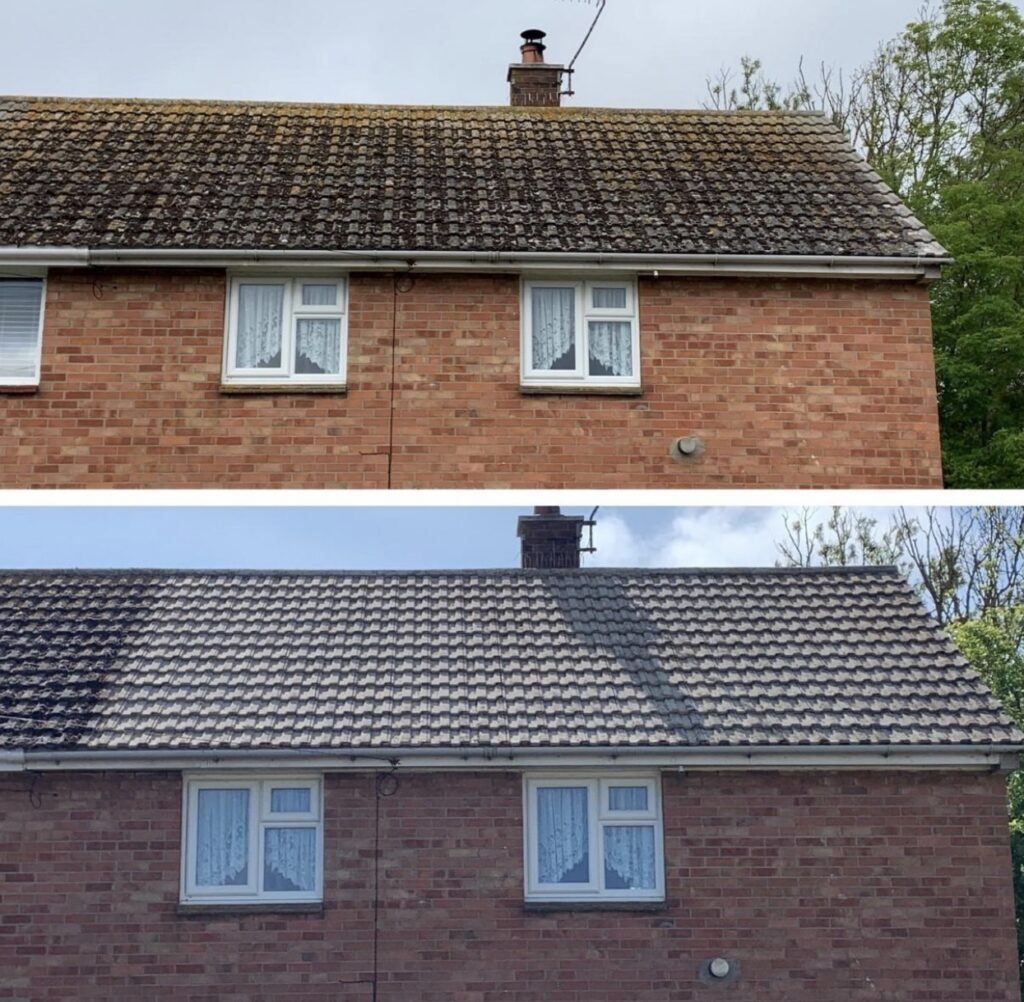
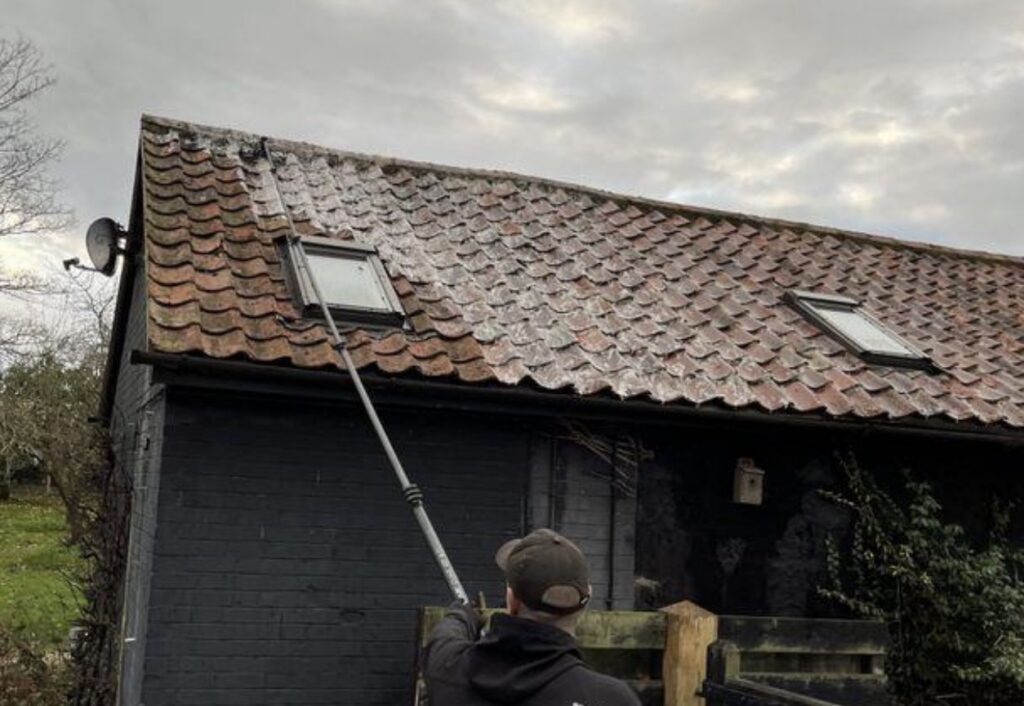
Images from Sky Scrapers Ltd work showing the methods described on this page.
Where this applies locally
Towns where this comes up most often on our patch:
Questions we get asked
Can you give me a price without seeing the roof?
We can often give a realistic estimate from a good photo and the roof dimensions, but a firm price usually needs either a photo set from several angles or a short site visit, because pitch and access matter as much as area.
Is a bigger roof always more expensive to clean?
Usually, but not always. A large simple gable roof with easy access can cost less to clean than a smaller roof with several dormers, valleys and awkward access points.
Does treatment cost extra on top of cleaning?
Treatment is usually quoted as part of the same job because it is what protects the cleaning work you have paid for. Ask any company you are comparing whether their price includes it.
Why would one quote be much cheaper than another?
Check what method is being used and whether treatment is included. A cheaper quote based on pressure washing with no treatment is not the same job as a hand-clean with biocide, even though both are described as 'roof cleaning'.
Ask for a considered quote, not a guess
Send us a few photos and the rough roof dimensions and we will explain exactly what is driving the price for your specific roof.
Sky Scrapers Ltd · info@sky-scrapers.co.uk
In short
Roof cleaning cost is driven by area, pitch, access, growth level and whether treatment is included — not by a fixed rate per square metre. Compare quotes on what is actually being done, not just the number at the bottom.