
How weather shapes when roof work can be done
Roof work is one of the few trades where the weather decides the diary rather than the other way round. Wind, frost, heavy rain and even strong sun all change what can be done safely and effectively on a given day.
Knowing which conditions stop work saves a lot of frustration when a date moves, and it explains why we will occasionally turn down a day you would have been happy with.
What stops work, and why
- Strong wind: the clearest stop. Nobody should be on a roof or a ladder in gusty conditions, whatever the deadline.
- Ice and frost: a frozen slope is lethal underfoot and frozen growth cannot be cleared cleanly anyway.
- Heavy rain during treatment: biocide needs dwell time on the surface, and rain within a few hours washes it off before it works.
- Prolonged heavy rain generally: wet moss is heavier, slopes are slippery and the clear-down turns into a mess.
- Very hot direct sun on treatment days: solution can dry too quickly to work properly on some surfaces.
Clearing versus treating
Hand clearing tolerates a wider range of conditions than treatment does. A dry, still, overcast day is close to ideal for both, but clearing can go ahead in weather that would make a softwash pointless.
That is why a job is sometimes split, with the clearing done on the booked day and the treatment applied on a return visit when conditions suit. It is not padding the job out, it is the treatment actually working.
Seasons and sensible timing
Autumn suits gutter clearing because the leaf fall has finished. Spring suits roof cleaning because growth is active and treatment bites hardest. Summer offers the most reliable run of workable days.
Winter is not a write-off, particularly for clearing on milder dry spells, but mortar work at chimney and ridge level genuinely does need the right conditions rather than a determined attitude.
Booking around a deadline
If you have a sale, a letting or an event with a fixed date, tell us at quote stage and book with headroom rather than for the last available week. Weather delays are far easier to absorb with a fortnight in hand.
When we do have to move a date we tell you as early as we can and rebook at the first suitable slot rather than putting you to the back of the list.
Our own photographs
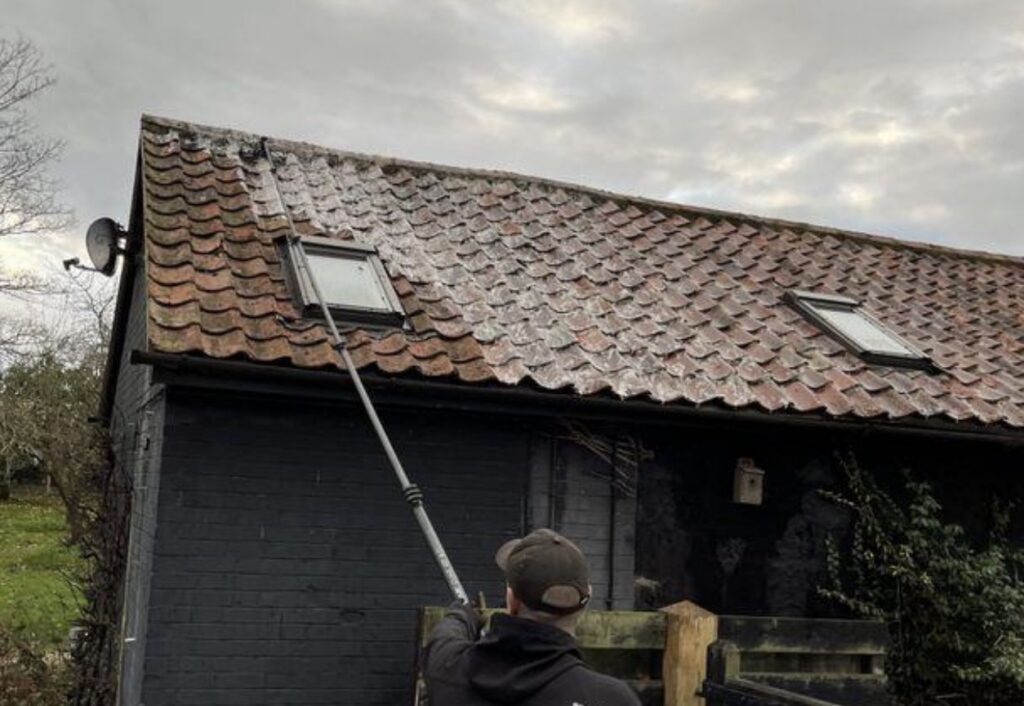
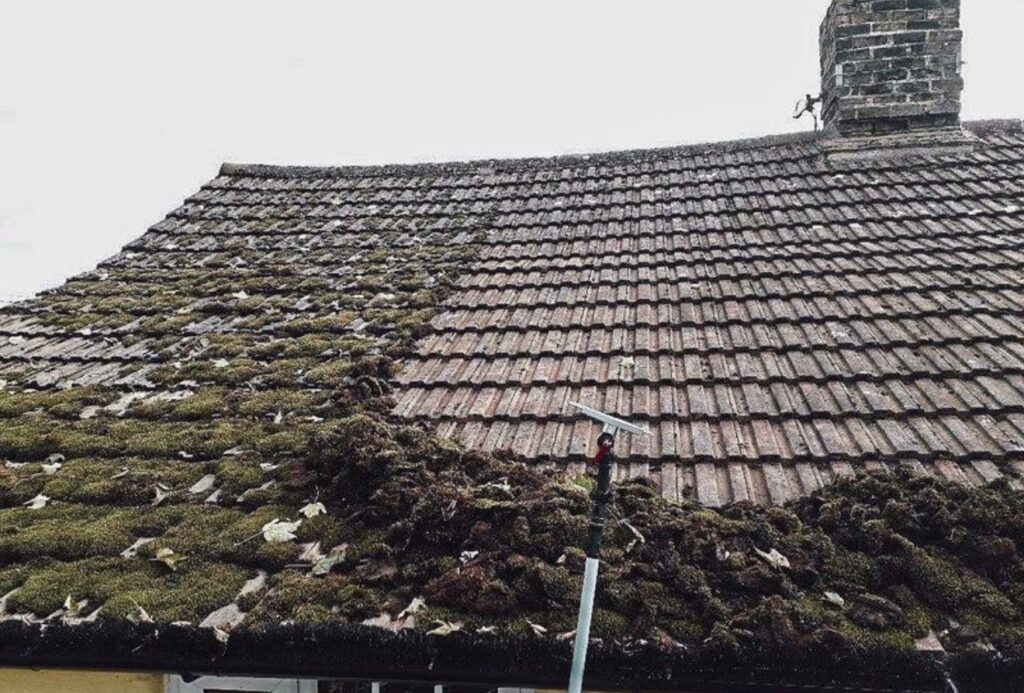
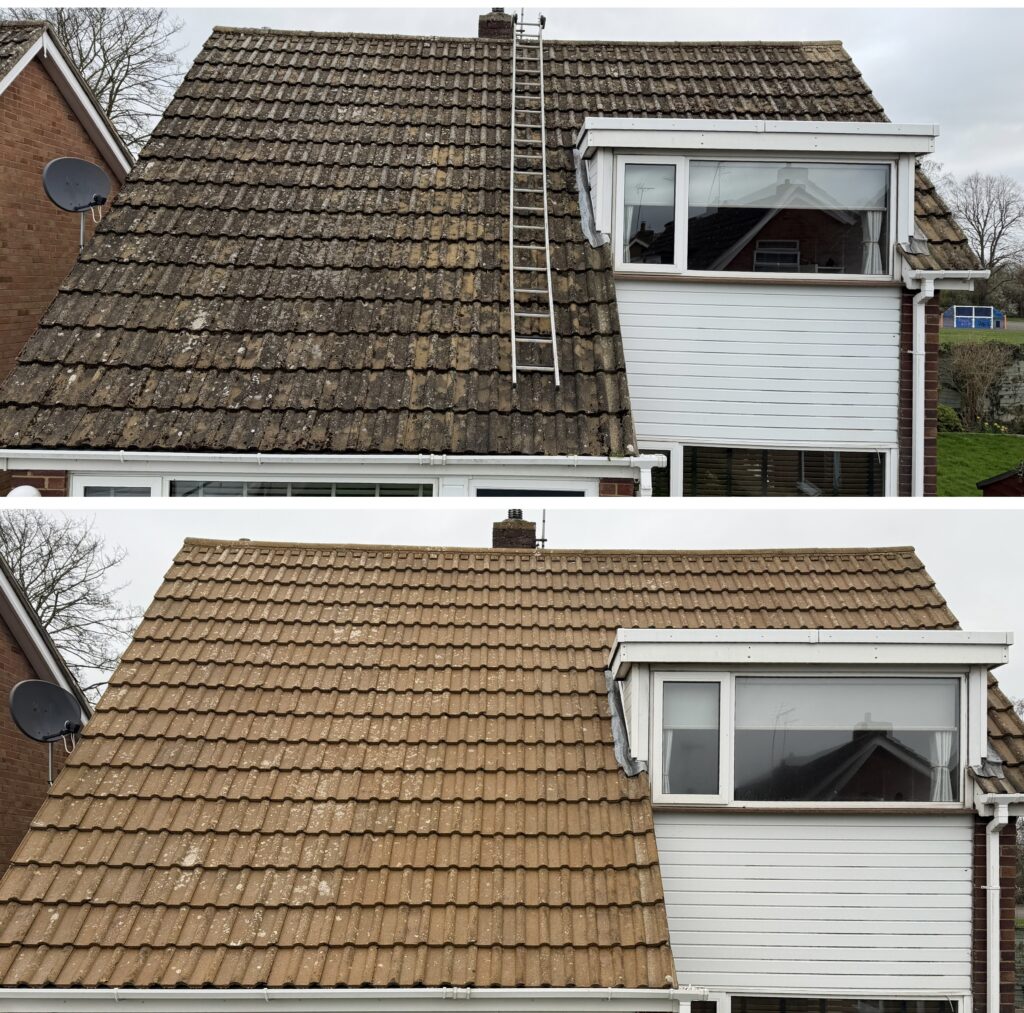
Images from Sky Scrapers Ltd work showing the methods described on this page.
Where this applies locally
Towns where this comes up most often on our patch:
Questions we get asked
Will you work in the rain?
Light drizzle rarely stops hand clearing. Treatment needs dry conditions with no heavy rain due for several hours, or the biocide is washed off before it has done anything.
Can roofs be cleaned in winter?
Yes on dry, still, frost-free days. Ice, wind and mortar work are the genuine limits, and we will not push any of the three.
How much notice do you give if a date moves?
As much as the forecast allows, usually the day before. We rebook at the next suitable slot rather than starting you again in the queue.
I need it done before a house sale, how far ahead should I book?
Give yourself a couple of weeks of headroom. Tell us the deadline at quote stage and we will plan around it.
Book with a deadline in mind
Tell us the date you are working towards and we will build in room for the weather rather than cutting it fine.
Sky Scrapers Ltd · info@sky-scrapers.co.uk
In short
Wind, ice and heavy rain stop work, treatment needs dwell time, clearing is more tolerant than treating, and deadlines need a fortnight of headroom.