
Roof softwashing and biocide treatment in Arlesey — Bedfordshire
Most of what we are asked to do in Arlesey is softwashing and biocide treatment, and most of it is booked by commercial owners and site managers who care about safe access planning, out-of-hours options and a written record of what was done. We are based in Ampthill, roughly 13 road miles away.
Against that background, softwashing and biocide treatment in Arlesey is judged property by property: arlesey has a historic brickmaking heritage, and some of its older streets still feature victorian brick terraces with slate roofs from that era, while later 20th-century estates around etonbury and the town's edges are built with concrete interlocking tiles. the railway station area has seen newer infill housing in recent years.
The faults we are called to here
The recurring issues we are asked to deal with in Arlesey are green algae film returning within months of a clean, black streaking down light-coloured tiles, lichen spotting across the whole pitch and render and cladding greening on the shaded elevation.
Arlesey has a historic brickmaking heritage, and some of its older streets still feature Victorian brick terraces with slate roofs from that era, while later 20th-century estates around Etonbury and the town's edges are built with concrete interlocking tiles. The railway station area has seen newer infill housing in recent years. That mix determines the kind of enquiry we get — and it is why we quote on the actual property rather than a per-square-metre rate.
What happens before we start in Arlesey
Water for softwashing and biocide treatment comes from an outside tap where there is one; if there is not, tell us and we bring our own supply to Arlesey.
We work Arlesey alongside Stotfold, Henlow and Ickleford, so if a neighbour wants the same softwashing and biocide treatment done we can usually fit both into one visit.
Softwashing & Biocide Treatment in Arlesey: key details
- County
- Bedfordshire
- Local authority
- Central Bedfordshire Council
- Postcode districts
- SG15
- Typical access
- The older terraced streets near the High Street have narrow frontages and on-street parking pressure, while the newer estate roads around Etonbury offer straightforward driveway access
- Main service booked here
- Softwashing & Biocide Treatment
- From our Ampthill base
- about 13 road miles
- To Ampthill
- about 13 miles
- To Stotfold
- about 2 miles
What softwashing and biocide treatment actually involves
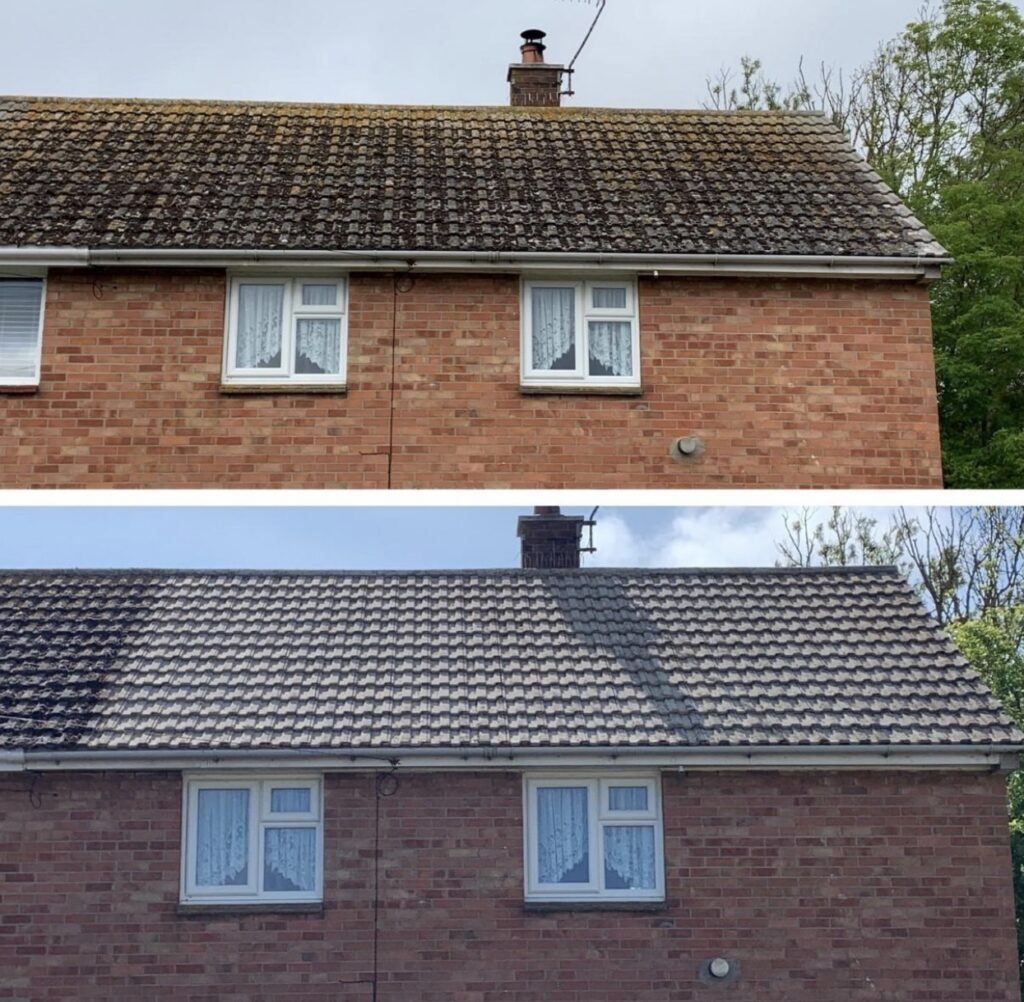
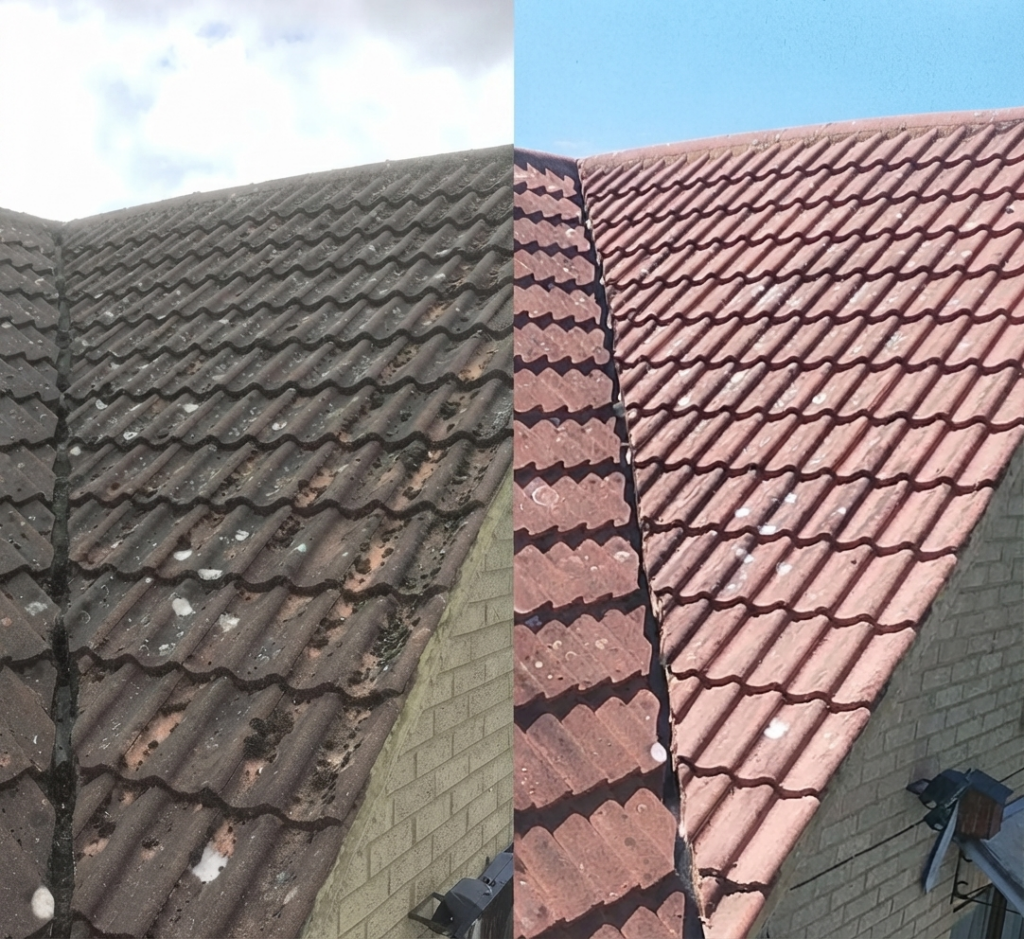
Low-pressure softwash and biocide treatment that keeps roofs cleaner for longer.
- Treatment is applied evenly across the whole pitch, including the areas that look clean, because untreated sections reseed the rest.
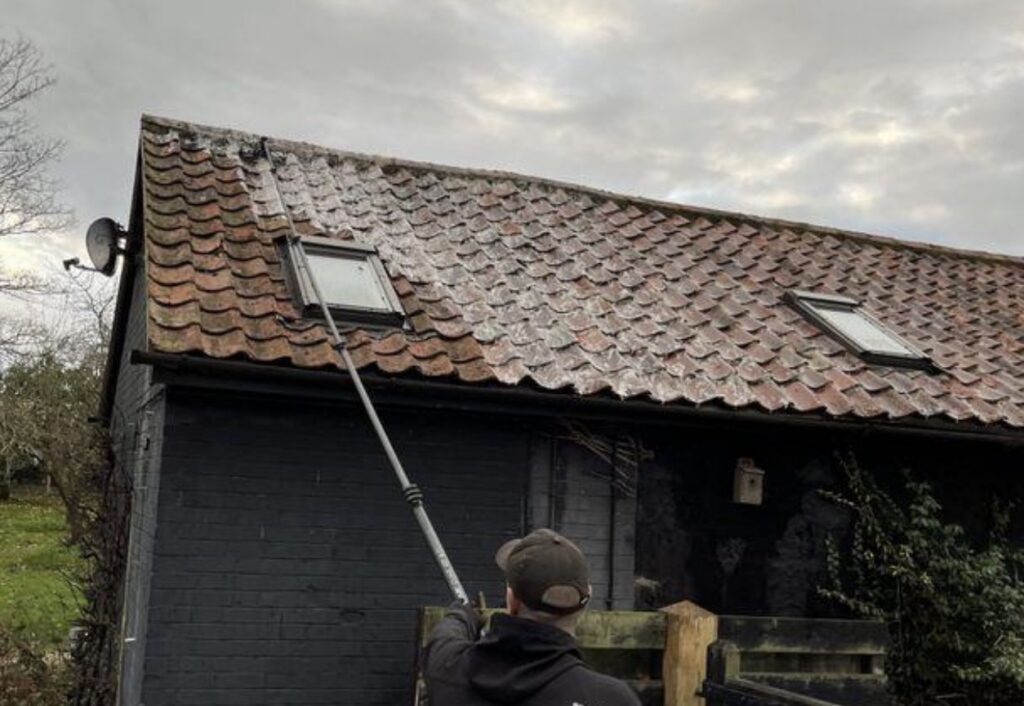
- Softwashing applies the cleaning solution at low pressure and lets the chemistry do the work, rather than relying on force.
- Treatment applied to the whole covering, not just the visible staining.
What the results look like
These are our own photographs of softwashing and biocide treatment work. They are examples of the method, not of a job at any specific address in Arlesey.
Ask what dates are open in SG15
Commercial sites usually need the visit planned around opening hours — say so when you enquire and we will work to it. We will give you the next realistic date rather than an optimistic one. Low-pressure softwash and biocide treatment that keeps roofs cleaner for longer — that is what this visit covers.
Sky Scrapers Ltd · info@sky-scrapers.co.uk
Neighbourhoods and streets we work in
Within Arlesey we work regularly across High Street, Wagon Road, Church End and Etonbury. Roof condition varies noticeably between them, largely because of building age and tree cover rather than anything else.
Terraced runs in Arlesey are quoted differently from detached plots, because scaffolding-free access is not always possible on both.
Booking rhythm in SG15
Spring bookings in Arlesey tend to be planned maintenance; autumn ones tend to be reactive. Both are fine, but the planned ones get the pick of the dates.
Commercial sites usually need the visit planned around opening hours — say so when you enquire and we will work to it.
Within reach of Arlesey
Arlesey sits roughly 13 miles from Ampthill and about 2 miles from Stotfold, so these all fall on the same softwashing and biocide treatment runs:
- Stotfold
- Henlow
- Ickleford
- Astwick
Related pages
- Hand Roof Cleaning in ArleseyTraditional hand roof cleaning with no high-pressure washing
- Roof Moss Removal in ArleseyManual moss removal from tiles, valleys and ridges
- Gutter & Fascia Cleaning in ArleseyGutter clear-outs, downpipe checks and fascia and soffit cleaning
- Softwashing & Biocide Treatment in LutonBedfordshire · LU1
- Softwashing & Biocide Treatment in StotfoldBedfordshire · SG5
- Softwashing & Biocide Treatment in BiggleswadeBedfordshire · SG18
Questions we get asked
How much notice do Arlesey bookings need?
We group SG15 work together, so once a run is planned locally we can normally slot another softwashing and biocide treatment job into the same week.
How does Arlesey compare with Ampthill for roof condition?
They are only about 13 miles apart, but local shade, aspect and tree cover matter far more than the distance between towns. Arlesey sits on the flat clay vale between the Ivel and Hiz rivers, and the low-lying, poorly draining ground keeps damp air settled over the town for longer after rain than on the chalk ground further south, favouring algae growth on shaded pitches.
Can you work outside business hours on commercial premises?
Often, yes. It depends on safe daylight working and access, but early starts and weekend visits are both possible on commercial sites.
Do you cover the whole of Arlesey for softwashing and biocide treatment?
Yes — the full SG15 area, including High Street, Wagon Road, Church End and Etonbury, plus the surrounding villages such as Stotfold, Henlow and Ickleford.
How often should a roof be treated?
It depends entirely on shade and aspect. A sunny south-facing pitch stays clean much longer than a shaded north-facing one under trees.
Next steps for Arlesey properties
If your roof shows green algae film returning within months of a clean, it is worth a look. We cover the whole SG15 area from Ampthill, 13 miles away, and we will tell you if it can wait.