
What local conditions do to roofs around Luton and the Chilterns
Roofs do not weather the same way everywhere. The mix of chalk downland, beech woodland, clay lowland and dense post-war housing around Luton, Dunstable and the Chiltern edge produces a specific pattern of growth that we see week in, week out.
This guide explains what is going on locally, why particular streets and elevations are always worse, and what that means for how a roof around here should be cleaned.
Tree cover along the Chiltern edge
Beech and other mature broadleaf woodland runs right up against housing along the escarpment through Dunstable Downs, Whipsnade, Studham, Caddington and the southern edge of Luton. Properties within that band collect far more leaf litter and stay damp for longer than houses out on open ground.
The pattern is predictable: valleys and the bottom two courses fill first, gutters block by mid-autumn, and the slope facing the trees carries visibly more growth than the one facing the road. Those homes generally need gutters clearing twice a year rather than once.
Housing stock and roof coverings
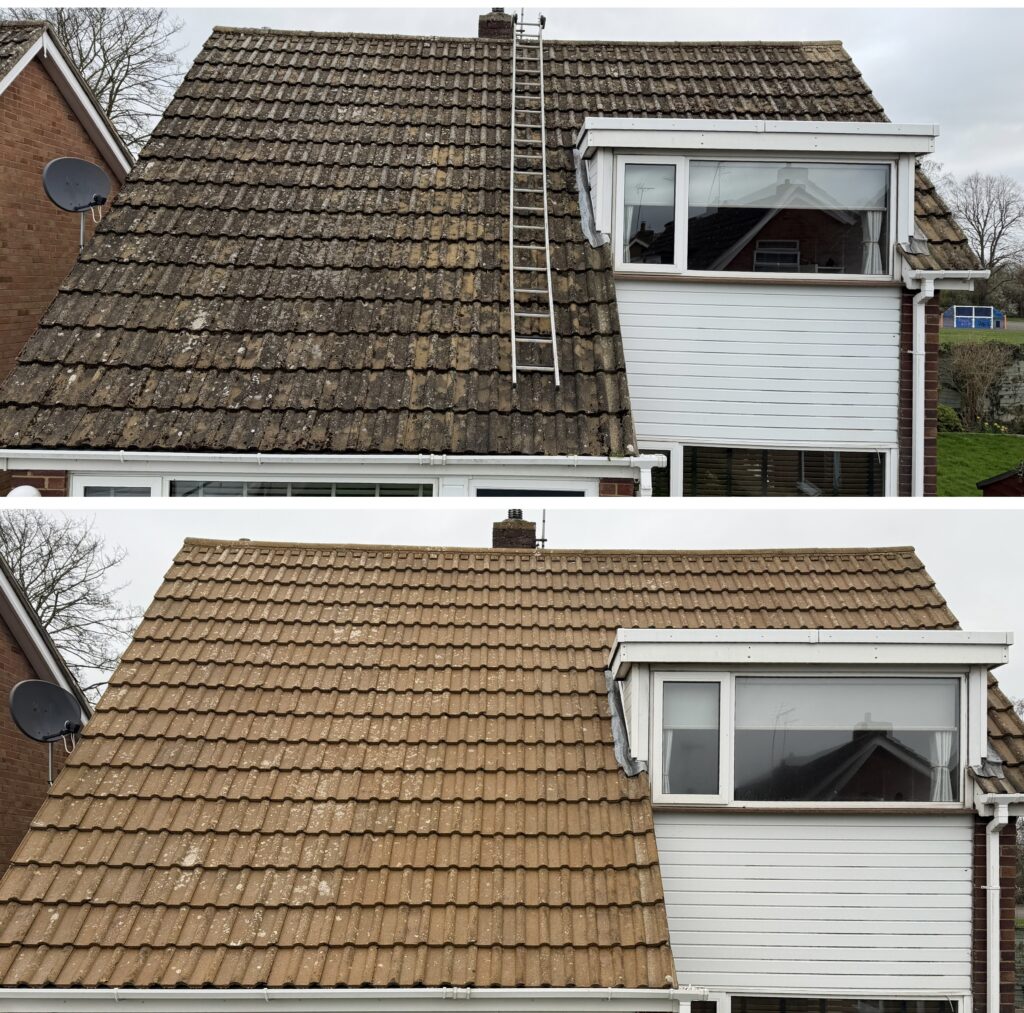
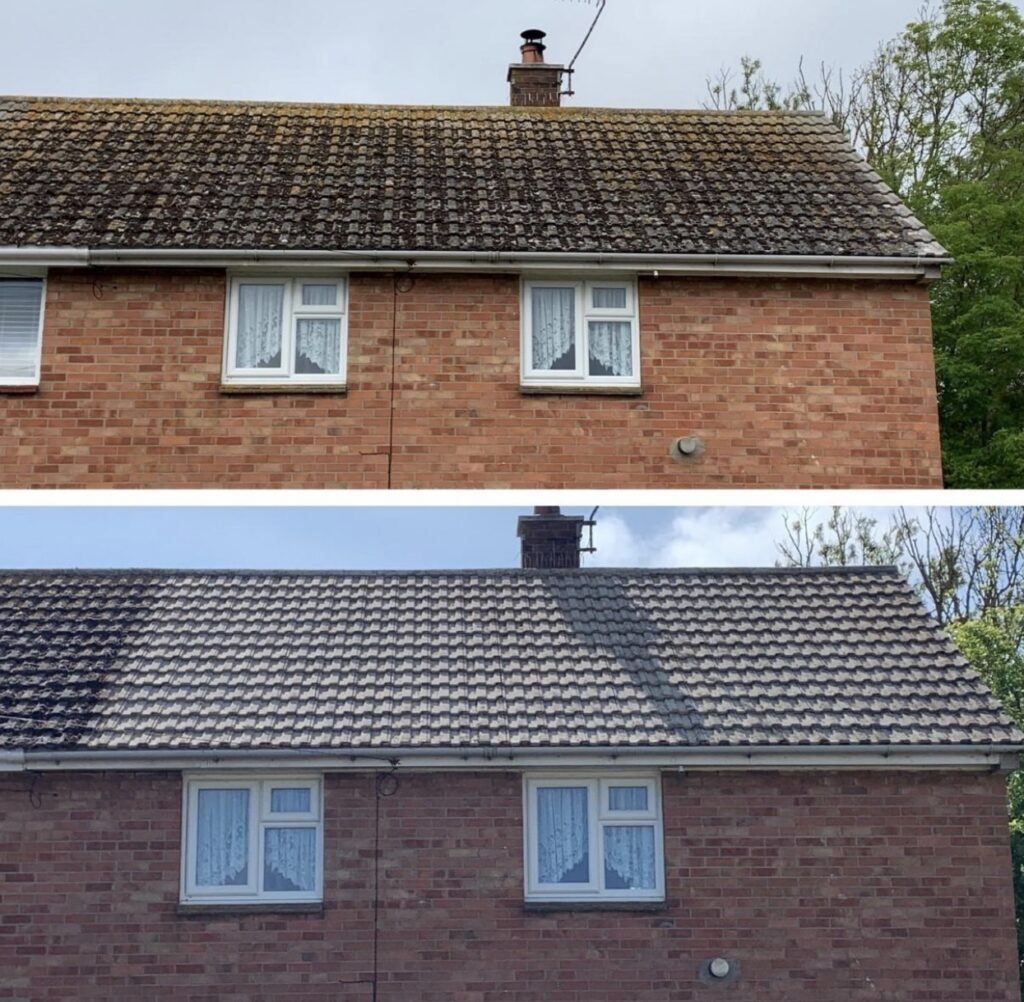
- Large areas of inter-war and post-war housing with concrete interlocking tiles, which are porous and colonise readily once weathered.
- Older Victorian and Edwardian terraces in central Luton and Dunstable with natural slate, which needs careful hand work rather than scraping.
- Clay plain tile and pantile on older village property towards Toddington, Barton-le-Clay and the Hertfordshire border.
- Newer estate development around Houghton Regis and the edges of Luton, where roofs are young but gutters fill quickly with construction debris and moss granules.
- Bungalows and shallow-pitched roofs throughout, which drain slowly and green up faster than steeper pitches.
Why north-facing rear slopes are always worse
Most estate housing in the area runs in rows with a consistent orientation, so entire streets share the same problem elevation. The rear slope of a north-facing property gets very little direct sun through the winter, holds moisture for days after rain, and develops moss years before the front.
This is why so many customers tell us their roof looks fine and then send us a photograph from the garden that tells a completely different story. Always look from the back before deciding a roof does not need doing.
Traffic, dust and the urban edge
Close to the M1 corridor, the A5 and the busier routes through Luton and Dunstable, roofs and render pick up a grey atmospheric film in addition to biological growth. It is a different problem from moss and it responds to soft washing rather than scraping.
It also shows up most on render and uPVC rather than tile, which is why properties along those routes often want the walls and fascias treated at the same visit as the roof.
What that means for the method
Hand cleaning rather than pressure washing, because so much of the local stock is either weathered concrete tile that pressure ruins or natural slate that pressure destroys.
Biocide treatment as standard on full cleans, because the shade and damp conditions along the Chiltern edge mean untreated roofs regrow quickly.
Gutters cleared as part of the job, because on tree-lined streets the gutters are always part of the problem and never separate from it.
Where we work
We cover Luton, Dunstable, Houghton Regis, Caddington, Barton-le-Clay, Toddington, Harpenden and the surrounding villages, alongside the rest of Bedfordshire and the neighbouring counties. Travel across the area is built into our normal pricing rather than added on.
Quotes and site visits are free and carry no obligation. In most cases photographs from the garden and the drive are enough for a firm figure.
Our own photographs
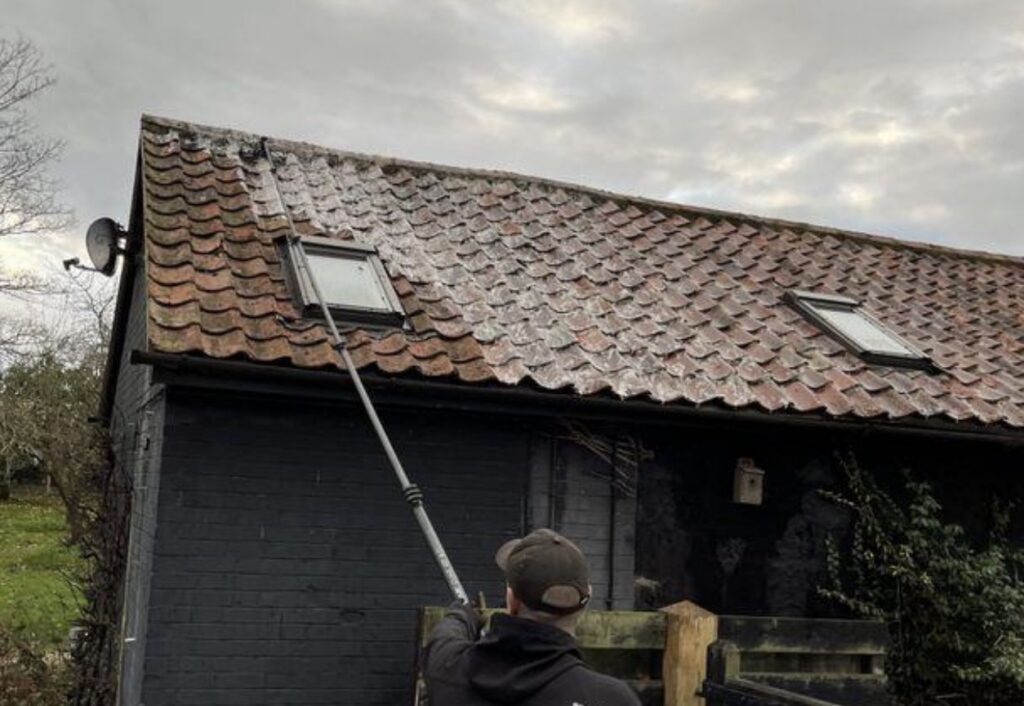
Images from Sky Scrapers Ltd work showing the methods described on this page.
Where this applies locally
Towns where this comes up most often on our patch:
Want a professional to handle it?
Local roofs, local conditions
Send a photograph from the back garden and we will tell you honestly whether it needs doing yet.
Sky Scrapers Ltd · info@sky-scrapers.co.uk
Questions we get asked
Do roofs near woodland need cleaning more often?
The roof itself does not necessarily, but the gutters do, usually twice a year. Heavy leaf fall and shade also mean shaded slopes benefit from a maintenance treatment sooner.
Is slate cleaned differently from concrete tile?
Yes. Slate is more brittle and delaminates if handled roughly, so it is worked more gently and never pressure washed.
My front roof looks fine, does the back matter?
It usually matters more. North-facing rear slopes carry the growth first, and cleaning only the visible side leaves a reservoir that recontaminates it.
Do you charge extra for travel around the area?
No. Travel across Bedfordshire and the neighbouring counties is included in our normal pricing.
Can render and roof be done in one visit?
Yes, and it costs less than two separate visits because the access setup and protection are shared.
In short
Chiltern woodland, shaded north-facing rear slopes and porous concrete tile give roofs around Luton and Dunstable a predictable growth pattern. Hand cleaning, biocide treatment and twice-yearly gutter clearing suit the area.
Related services
Covering Bedfordshire and surrounding counties