
Manual moss removal across Barton-le-Clay (Central Bedfordshire Council)
Moss removal in Barton-le-Clay is shaped less by the town than by the street: Bedford Road, Sharpenhoe Road and Luton Road each hand us different pitches, different coverings and different access. We are based in Ampthill, roughly 7 road miles away.
The chalk escarpment of the Barton Hills rises immediately behind the village, funnelling wind down over rooftops and depositing chalky dust and organic debris from the downland grassland above, which is a distinctly different soiling pattern from the clay-vale villages further north — and that is the single fact that decides how a moss removal quote in Barton-le-Clay is put together.
Local reference points
- County
- Bedfordshire
- Local authority
- Central Bedfordshire Council
- Postcode districts
- MK45
- Districts we work in
- Bedford Road, Sharpenhoe Road, Luton Road
- Parent area
- Barton-le-Clay (standalone town page)
- From our Ampthill base
- about 7 road miles
- To Ampthill
- about 7 miles
- To Luton
- about 9 miles
Practicalities of a Barton-le-Clay booking
Because the A6 route into Barton-le-Clay is straightforward, we can bring the full moss removal kit rather than a cut-down load.
We work Barton-le-Clay alongside Sharpenhoe, Streatley and Silsoe, so if a neighbour wants the same moss removal done we can usually fit both into one visit.
What we do differently on Barton-le-Clay jobs
Manual moss removal from tiles, valleys and ridges.
- Gutters and downpipes are checked and cleared afterwards, since removal always dislodges material.
- Moss is lifted manually so the root mat comes away with it, instead of being cut off at the surface and left to regrow within a season.
- Displaced or cracked tiles reported with photographs.
Inside the MK45 district
Roof Moss Removal enquiries in Barton-le-Clay cluster in Bedford Road, Sharpenhoe Road and Luton Road, where the older coverings and mature trees sit together.
Between Bedford Road and Sharpenhoe Road the difference in growth on north-facing slopes is obvious from the pavement.
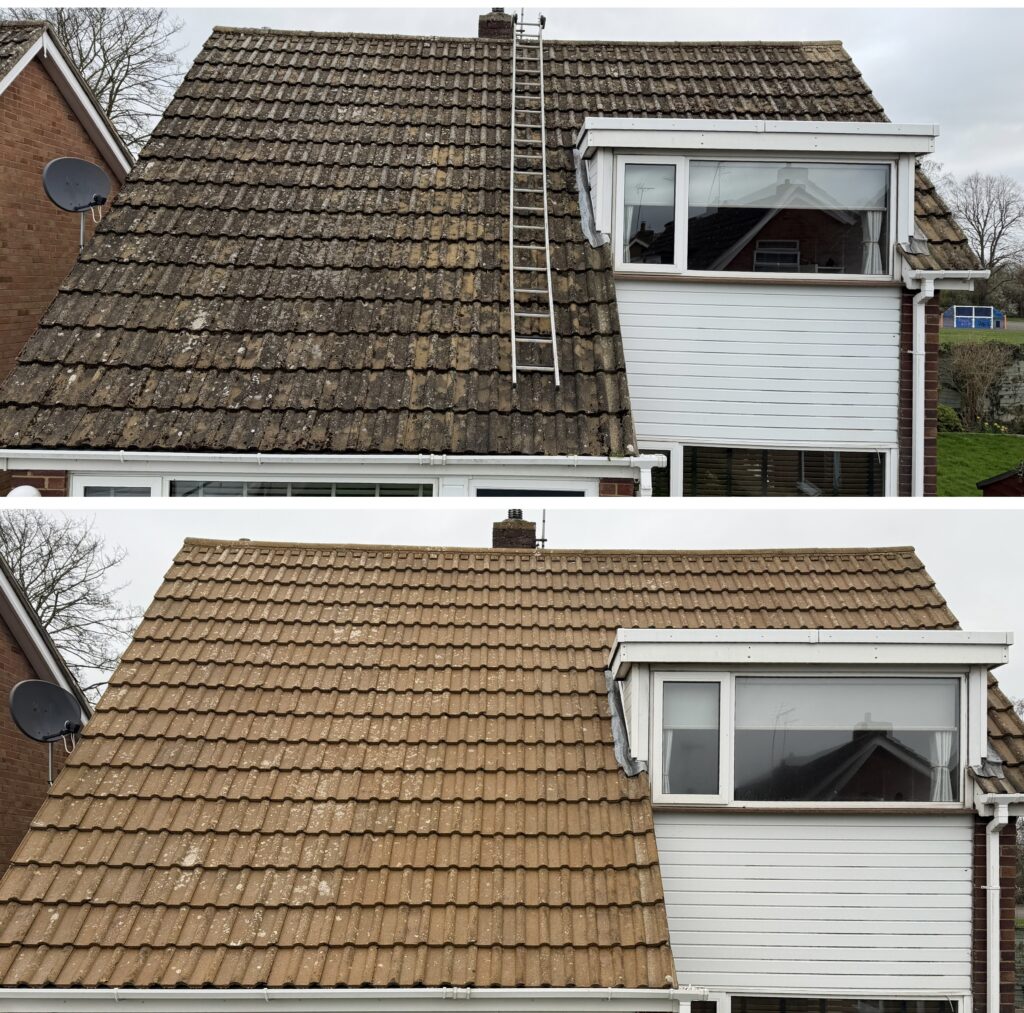
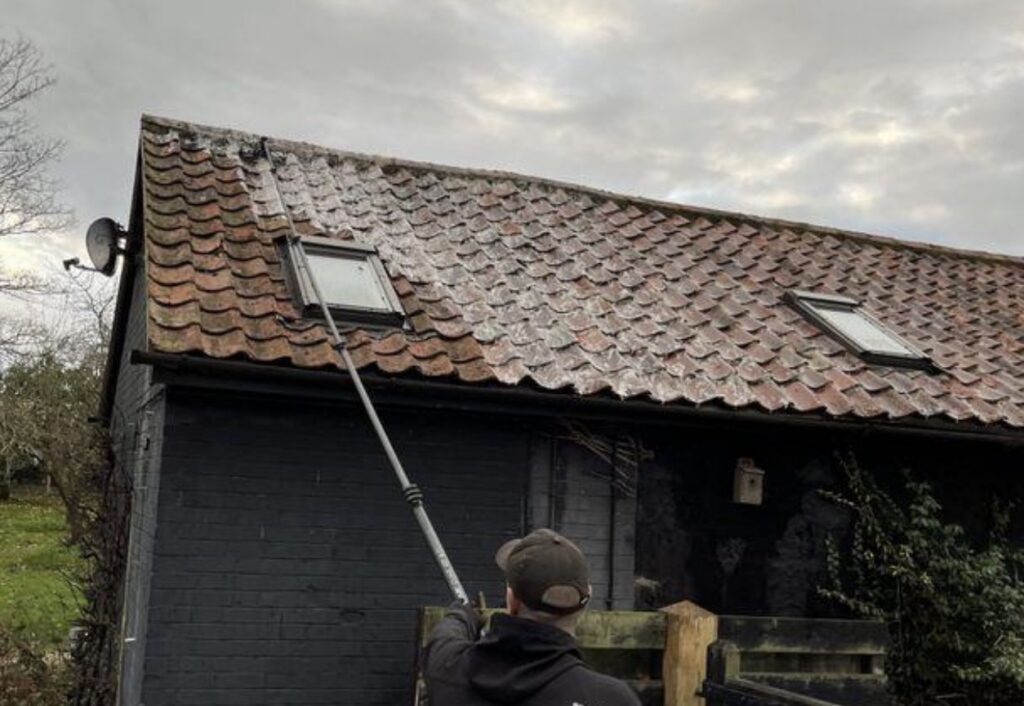
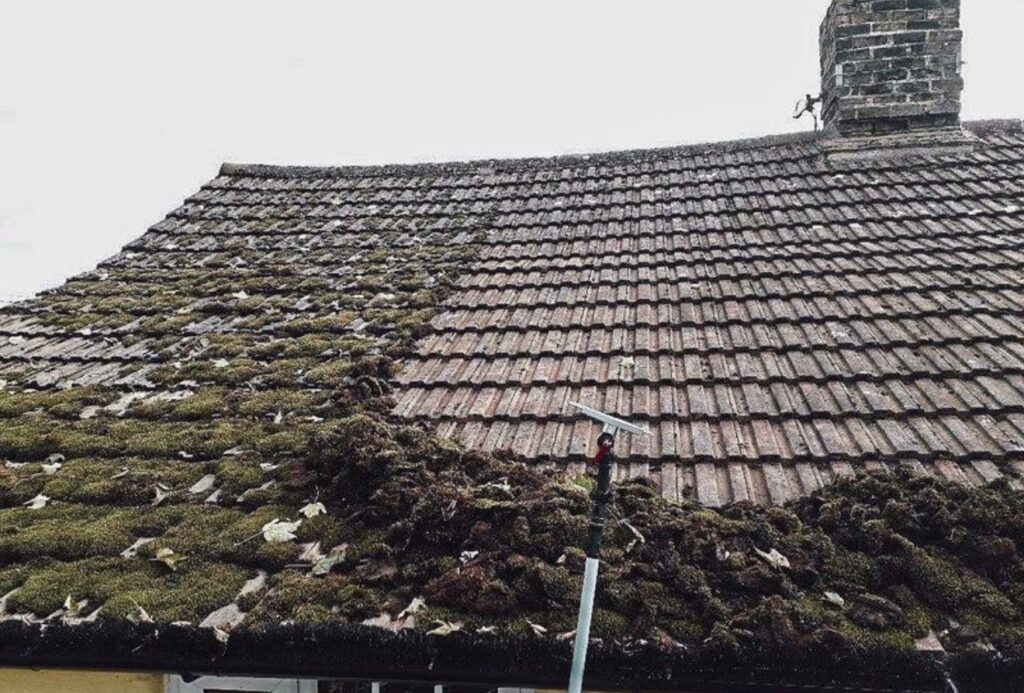
Before and after on moss removal jobs
These are our own photographs of moss removal work. They are examples of the method, not of a job at any specific address in Barton-le-Clay.
Ask what dates are open in MK45
Rural plots often need extra access kit, so send a photo of the approach as well as the roof. We will give you the next realistic date rather than an optimistic one. Manual moss removal from tiles, valleys and ridges — that is what this visit covers.
Sky Scrapers Ltd · info@sky-scrapers.co.uk
Booking rhythm in MK45
Spring bookings in Barton-le-Clay tend to be planned maintenance; autumn ones tend to be reactive. Both are fine, but the planned ones get the pick of the dates.
Long-established village households alongside newer families drawn by the proximity to the Barton Hills and the A6 commuter route into Luton.
Materials, and how each one is treated
Plain clay tiles: moss sits in the overlaps and has to be teased out rather than scraped hard.
Slate: moss tends to grow along the joints and at the tail, so work is done along the courses.
Where else we work locally
Barton-le-Clay sits roughly 7 miles from Ampthill and about 9 miles from Luton, so these all fall on the same moss removal runs:
- Sharpenhoe
- Streatley
- Silsoe
- Pulloxhill
- Barton Hills
More on moss removal and Bedfordshire
- Hand Roof Cleaning in Barton-le-ClayTraditional hand roof cleaning with no high-pressure washing
- Softwashing & Biocide Treatment in Barton-le-ClayLow-pressure softwash and biocide treatment that keeps roofs cleaner for longer
- Gutter & Fascia Cleaning in Barton-le-ClayGutter clear-outs, downpipe checks and fascia and soffit cleaning
- Roof Moss Removal in Aspley GuiseBedfordshire · MK17
- Roof Moss Removal in BedfordBedfordshire · MK40
- Roof Moss Removal in CranfieldBedfordshire · MK43
Questions we get asked
Do you work on moss removal for anything other than houses in Barton-le-Clay?
Long-established village households alongside newer families drawn by the proximity to the Barton Hills and the A6 commuter route into Luton.
How much notice do Barton-le-Clay bookings need?
We group MK45 work together, so once a run is planned locally we can normally slot another moss removal job into the same week.
Is access a problem on Barton-le-Clay properties?
Properties along the A6 frontage have restricted verge parking due to traffic, so equipment is generally carried in from the quieter residential roads behind, most of which have their own driveways. We plan the moss removal set-up around whichever applies on your street.
Why does growth come back so quickly on Barton-le-Clay roofs?
The chalk escarpment of the Barton Hills rises immediately behind the village, funnelling wind down over rooftops and depositing chalky dust and organic debris from the downland grassland above, which is a distinctly different soiling pattern from the clay-vale villages further north. For moss removal that means the interval between visits is set by aspect and tree cover, not by a fixed number of years.
Is moss actually damaging my roof?
Thick moss holds water against the tile and blocks the flow into valleys and gutters. On older coverings that standing water is the real problem, not the moss itself.
Next steps for Barton-le-Clay properties
If your roof shows deep moss mats holding water on the tiles, it is worth a look. We cover the whole MK45 area from Ampthill, 7 miles away, and we will tell you if it can wait.