
Moss keeps falling off my roof into the garden
Finding lumps of moss on the drive after wind or heavy rain is one of the most common reasons people first ring us. It looks like the roof is shedding the problem on its own, and in a sense it is, but not in a way that helps you.
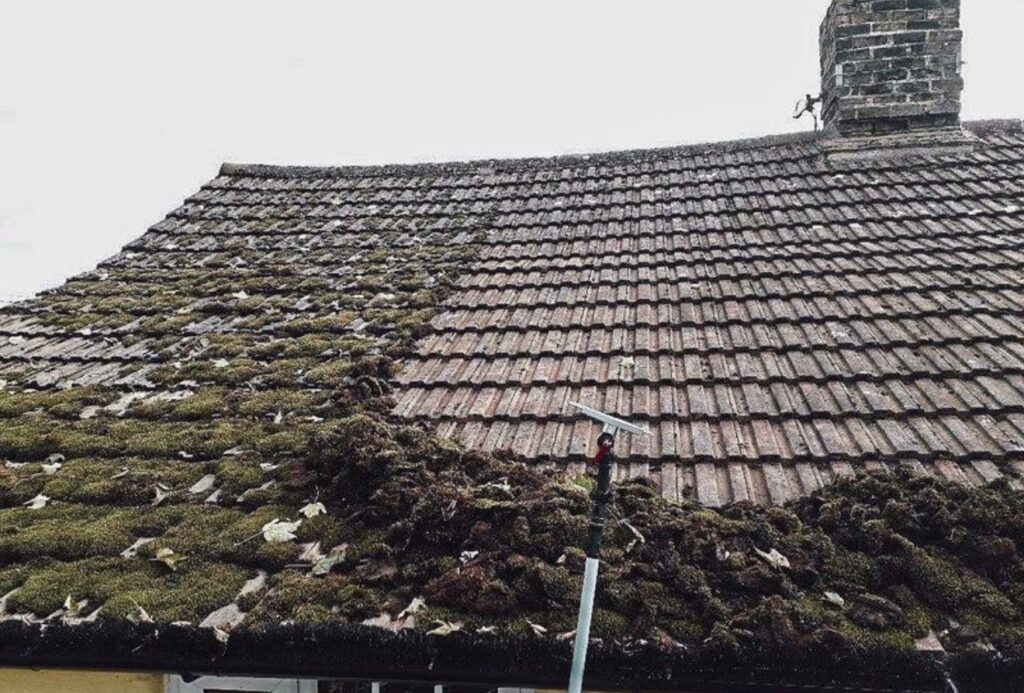
What it actually tells you is that the growth has become heavy enough to detach under its own weight. Whatever comes off the slope has to go somewhere, and most of it goes into the gutter before it reaches the ground.
Why it detaches now and not before
Moss holds water. A dry cushion is light and clings to the tile surface. Saturate it over a wet fortnight and the same cushion can weigh several times as much, and the roots that were holding it in the tile texture give way.
Frost accelerates it. Water trapped in the growth expands as it freezes, breaking the bond with the tile, so the first thaw after a cold snap is when most people notice clumps on the ground.
What is happening out of sight
- Gutters filling from the top down, which is why they can look clear from the ground and still be blocked.
- Downpipe mouths choking, so water backs up along the run and spills at the joints.
- Debris wedging under tile laps as it travels down the slope, holding damp against the covering.
- Valleys and behind-chimney gullies collecting the heaviest material because everything funnels there.
- Ground-level splashing against walls and boards, which is what causes the black streaking on fascias.
What not to do
Do not pull at what you can reach from a ladder. Tugging a cushion off the bottom course usually takes surface material with it and can lift a tile nib you cannot see.
Do not put a pressure washer on it either. Blasting moss off a slope drives water under the laps and strips the weathered face of the tiles, which is precisely why we clean by hand instead.
Stop the roof shedding into your gutters
Send a photo of the worst slope and the clumps on the ground and we will tell you what stage it is at.
Sky Scrapers Ltd · info@sky-scrapers.co.uk
The sensible order of work
Clear the roof by hand first so nothing new is heading for the gutters, then clear and flush the gutters and downpipes, then treat the roof so regrowth is slowed. Doing gutters first on a shedding roof is money spent twice.
Our full roof cleans finish with a biocide treatment and carry a written 24-month guarantee, and if we find loose ridge tiles or cracked flaunching while we are up there we photograph it and tell you.
Our own photographs
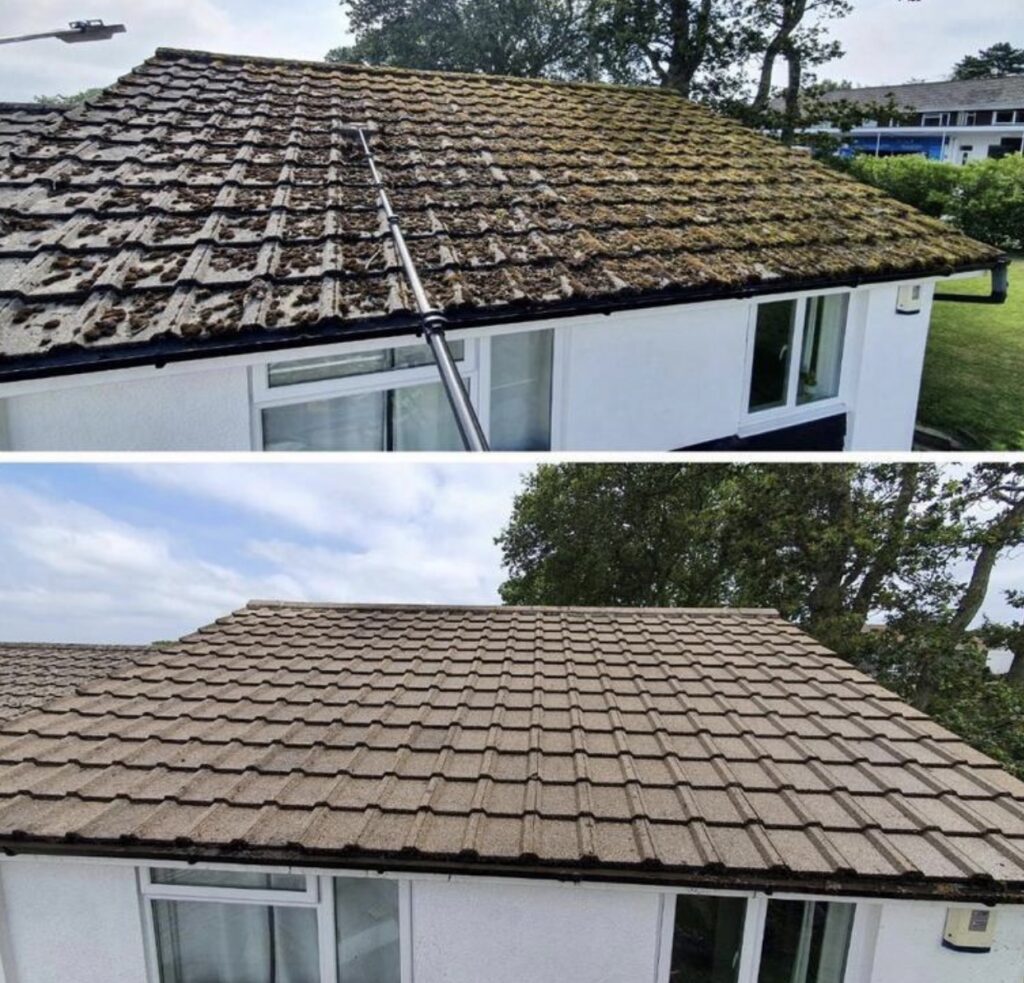
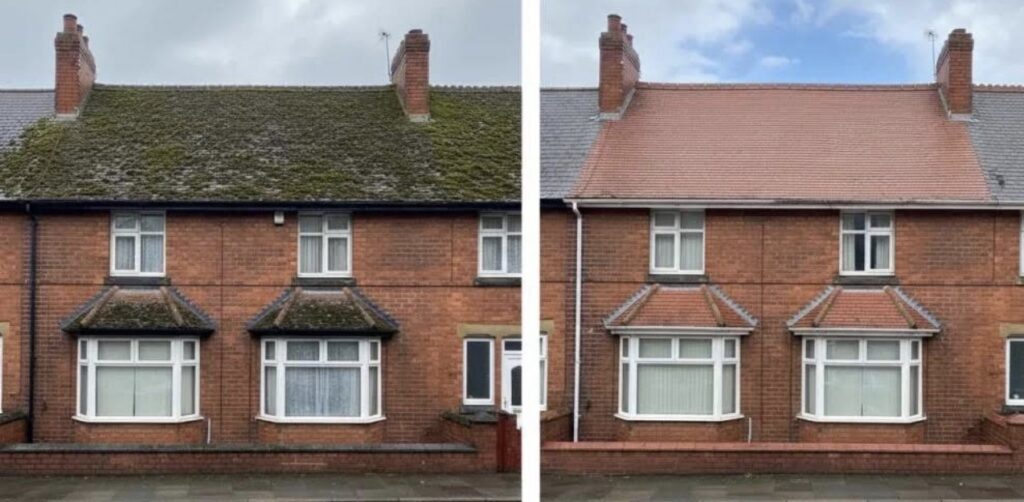
Images from Sky Scrapers Ltd work showing the methods described on this page.
Where this applies locally
Towns where this comes up most often on our patch:
Questions we get asked
Is falling moss a sign of roof damage?
Not by itself. It is a sign the growth is mature and saturated. It does often reveal damage underneath once the slope is cleared, which is why we photograph what we find.
Will it just clear itself if I leave it?
The visible slope may thin out, but the material lands in your gutters. Left long enough that becomes overflow, staining and damp at the eaves.
Should I clear the gutters first?
Only if you plan to clear them again afterwards. On a shedding roof the right order is roof, then gutters, then treatment.
How soon should this be dealt with?
Before the wet season if you can. Autumn clearing ahead of winter rain is the timing that saves the most trouble.
In short
Falling moss means saturated, mature growth losing its grip, and most of it lands in the gutters. Clear the roof by hand first, then the gutters, then treat.