
Flat roof and felt cleaning without damaging the membrane
Flat roofs on extensions, garages and dormer cheeks collect debris in a way pitched roofs do not, because there is no slope to help material move on. Leaves, moss and standing silt sit exactly where they land, and if the outlets or gullies get covered, water starts pooling rather than draining.
Felt, GRP and single-ply membranes are all more vulnerable to abrasion and puncture than a tiled roof, so cleaning a flat roof is as much about protecting the surface as it is about removing what has built up on it.
What accumulates on a flat roof and why it matters
Standing water is the main enemy of any flat roof membrane, and blocked outlets caused by leaf litter and moss are the most common reason we find pooling that should not be there. Left long enough, moss also roots into the felt's mineral surface, and pulling it free carelessly can lift granules and expose the bitumen underneath.
How we approach a flat roof
- Hand clearing of leaves, moss and silt, working towards the outlets rather than away from them.
- Soft brushing on felt and GRP to avoid lifting the mineral cap sheet or scoring the gel coat.
- Outlets and gullies checked and cleared as part of the job, not treated as separate from the roof surface.
- No pressure washing — a lance can drive water under laps and seams that are only designed to shed rain running downhill.
Where flat roofs usually need this
Rear extension roofs, garage roofs, dormer cheeks and porch canopies are the most common flat sections we clean, and they are very often overlooked entirely during a general roof clean because they sit low and out of sightline from the ground.
Get a flat roof or garage roof quote
Send a photo from an upstairs window if you have one, or just the address — we can usually work out roughly what is involved.
Sky Scrapers Ltd · info@sky-scrapers.co.uk
Our own photographs
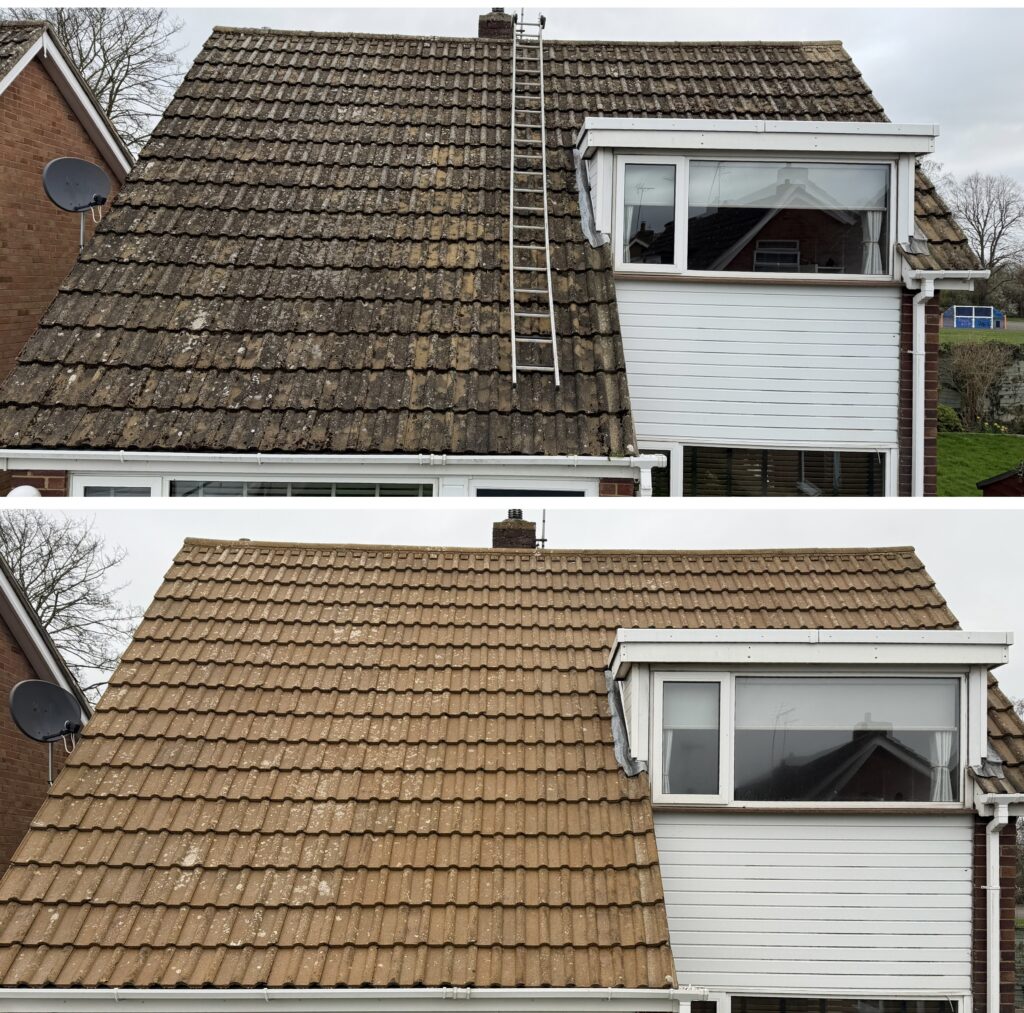
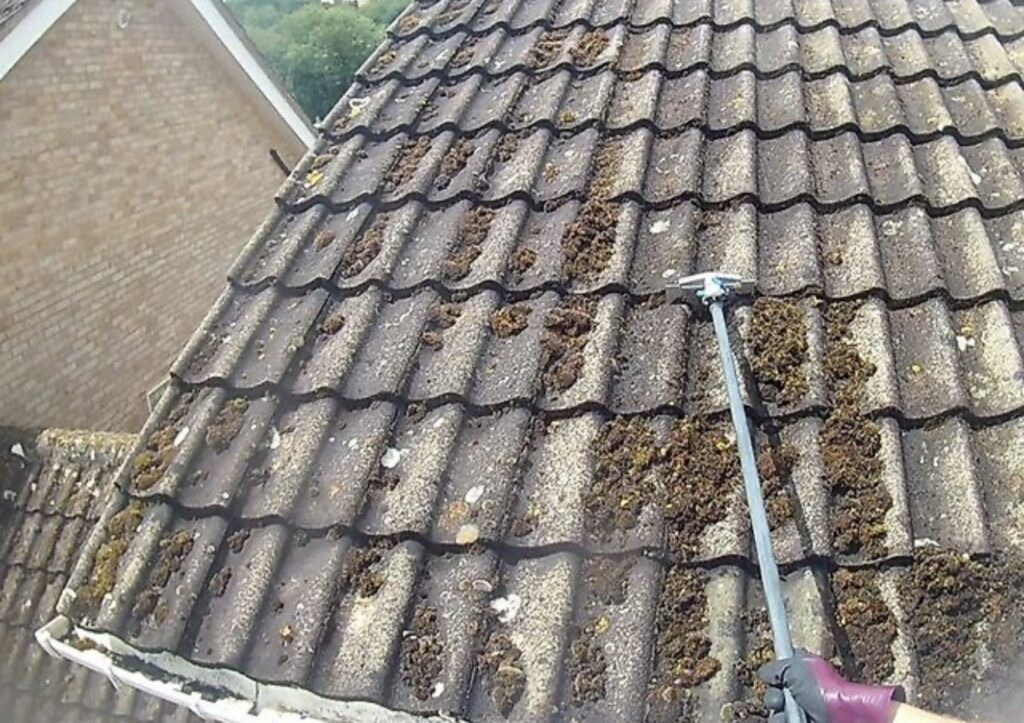
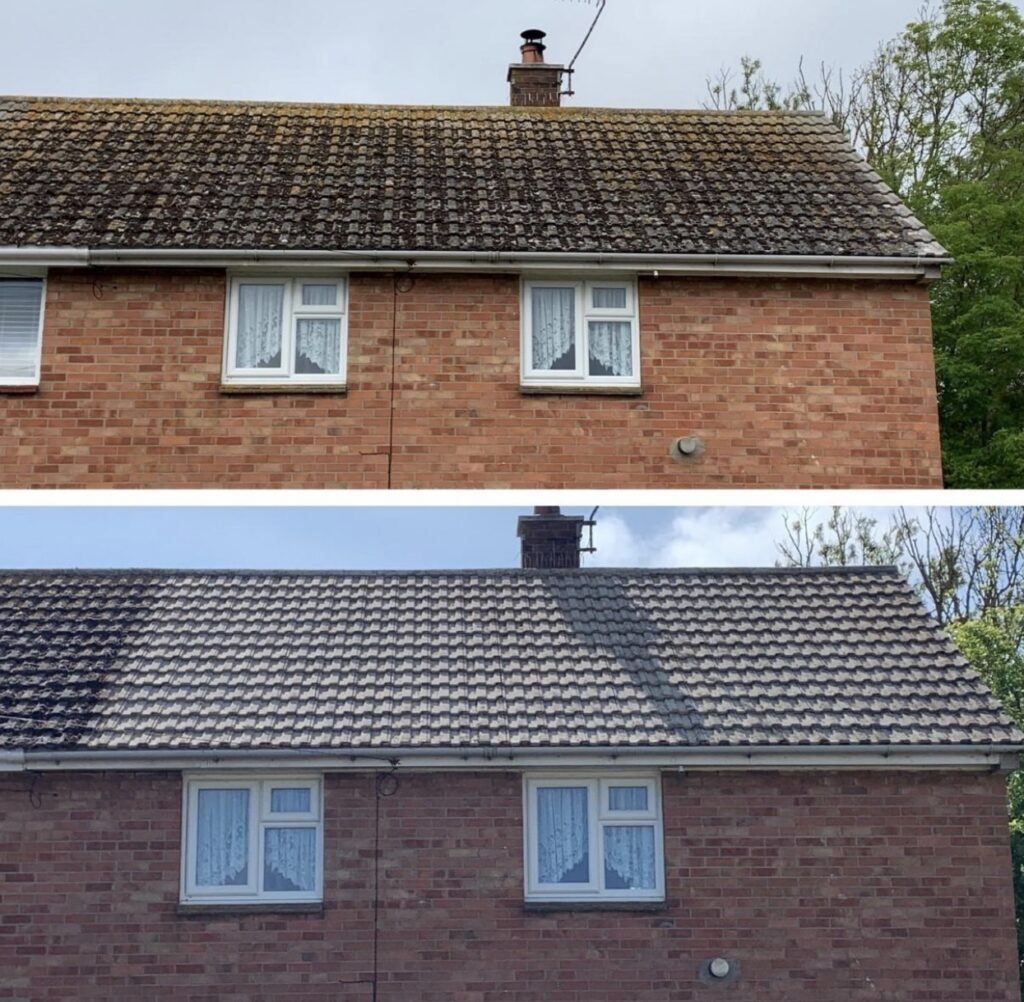
Images from Sky Scrapers Ltd work showing the methods described on this page.
Where this applies locally
Towns where this comes up most often on our patch:
- Hand Roof Cleaning in BedfordBedfordshire · MK40
- Hand Roof Cleaning in LutonBedfordshire · LU1
- Hand Roof Cleaning in Letchworth Garden CityHertfordshire · SG6
- Garage, porch and outbuilding roofsBuilding type
- Overflowing gutters usually mean the downpipe, not the gutterCommon problem
- Conservatory roofs, frames and box gutters cleaned at low pressureBuilding type
Questions we get asked
Can moss actually damage a felt roof?
Yes. Moss roots into the mineral surface and holds moisture against it, and clearing it carelessly can strip granules and expose the bitumen underneath — which is why we clear it by hand and gently rather than scraping hard.
Do you clear the outlets and gullies as well?
Yes, that is usually the most important part of a flat roof clean. A clear surface with a blocked outlet still pools water.
Is pressure washing ever used on flat roofs?
No. Flat roof membranes rely on laps and seams that shed water running downhill on a slope — a pressure lance can force water past them from the wrong angle.
My extension roof is barely visible from the ground — does it still need cleaning?
Often more than the main roof does, because it is exactly the kind of area that gets overlooked and ends up with blocked outlets nobody notices until there is a leak.
Summary
Flat roofs fail because of standing water more than anything else, and standing water is almost always a blocked outlet story. Clearing debris by hand and checking the outlets is the job.