
Concrete interlocking tile roofs: the water-channel problem
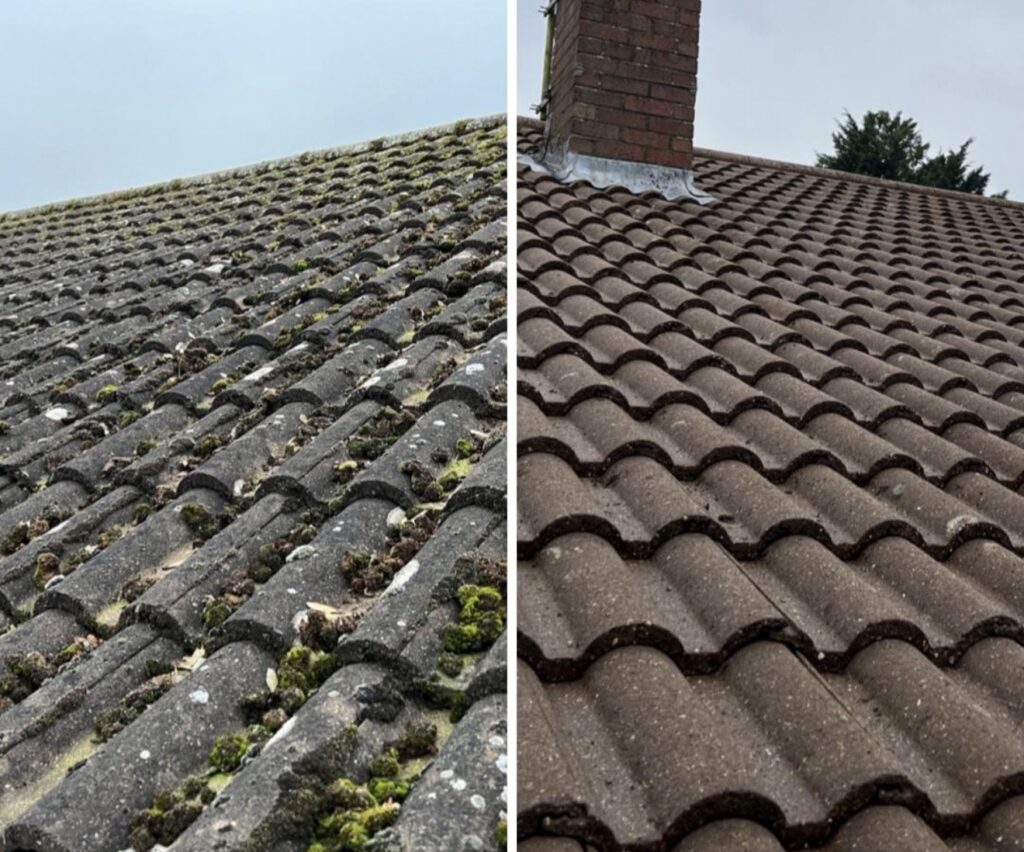
Concrete interlocking tiles are the most common covering on estates built from the 1970s onward, and they work by relying on moulded side and head laps rather than a flat overlap. That interlock is precisely where moss establishes first, because the channel holds water and grit long after the visible face of the tile has dried.
Once moss fills the lap it stops the channel doing its job, and water backs up under the tile above rather than running over it. Cleaning these roofs properly means clearing the channel, not just brushing the exposed face.
Why the interlock matters more than the surface
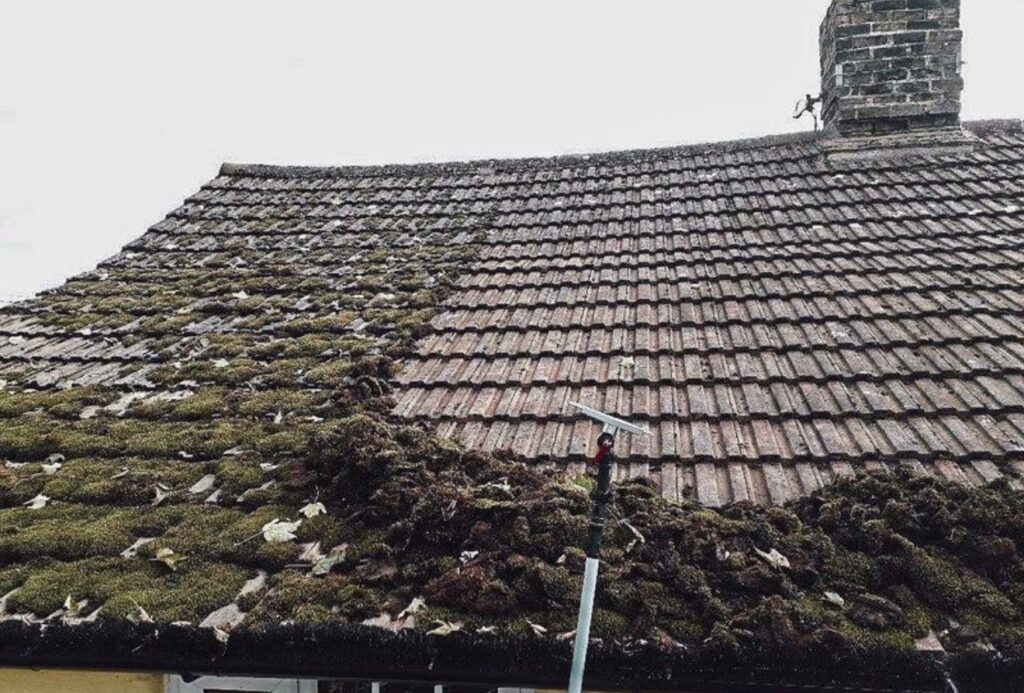
A concrete tile looks clean once the visible face is brushed off, but if the moulded side-lap channel underneath is still packed with root and grit, the tile is not actually doing its job. We work each course by hand so growth is drawn out of the channel rather than left to regrow within weeks.
This is also why pressure washing a concrete tile roof is a false economy. The lance blasts the surface clean in seconds but drives debris and water further into the lap, and repeated exposure erodes the cement finish that gives the tile its colour.
What we do differently on concrete tile
- Hand scraping along each course, working with the lap rather than across it.
- Stiff-bristle brushing to clear granules and moss root from the channel, not just the exposed face.
- Biocide treatment applied afterwards to slow regrowth in the lap where moisture sits longest.
- Cracked or slipped tiles noted and flagged rather than walked on and made worse.
Colour loss is a separate issue
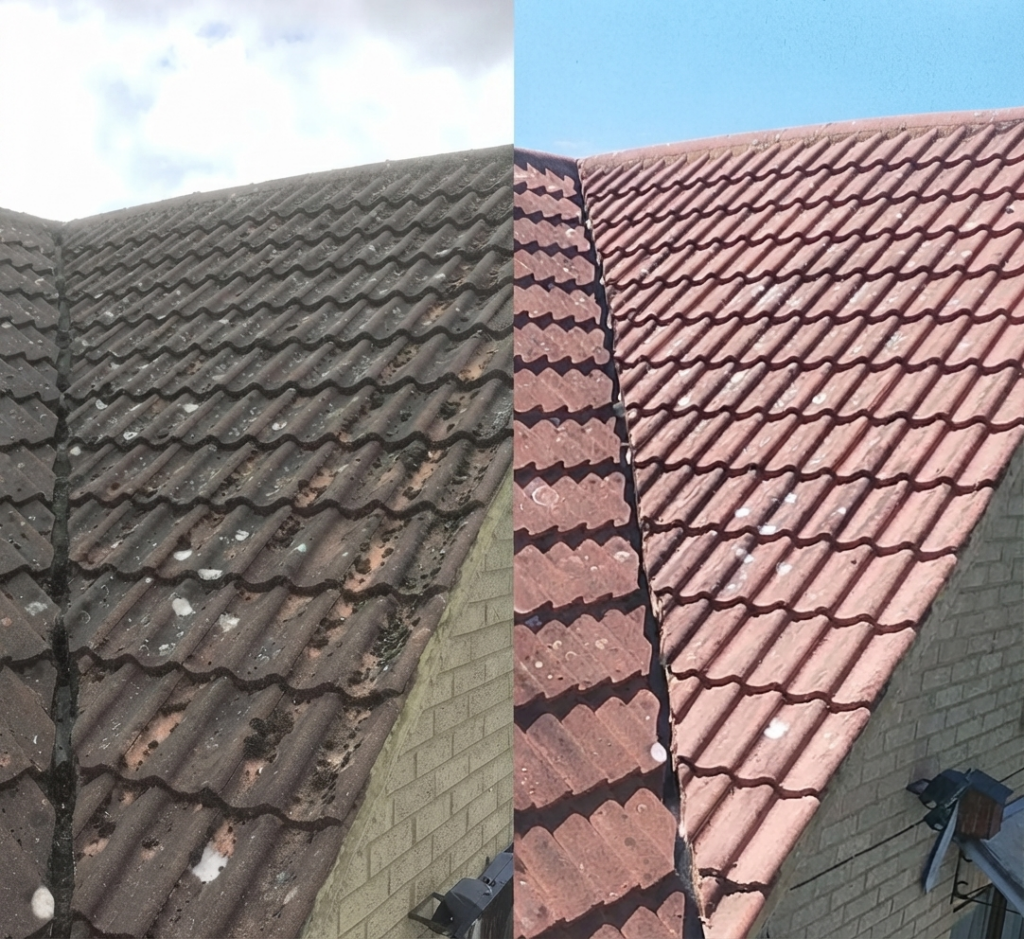
Concrete tiles are through-coloured or surface-coated, and the coating wears with age regardless of cleaning. Cleaning removes organic growth and staining; it does not restore faded colour, and we will not claim otherwise on a quote.
Common estates we see this on
Concrete interlocking tile is the standard covering on estate housing around Bedford, Kempston, Flitwick and Milton Keynes, and moss build-up in the channel is the single most common call-out we get from these areas.
Our own photographs
Images from Sky Scrapers Ltd work showing the methods described on this page.
Where this applies locally
Towns where this comes up most often on our patch:
- Hand Roof Cleaning in BedfordBedfordshire · MK40
- Hand Roof Cleaning in KempstonBedfordshire · MK42
- Hand Roof Cleaning in FlitwickBedfordshire · MK45
- Hand Roof Cleaning in Milton KeynesBuckinghamshire · MK1
- New build roofsBuilding type
- Moss is blocking your guttersCommon problem
- Why the north-facing slope is always the one covered in mossCommon problem
Questions we get asked
Does interlocking tile need different cleaning to plain tile?
Yes. The growth sits in the moulded lap channel as much as on the visible face, so brushing needs to work into that channel rather than just skim the surface.
Will cleaning restore the original tile colour?
No. Cleaning removes moss, algae and staining. Surface coating that has weathered with age will not come back — that is a coating issue, not a cleaning one.
Can pressure washing damage concrete tiles?
Yes, repeatedly and predictably. It erodes the surface finish and can drive moss root and water further into the side lap rather than removing it.
How do I know if a tile has slipped rather than just gone mossy?
A slipped tile usually shows a visible gap or step against its neighbours. We check for this as we work and note anything that needs a roofer rather than cleaning it around.
Get a quote for your concrete tile roof
Tell us the rough age of the roof and how long since it was last cleaned, and we can give you a realistic estimate of the work involved.
Sky Scrapers Ltd · info@sky-scrapers.co.uk
In short
Concrete interlocking tiles hide most of their moss problem in the lap channel. Hand clearing that channel, then treating it, is what actually slows regrowth — pressure washing just polishes the surface and leaves the real problem in place.