
Why your gutters are sagging and pooling water
A gutter that has dropped in the middle stops being a drainage channel and becomes a trough. Water sits in it, silt settles, seeds germinate in the silt, and the extra weight pulls the run down further.
The useful question is not whether it looks wrong, it is whether the cause is load or fixings, because those need different answers.
Load or fixings: how to tell
- If the sag disappears once the run is cleared and flushed, the cause was weight and the brackets are probably sound.
- If it stays low with the run empty, the brackets, the fascia behind them or the spacing between them is the problem.
- Gaps opening at a joint on one side only usually mean the run has shifted rather than the joint failing.
- A wet stripe down the wall under one point tells you where the water is escaping, which is often not where the visible damage is.
- Movement when the gutter is touched from a ladder means fixings, not silt.
Why the fascia matters
Brackets are only as good as what they screw into. On older properties with timber fascias, years of overflow behind the gutter softens the board, and the screws lose their bite long before anyone notices from the ground.
That is the reason we look behind the gutter rather than only inside it. A run that keeps dropping after being refixed is usually telling you the board behind it has gone soft.
What clearing does and does not fix
Clearing and flushing removes the load, restores the fall and stops the pooling in most cases. It cannot restore a bracket that has pulled through or a board that has rotted.
Where we find that, we photograph it and explain the options plainly. Cleaning a gutter that needs refixing is not something we would take money for and pretend was a fix.
Preventing the next one
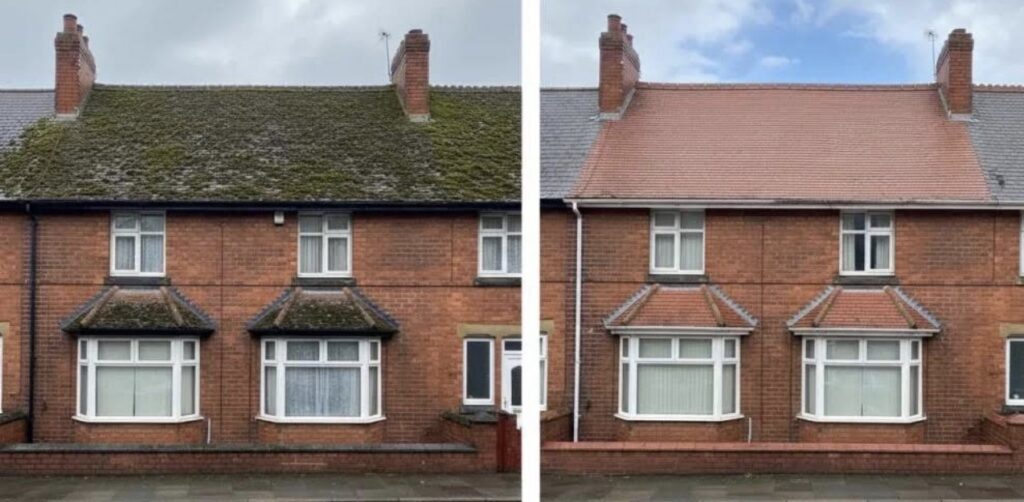
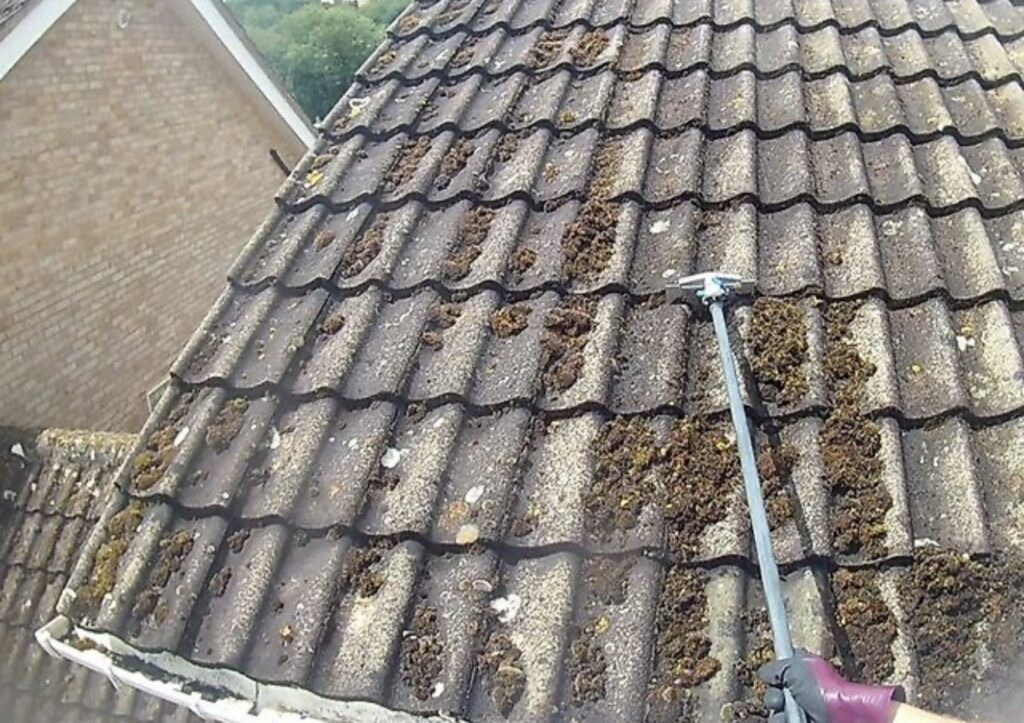
Most sagging comes back to how much material lands in the run. Roofs shedding moss fill gutters far faster than clean ones, so the long-term answer is usually to deal with the roof as well as the gutter.
Clearing in autumn once the leaf fall is finished, and again in spring where there are conifers or overhanging trees, keeps the load off the brackets for most properties.
Our own photographs
Images from Sky Scrapers Ltd work showing the methods described on this page.
Where this applies locally
Towns where this comes up most often on our patch:
Questions we get asked
Can you refix a dropped gutter while clearing it?
Minor bracket adjustment during a clear is often possible. A run pulling away because the fascia behind it has failed needs proper repair, and we will show you photographs of why.
Does pooling water actually matter?
Yes. Standing water holds silt, breeds growth, adds weight and freezes in winter, and it is the usual reason a joint starts weeping.
Why does one section always overflow?
Either the fall runs away from the downpipe at that point, or the downpipe mouth below it is choked. Both are checked as part of clearing.
How often should gutters be cleared to avoid this?
Once a year suits most homes, twice where there are conifers, overhanging trees or a roof still carrying moss.
Get the run checked properly
Photograph the section that sags and the wall underneath it, and we will tell you whether it is load or fixings.
Sky Scrapers Ltd · info@sky-scrapers.co.uk
In short
Clearing fixes sagging caused by weight. Sagging that persists on an empty run points to brackets or a failed fascia, and we photograph that rather than cover it up.