
Nesting material in gutters and under roof edges
Every spring we get calls about scratching noises at the eaves and gutters that overflow out of nowhere. Nesting material is dense, it packs tight, and a single nest sited over a downpipe mouth will block a whole elevation.
It also needs handling carefully rather than quickly, because active nests are protected and interfering with one is not something a cleaning company should be doing.
Where it usually is
- Directly above a downpipe mouth, where the outlet gives shelter and a natural anchor point.
- Behind the fascia at the top of a soffit run, reached through a gap in the boards or a lifted tile at the verge.
- Under the bottom course of tiles where the eaves comb is missing or damaged.
- In the sheltered gully behind a chimney stack, mixed in with moss and windblown debris.
- Inside wide box gutters and behind parapet walls on older or converted buildings.
Why it causes damp rather than just blockage
Nesting material behaves like a sponge with a structure. It holds water against timber and plaster long after rain has stopped, and because it sits at the eaves it is right next to the most vulnerable part of the roof edge.
The visible symptom is usually overflow at one point, or a damp patch on an upstairs ceiling near the outside wall, rather than anything you can see in the gutter from the ground.
Timing and responsibility
If a nest is in use we leave it and come back. Clearing is planned around the season for that reason, and we will tell you plainly if the sensible thing is to wait rather than to book you in immediately.
Once a nest is genuinely disused, the material is removed, the run flushed and the downpipe checked from the top and the bottom so you know the whole route is clear.
Reducing the chances of a repeat
Nesting follows opportunity. Missing eaves combs, gaps at the verge and broken soffit vents are the openings that get used, and we photograph what we find so you can decide what to close up.
A roof carrying heavy moss is also more attractive, because the material itself is useful for building. Cleaning the roof reduces both the debris load and the appeal.
Our own photographs
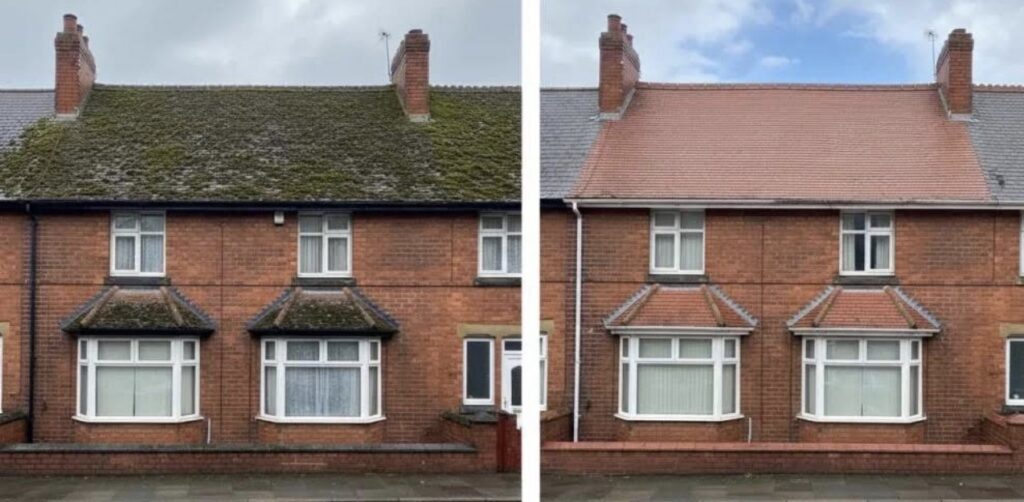
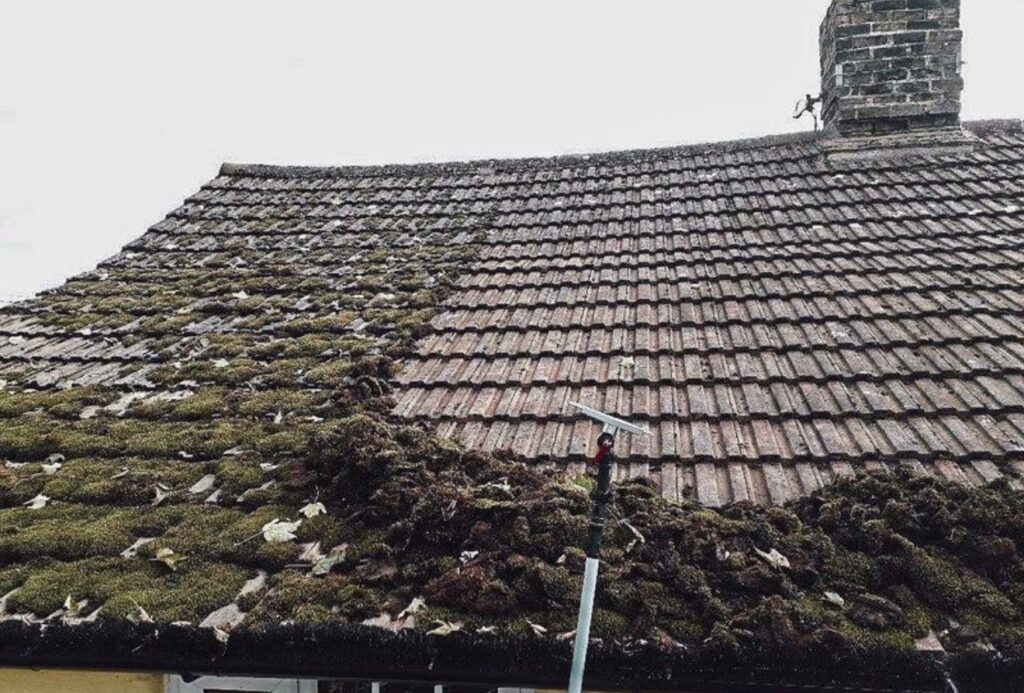
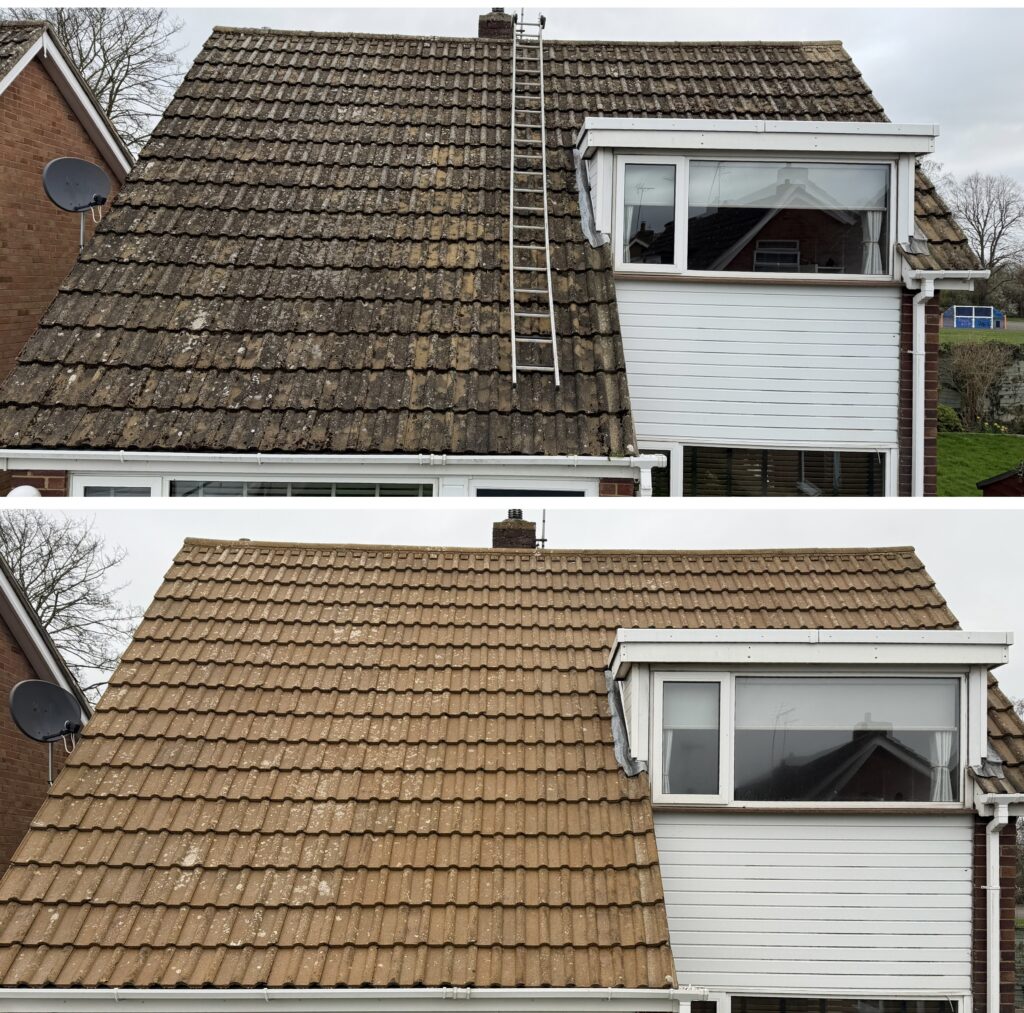
Images from Sky Scrapers Ltd work showing the methods described on this page.
Where this applies locally
Towns where this comes up most often on our patch:
Questions we get asked
Will you remove an active nest?
No. Active nests are protected, so we plan the visit around the season and come back once it is genuinely disused.
How can I tell if a blockage is a nest rather than leaves?
Nests block suddenly and completely at one point, usually over a downpipe. Leaf build-up is gradual and spread along the run.
Can nesting cause damp indoors?
It can. Packed material holds water at the eaves, which is the part of the roof closest to your upstairs ceilings and wall heads.
Do you check the downpipe as well?
Yes. There is no point clearing the gutter and leaving a packed downpipe, so the route is checked from both ends and flushed.
Get an overflowing eaves checked
Tell us where the water comes over and whether you have heard activity in the roof edge, and we will advise on timing.
Sky Scrapers Ltd · info@sky-scrapers.co.uk
In short
Nesting material blocks suddenly and holds damp at the eaves. Active nests are left alone, disused material is cleared and flushed, and the openings that invited it are photographed.